Tilda, WordPress, or Custom Code: What to Choose in Uzbekistan
We break down where to launch a website in Uzbekistan: Tilda, WordPress, or custom development. Explore costs in UZS (so'm), seasonal launch timelines, and payment or 1C integration limits.
For a quick hypothesis test or a seasonal promo campaign, Tilda is usually the smartest pick: launch takes just 3–7 days, with a standard landing page costing from 4–5 million UZS (so'm). For an expanding catalog and an online store, WordPress with WooCommerce or an off-the-shelf CMS remains the standard choice (from 8–36 million UZS (so'm)), while custom framework development from scratch is reserved for large-scale projects with non-standard logic and budgets starting from 30–40 million UZS (so'm).
In Brief
- The Tilda website builder gets the job done in 3–7 days with hosting included, but it is capped at 500 pages per project and presents hurdles with OFD fiscalization.
- A typical landing page in Tashkent starts from 4–5 million UZS (so'm), a CMS corporate site costs between 9.5–17 million UZS (so'm), and an online store runs from 8–36 million UZS (so'm).
- WordPress provides full autonomy and database access, but incurs annual overhead: a .uz domain costs 25,000–35,000 UZS (so'm), and TAS-IX hosting ranges from 300,000 to 1,800,000 UZS (so'm) per year.
- Custom development using Laravel, React, or Next.js starts from 30–40 million UZS (so'm) and requires 1.5 to 3 months of dedicated team effort.
Three Approaches to Launching a Website
When a business decides to refresh its digital presence ahead of high season, selecting a platform often turns into a debate over technology stacks. In reality, platform choices are driven purely by business requirements: how many items you sell, how frequently prices change, how you accept payments, and whether warehouse synchronization is necessary.
In Uzbekistan, business goals are typically solved through one of three routes: a SaaS builder (most commonly Tilda), a standalone open-source CMS (WordPress / WooCommerce), or custom engineering on modern frameworks (React, Laravel, Next.js). Each path solves distinct challenges and comes with its own hidden trade-offs.
Tilda: Fast Launch with Clear Boundaries
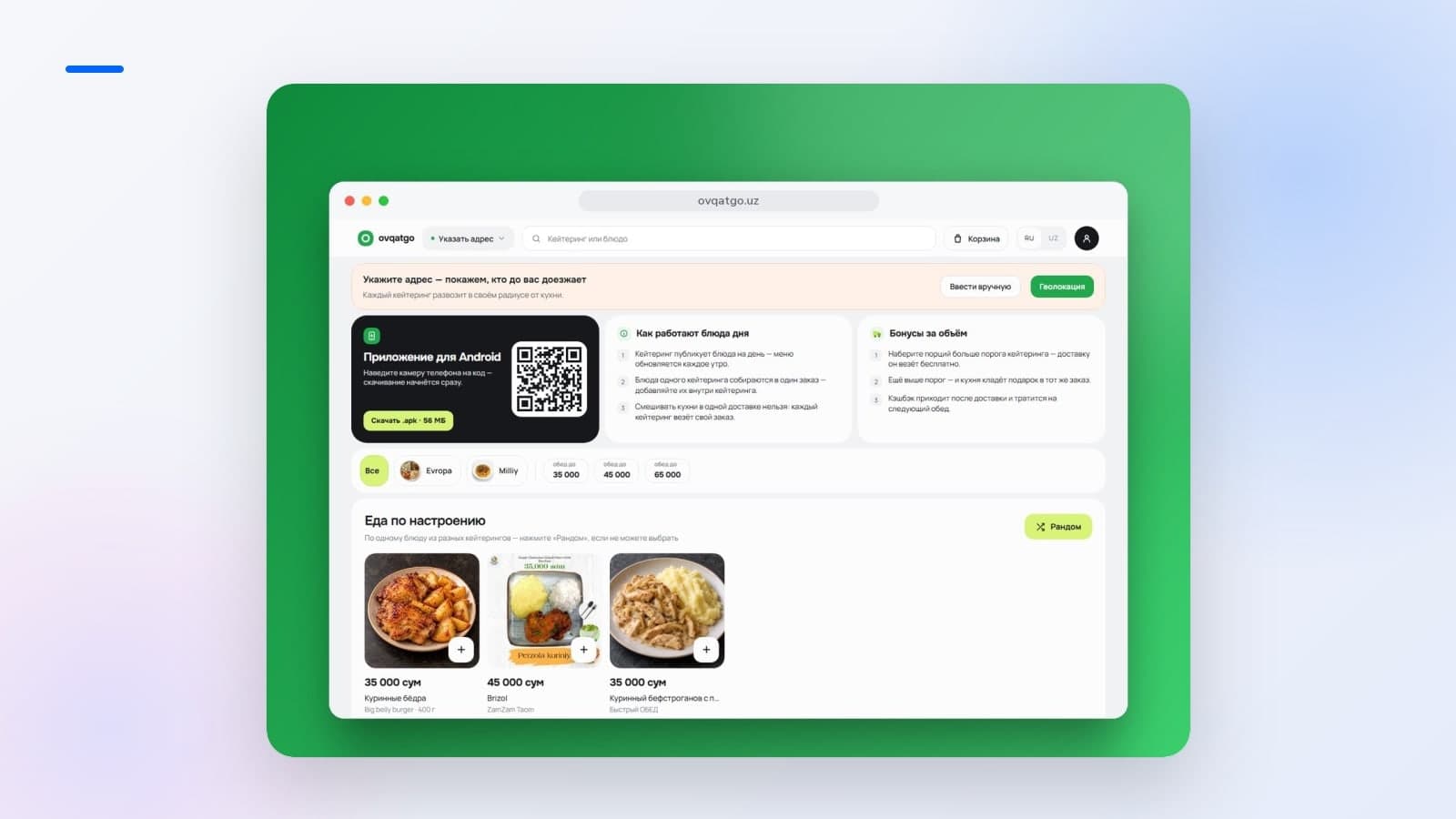
Tilda is a visual website builder where pages are assembled from pre-designed blocks or customized in Zero Block. According to agency Red Group, Tilda allows you to roll out a project within 3–7 days with built-in hosting, but enforces a 500-page limit per project and offers limited support for multi-warehouse management or custom checkouts. Checkout refers to the customer's journey in the cart from entering a shipping address to receiving a receipt.
For validating demand for a new service, a website builder is hard to beat. We often build seasonal campaign pages or landing pages when ad traffic needs to go live this week on a modest budget. According to agency ABC Design, Tashkent digital agencies charge from 4–5 million UZS (so'm) for a typical landing page built on Tilda or lightweight templates.
However, website builders have hard ceilings. If you carry hundreds of SKUs, require advanced filtering, or rely on multi-tier discount systems, the platform begins to struggle. Furthermore, you cannot export database logic or rewrite backend workflows inside a closed proprietary service: your website remains physically locked within Tilda's cloud.
WordPress and CMS: Autonomy and Scaling
WordPress powered by WooCommerce is the world's most popular engine for content-driven websites and digital commerce. It installs on your own server, granting you 100% ownership of your source code, system files, and customer databases.
As highlighted by Red Group, WordPress and standalone CMS solutions require local hosting within the TAS-IX network (from 300,000 to 1,800,000 UZS (so'm) per year) along with a .uz domain (25,000–35,000 UZS (so'm) per year). TAS-IX is Uzbekistan's domestic traffic exchange network; servers hosted inside it load web pages significantly faster for local domestic visitors than foreign servers do.
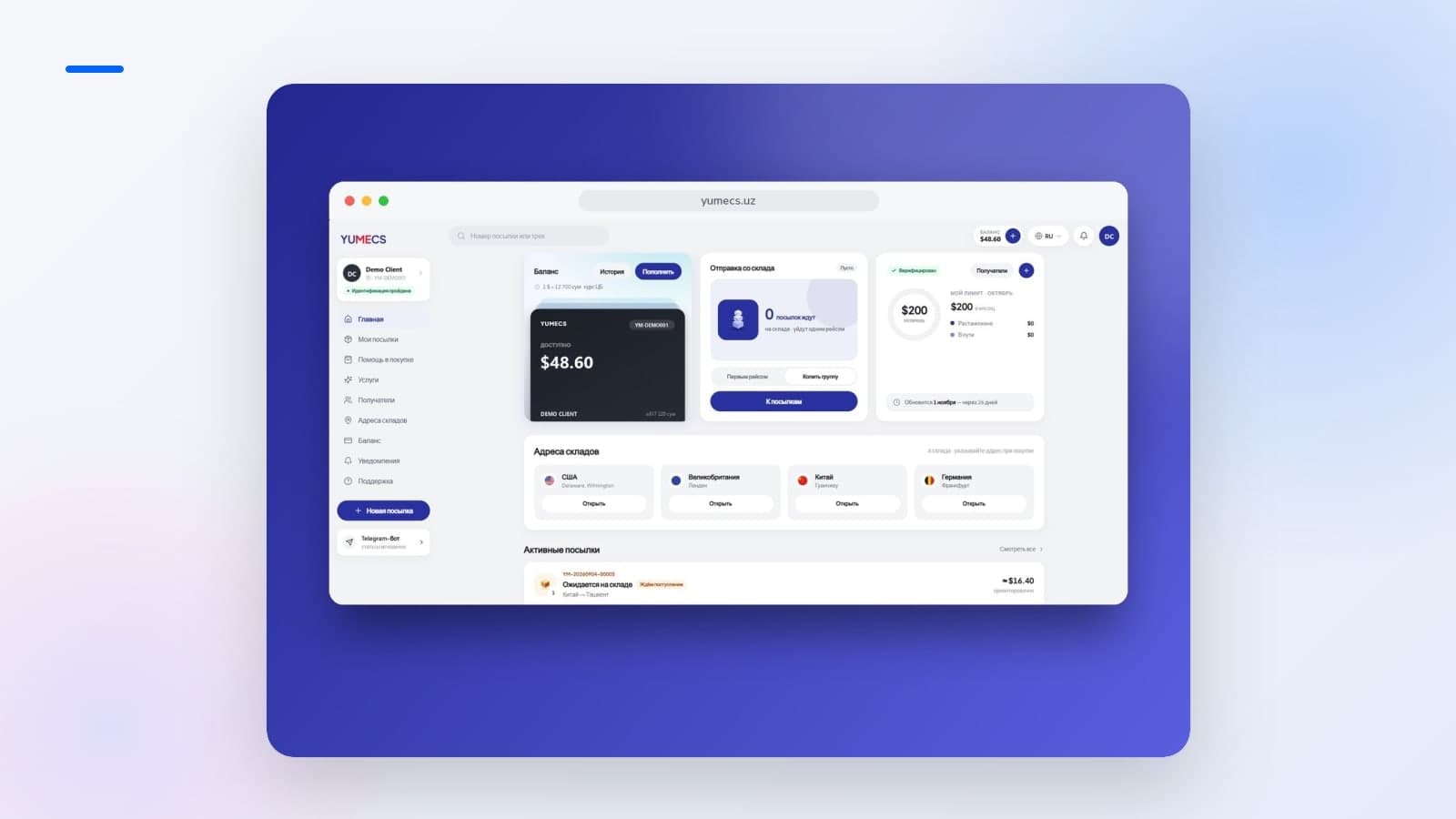
According to estimates by ABC Design, a corporate CMS website costs between 9.5–17 million UZS (so'm), while an e-commerce store with an interactive cart and catalog ranges from 8–36 million UZS (so'm), depending on custom requirements and 1C integrations. In our own work, we frequently deploy CMS solutions for businesses offering layered services—such as Financify, where an outsourced accounting firm needed a corporate portal equipped for continuous blogging and organic SEO acquisition.
Custom Development: When Standard Modules Fall Short
Building from scratch involves architecting a dedicated database schema and custom backend logic using frameworks like Laravel, Django, Next.js, or React. A framework is a professional suite of software libraries and architectural foundations that developers use to engineer custom web applications.
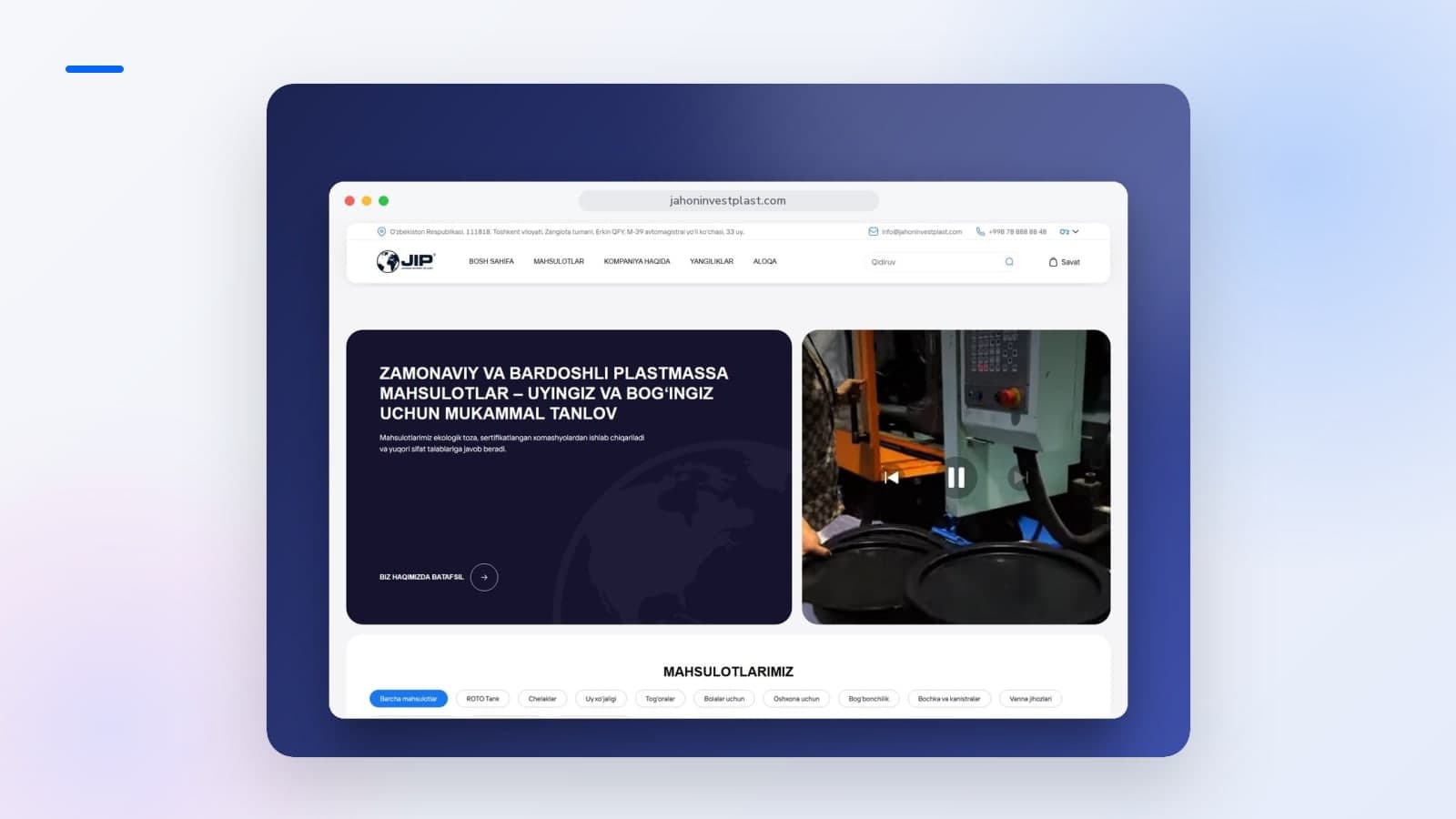
According to agency Innosoft, engineering complex platforms and bespoke web products on modern frameworks in Uzbekistan starts from 30–40 million UZS (so'm) and can reach 100 million UZS (so'm), requiring 1.5 to 3 months of dedicated engineering. This approach makes sense only when your website doubles as a dealer portal, syncs directly with an industrial ERP, or requires a custom online booking engine that standard plugins cannot handle.
Comparing Options by Cost and Objectives
| Criterion | Tilda | WordPress / CMS | Custom Development |
|---|---|---|---|
| Launch timeline | 3–7 days | 2–6 weeks | 1.5–3 months |
| Cost in Tashkent | 4–5 million UZS (so'm) (landing page) | 9.5–17 million (website), 8–36 million (store) UZS (so'm) | 30–100 million UZS (so'm) |
| Hosting and domain | Included in platform subscription | Hosting 300,000–1,800,000 UZS (so'm)/year, domain 25,000–35,000 UZS (so'm) | Dedicated VPS/server from 1.5–3 million UZS (so'm)/year |
| Page count | Up to 500 pages per project | No strict limits | Unlimited |
| Complex integrations | Limited by APIs and webhooks | Broad selection of plugins and open APIs | Any custom architecture |
| Best suited for | Testing demand, promos, landing pages | Catalogs, B2B websites, online stores | Ecosystems, portals, web services |
Payment Gateways, Fiscalization, and 1C in Uzbekistan
Launching a viable commercial website in Uzbekistan rarely hinges on aesthetics alone; it depends heavily on legal standards and local consumer habits. Shoppers expect instant debit card payments via Uzcard and Humo through trusted gateways like Payme, Click, or Uzum Bank.
As explained by technical experts at Alfalab, complete e-commerce operations in Uzbekistan demand direct sync between payment gateways (Payme, Click, Uzum), fiscalization providers via state OFD (Solik), and real-time inventory tracking. While WordPress and open CMS platforms offer ready-to-deploy modules, SaaS website builders often require third-party webhooks or custom middleware. Middleware is intermediate software that receives data from one system, reformats it, and passes it to another.
If you are rolling out full-scale online stores with automated electronic receipt generation, an open CMS or custom code will spare you recurring monthly fees for fragile bridging services between a visual builder and local fiscal operators.
Checklist: Choosing the Right Engine for Your Goals
- Evaluate your SKU volume. If you carry fewer than 20–30 products and close orders via instant messaging, Tilda will cover 100% of your business needs without unnecessary overhead.
- Clarify integration requirements. If you need automated 1C inventory synchronization and direct Solik fiscal reporting, choose an open CMS or an engineered platform.
- Account for your deadline. If your launch coincides with a seasonal peak arriving next week, custom coding will miss the window: start immediately with a nimble website builder.
- Determine ongoing maintenance. Your in-house marketer can easily edit copy on Tilda; a CMS requires basic administrative oversight; custom frameworks demand ongoing developer support.
Common Mistakes When Choosing a Platform
- Commissioning custom engineering for standard tasks. Spending 30–40 million UZS (so'm) on a React brochure site delivers zero commercial edge: the business simply overpays for technology that generates no incremental profit.
- Attempting to scale a marketplace on a builder. Tilda quickly hits limits on page quotas and dynamic filter speeds, forcing an expensive rebuild from scratch.
- Overlooking local operational costs. When estimating CMS budgets, companies frequently forget to factor in .uz domain renewals, fast TAS-IX hosting, and commercial licenses for automated fiscalization modules.
- Prioritizing technical complexity over usability. Before writing a single line of code, map out user flow and clear navigation, supported by well-planned UX/UI design.
Frequently Asked Questions
Tilda or WordPress: what should I choose for a corporate website?
If you need a 5–10 page corporate showcase that requires infrequent updates, Tilda launches faster and is far easier for non-technical staff to edit. If you intend to scale your service architecture, maintain an extensive catalog, and capture organic search traffic through content SEO, WordPress or purpose-built corporate websites on a standalone CMS are much safer bets.
How much does an e-commerce store on Tilda or WooCommerce cost in Tashkent?
According to Tashkent agency benchmarks, a basic promotional landing page costs from 4–5 million UZS (so'm), while full e-commerce stores with catalogs and carts range from 8–36 million UZS (so'm). Total costs on WooCommerce or comparable engines depend on your required integrations: Payme or Click payment gateways, OFD fiscal receipt processing, and two-way 1C inventory sync.
Can I migrate an existing website from Tilda to WordPress?
There is no one-click migration tool. You can only export raw HTML/CSS on Tilda's top-tier plans, but that code cannot function as native WordPress templates: your page layouts, post architectures, and media must be reconstructed manually on the new CMS.
Which platform performs better for SEO in Uzbekistan?
When properly configured, simple Tilda sites index smoothly in search engines. However, for deep SEO across large catalogs, WordPress delivers significantly greater control: category-level meta tags, automated XML sitemaps for thousands of URLs, custom permalink structures, and superior page speed tuning on local TAS-IX servers.
If you are weighing the pros and cons of a website builder, CMS, or tailored custom development, get in touch with our team via our contacts page. We will assess your commercial goals, clearly explain the limits of each tool, and help you launch on time without runaway expenses.