7 Online Payment Mistakes in Uzbekistan: Fines and System Glitches
A deep dive into 7 common mistakes when integrating Payme and Click on websites and Telegram bots: from fiscal receipt penalties to stuck orders and refund losses.
Online payment issues in Uzbekistan usually stem from three core problems: poor server architecture, missing fiscalization, and manually processing card transfers. Integrating a single payment gateway costs around 3,000,000 UZS (so'm), while bank and provider merchant moderation takes anywhere from 3 to 14 business days, according to data from Bit-Box. Cutting corners during setup can lead to tax fines and frustrated customers abandoning stuck orders.
Key Takeaways
- Accepting payments to a personal card without a virtual cash register (online cash register / virtual KKM) risks a 5,000,000 UZS (so'm) fine under Article 221 of the Tax Code of Uzbekistan. Errors in fiscalization or MXIK (IKPU) codes trigger a penalty of 2% of quarterly revenue under Article 227-1 of the Tax Code.
- Internet acquiring merchant fees for Uzcard and Humo cards via Click Business and Payme Business typically range from 1.5% to 2.5% per transaction.
- Order statuses must only be confirmed via backend server webhooks sent directly from the payment gateway, never based on the user returning to a success redirect page.
- Gateway technical integration generally costs between 3,000,000 and 7,000,000 UZS (so'm), depending on how many payment providers you connect.
1. Accepting Payments on Personal Cards and Manually Checking Screenshots
Many business owners start selling via Telegram or Instagram by simply sending their personal card number. The customer transfers money via their banking app and sends a screenshot of the receipt. A manager then verifies it manually before processing the order.
This workflow causes two major issues. First, it leaves you wide open to fraud, including fabricated receipts and reversed transfers. Second, it violates local tax law. Under Article 221 of the Tax Code of Uzbekistan, accepting retail payments without an officially registered virtual cash register or failing to issue an electronic fiscal receipt carries a fine of 5,000,000 UZS (so'm), according to Tax & Legal.
The solution is to open a verified merchant account with Payme Business, Click Business, or bank acquiring services, generating secure payment links tied to specific order IDs.
2. Updating Order Status Based on Redirect URLs
After a customer completes payment on a secure gateway page, the provider redirects their browser back to your site—typically to a URL like /order/success. A frequent mistake by novice developers is updating the order status to "Paid" the moment that page loads in the user's browser.
If the customer closes their browser tab early, loses mobile connection in the subway, or simply taps "Back," the funds are deducted from their card, but your store never registers the purchase. The items remain in the cart, the customer calls support in frustration, and your staff has to reconcile bank statements manually.
Order statuses should always be updated exclusively via asynchronous server-to-server notifications (webhooks), which the payment gateway sends directly to your backend regardless of what happens in the client's browser.
3. Neglecting Fiscalization and Using Incorrect MXIK (IKPU) Codes
When accepting cashless payments online, your system must automatically transmit transaction data to the State Tax Committee (Soliq) and generate an electronic fiscal receipt with a valid QR code. This receipt must include required attributes, such as the correct product/service classification code (MXIK / IKPU) and the company's VAT status.
Under Law No. ZRU-927 dated May 29, 2024, fines under Article 227-1 of the Tax Code of Uzbekistan for fiscal marking violations or incorrect MXIK (IKPU) codes stand at 2% of net revenue for the reporting quarter, escalating to 20% for repeated violations within a year, as reported by Buxgalter.uz. For an online store with a quarterly turnover of 300,000,000 UZS (so'm), a single misclassified product category could cost 6,000,000 UZS (so'm).
4. Lacking Two-Step Payments When Managing Floating Inventory
In a standard one-step payment flow, funds are charged instantly. If your last inventory item just sold out or a catering kitchen cannot fulfill the order, your team must issue a refund.
With one-step processing, handling refunds can incur payment fees or manual accounting overhead, and the customer might wait anywhere from a few minutes to several business days to see the funds back in their account. If you sell custom goods or dynamic stock, use two-step authorization (holding/pre-authorization): funds are locked on the customer's card and only captured once the warehouse or manager confirms availability.
5. Offering Only a Single Payment Gateway
In Uzbekistan, the digital card audience is largely divided between Click and Payme users. Limiting your checkout to just one provider leads to cart abandonment whenever a customer cannot find their preferred payment method.
Standard merchant rates for Uzcard and Humo cards range between 1.5% and 2.5% per transaction, based on pricing from Click Business. Because transaction fees across major providers are virtually identical, giving users a choice between the two main gateways on your website or app is an easy win for conversion rates.
| Integration Setup | Estimated Technical Cost | Merchant Verification Time | Best Suited For |
|---|---|---|---|
| Single gateway (Click or Payme) | from 3,000,000 UZS (so'm) | 3–7 business days | Small setups testing business hypotheses |
| Dual gateways (Click + Payme) | from 5,000,000 UZS (so'm) | 5–10 business days | Standard online stores and catalogs |
| Three systems (+ Uzum Pay) | from 7,000,000 UZS (so'm) | 7–14 business days | Marketplaces and high-volume retail |
6. Flawed Telegram Bot Architecture
When selling via Telegram bots, inexperienced teams often send bank details as plain text or generate static payment links without unique order parameters. If three buyers purchase an item priced at 150,000 UZS (so'm) at the exact same moment, the bot has no way of matching who paid for what.
Telegram bots should integrate the Telegram Payments API or pass unique transaction IDs through Telegram WebApps. This eliminates manual reconciliation and allows the bot to send an electronic receipt instantly once confirmed by the payment gateway.
7. Submitting an Unprepared Website for Gateway Review
Payment providers review your website thoroughly before issuing production API keys. Merchant moderation usually takes between 3 and 14 business days according to Bit-Box, but missing basic legal pages can delay your launch by weeks.
Providers will reject an application if your site lacks a public offer agreement, privacy policy, clear refund and return terms, or business legal details (Tax ID / INN, registered address). High-quality corporate website development and e-commerce projects always ensure these compliance pages are published before applying for merchant onboarding.
A real case: D2C payment automation
A local retail D2C brand in Uzbekistan processed orders manually via direct messages on Telegram. Customers submitted payment screenshots, managers checked transfers manually, and overnight inquiries were left unhandled until morning. This resulted in cash register discrepancies and unfulfilled or mistakenly shipped orders. As detailed in the company's case study on upgrid.uz, they replaced P2P transfers with automated Payme and Click links connected to CRM deal creation. This removed manual checks, cut order confirmation times down to seconds, and completed deployment in just 21 business days.
A real case: Seamless MyTaxi payment acquiring
Passenger transport service MyTaxi needed a high-availability solution for cashless card payments without requiring SMS verification codes for every ride, coupled with automated fiscalization during peak hours. As shared on atmos.uz, the team implemented internet acquiring with card tokenization and direct fiscal data reporting via the certified ATMOS gateway. This stabilized transactions across Uzcard, Humo, Visa, and Mastercard cards, eliminating downtime and tax compliance risks.
If you are just starting
- Register your legal entity, individual entrepreneur (IE/YTT), or self-employed status and set up a dedicated merchant settlement account.
- Apply for your first essential gateway (such as Click Business or Payme Business). At this stage, one primary provider is often enough. Basic integration by web agencies typically starts from 3,000,000 UZS (so'm), according to Bit-Box.
- Publish your public offer, refund policy, and company contact details on your website so you pass merchant moderation within 3–7 business days without back-and-forth delays.
- Keep it simple: skip complex pre-authorization hold logic for your initial launch and use direct payments with instant fiscal receipt generation.
If your business is already running
For established businesses scaling with dedicated online store development or managing large sales teams, keeping back-office accounting in sync is vital.
- Audit your catalog's MXIK (IKPU) product codes. Inaccurate codes risk a 2% penalty on quarterly revenue under Article 227-1 of the Tax Code of Uzbekistan, as noted by Buxgalter.uz.
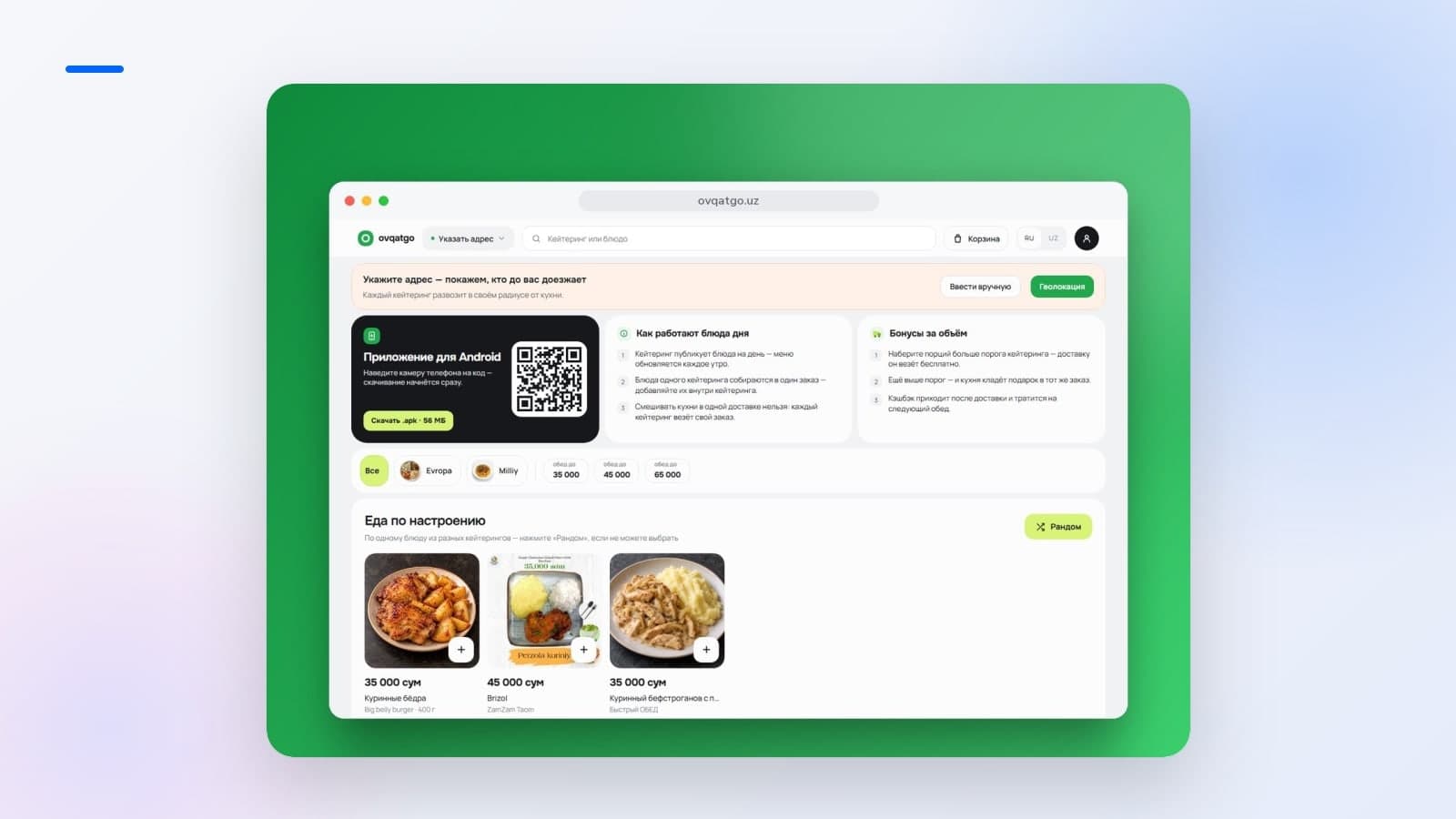
- Implement both primary payment gateways (Click and Payme) to cut down cart abandonment rates. Dual-gateway setup starts at around 5,000,000 UZS (so'm), per estimates by Bit-Box. In our own lunch delivery marketplace OvqatGo, we integrated Payme, Click, and cash-on-delivery options, giving users the freedom to choose their preferred method on both the web portal and Android app.
- Shift all order status updates in your CRM to server-side webhooks. This removes human error and allows your business to process orders 24/7.
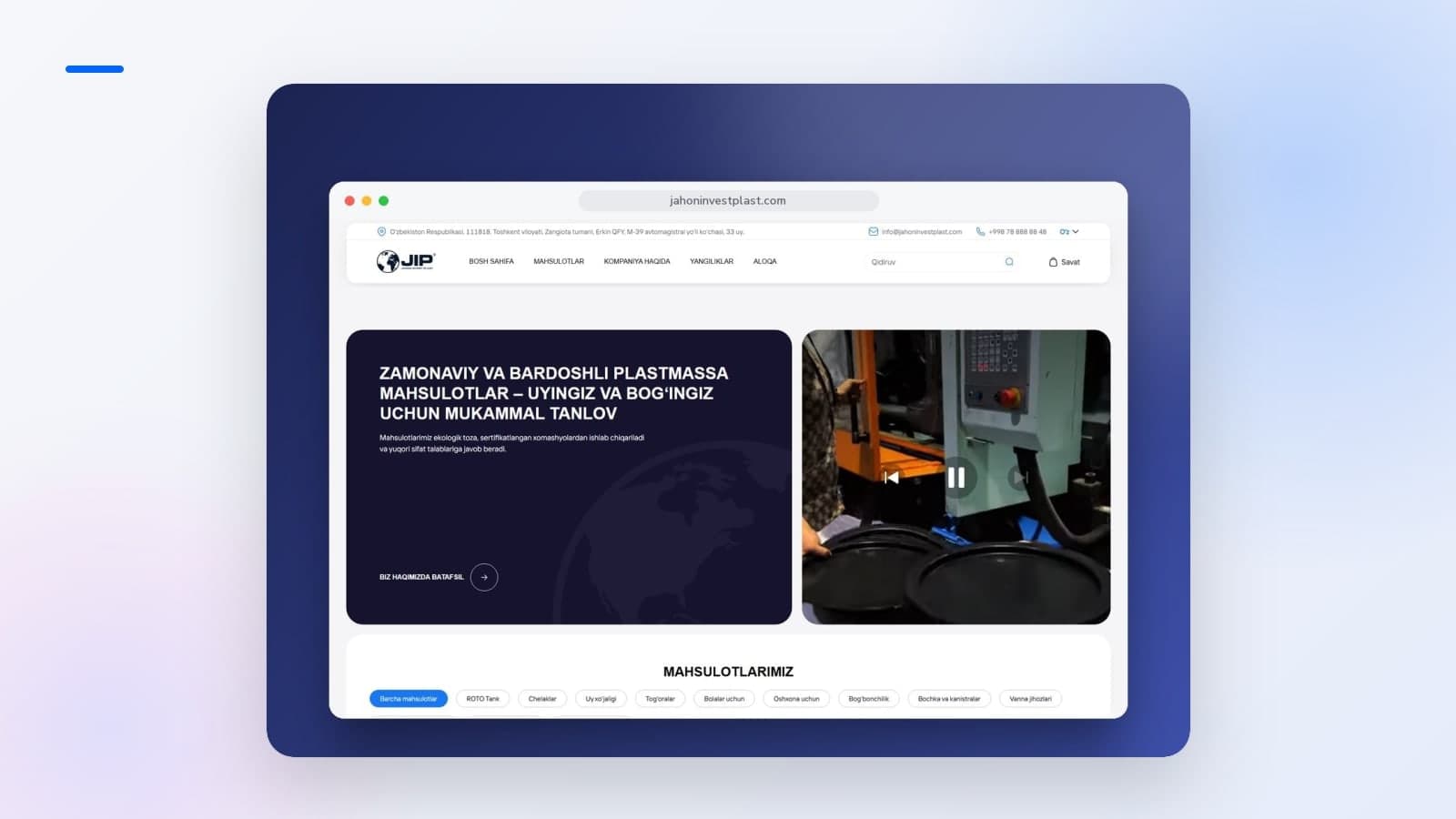
If you run a B2B catalog without direct sales to individual consumers—such as our project for Jahon Invest Plast, where a plastic manufacturer uses a multilingual catalog and cart to collect wholesale quote requests—you do not need retail payment gateways at all. An automated invoicing system for bank transfers is more than enough.
Frequently Asked Questions
Why does an order status freeze after payment through Click or Payme?
In most cases, the website is configured to update statuses upon the user's browser redirect rather than via direct backend webhooks. If the customer closes their browser tab before the redirect completes, your server never receives confirmation from the gateway.
What is the penalty for accepting payments without fiscal receipts?
Under Article 221 of the Tax Code of Uzbekistan, operating without an online cash register and failing to provide a fiscal receipt carries a fine of 5,000,000 UZS (so'm). Inaccurate fiscal receipt details or incorrect MXIK (IKPU) codes result in a fine of 2% of the merchant's quarterly turnover under Article 227-1 of the Tax Code.
How long does it take to connect payment acquiring to a website?
Document verification and merchant onboarding usually take between 3 and 14 business days with payment providers. The software integration itself typically takes 2 to 5 business days when working with well-documented APIs.
Looking to configure smooth online payments, build a Telegram shop bot, or launch a resilient e-commerce platform? Reach out to NDC. We will help you select the right architecture for your scale and integrate your payments properly—without bugs or tax risks.
Sources
- Локальный D2C-ритейлер в Узбекистане · upgrid.uz
- MyTaxi (Newmax Technologies) · atmos.uz
- Click Business — тарифы и условия для мерчантов
- Онлайн-кассы и фискальные чеки в Узбекистане — Tax & Legal
- Штраф по статье 227-1 Налогового кодекса снижен до 2% — Buxgalter.uz
- Payme, Click, Uzum — подключение оплаты к сайту: требования и цены — Bit-Box
- Интеграция Click и Payme: оплата на сайте и в боте — Synclab