Restaurant POS Software in Uzbekistan: iiko, R-Keeper, or Poster
A comparison of three popular food service management platforms in Uzbekistan: subscription costs, hardware budgets, Soliq fiscal integration, and rollout timelines.
For a small coffee shop or to-go spot in Uzbekistan, Poster is the best fit thanks to its low barrier to entry on mobile tablets. Larger restaurants with multiple kitchen stations, central prep units, and in-house delivery are better served by iiko or R-Keeper, which handle complex multi-level ingredient tracking and flexible order routing. Launching a turnkey entry-level setup takes from 3 days, whereas a full-scale restaurant complex requires 2 to 3 weeks with combined hardware and software budgets ranging from 3,810,000 to 10,332,000 UZS (so'm).
In Brief
- Poster costs between 310,000 and 780,000 UZS (so'm) per month and runs on standard consumer tablets paired with receipt printers starting at 3,500,000 UZS (so'm).
- An iiko license runs from 484,000 to 1,332,000 UZS (so'm) per month per venue, fully meeting the operational needs of complex dining spots and chains.
- R-Keeper requires 2–3 weeks to deploy and connect with StoreHouse, with on-site technician visits in Tashkent starting from 300,000 UZS (so'm).
- All point-of-sale systems in Uzbekistan must transmit receipts to the tax authorities in real time with mandatory MXIK (IKPU) product codes under Cabinet of Ministers Resolution No. 943.
Comparing the Systems: iiko, R-Keeper, and Poster
Your choice of POS and back-office software determines how quickly servers enter orders, how accurately kitchen inventory is deducted, and whether your tax filings balance out. Here is how the three platforms stack up across the most important operational metrics.
| Criteria | Poster | iiko (iikoCloud) | R-Keeper + StoreHouse |
|---|---|---|---|
| Monthly license | 310,000 – 780,000 UZS (so'm) | 484,000 – 1,332,000 UZS (so'm) | Perpetual license purchase or lease (quoted via dealers) |
| Hardware per terminal | Tablet + printer: from 3,500,000 UZS (so'm) | Windows POS terminal: 5,500,000 – 9,000,000 UZS (so'm) | Windows POS terminal: 5,500,000 – 9,000,000 UZS (so'm) |
| Deployment time | 3–5 days | 1–2 weeks | 2–3 weeks |
| Complex inventory tracking | Standard recipes and manual deductions | Deep control: butchery yields, semi-finished goods, automated ordering | Maximum inventory granularity in StoreHouse |
| Fiscal receipt compliance | Integrated virtual cash register modules | iikoFiscal module / virtual cash register gateways | Fiscal gateways and driver compliance under Resolution No. 943 |
| Best suited for | Coffee shops, street food, bars, small bistros | Multi-station dining rooms, chains, delivery operations | Traditional fine dining, banquet halls, multi-unit franchises |
Legal Compliance: Fiscal Receipts and MXIK (IKPU) Codes
In Uzbekistan, restaurant software cannot be selected purely on visual interface design. Under Resolution No. 943 of the Cabinet of Ministers, food service establishments must issue fiscal receipts bearing official tax authority QR codes and real-time MXIK (IKPU) product codes for every sold dish or beverage. This requires the checkout software to integrate seamlessly with an approved virtual cash register service.
Poster handles this requirement via a dedicated software module. In iiko and R-Keeper, fiscal data transmission is configured through virtual cash register driver bridges installed on the physical POS terminal. If your POS platform fails to sync valid MXIK codes, your cashiers cannot legally issue receipts to guests.
If you are just starting
When launching your first micro-cafe, kiosk, or bakery, an enterprise-grade ERP system will simply drive up overhead with features you will not use on day one.
- Purchase a tablet and a thermal receipt printer. A functional hardware kit starts at 3,500,000 UZS (so'm) based on equipment figures from sbg.uz. A bulky, heavy-duty Windows POS terminal is unnecessary overhead for a venue with 5 to 10 tables.
- Subscribe to a cloud plan. A single-terminal license for Poster starts at 310,000 UZS (so'm) per month according to joinposter.uz. This provides everything required to input your menu, monitor milk and coffee bean stock, and print legal receipts.
- Set up basic single-level recipes. Avoid building complex inventory degradation allowances or multi-step prep workflows right away. Deducting base ingredients directly per cup of coffee or slice of cake is enough to maintain clean numbers.
If your business is already running
Once you operate a full-service kitchen with dedicated hot and cold lines, prep units, or an in-house delivery fleet, consumer-grade tablet registers hit their operational limits. This is the stage where growing venues migrate to iiko or R-Keeper.
- Isolate kitchen operational zones. Orders rung up at the cash register must route instantly to Kitchen Display System (KDS) screens or dedicated kitchen printers split between prep stations.
- Configure end-to-end inventory management. Your software should calculate inventory deductions not simply against raw wholesale meat, but across prepped ingredients and multi-tier prep batches, factoring in cooking shrinkage and yield losses.
- Link the register with delivery channels and your web store. In our development experience at NDC, restaurants scaling internal delivery teams struggle when hosts manually re-enter orders from Telegram or websites into the register. To automate customer-facing ordering channels, we build secure internal bridges through CRM development and automation or deliver custom order-taking storefronts through corporate website development.
- Execute a staged migration. Never switch out your POS platform on a busy Friday evening. Migrating a complex menu, completing full inventory stock counts, and running staff training requires 2 to 3 weeks of managed implementation, as confirmed by specialists at rkeeper.uz.
A real case: Automating the Mazzali quick-service chain in Tashkent
Fast-growing fast-food brand Mazzali needed to connect high-speed register checkout with automated order routing to hot and cold kitchen stations via ticket printers, while tracking precise ingredient usage for prepped stocks.
Local integrator SBG deployed a complete solution built on r_keeper: establishing structured cashier stations, kitchen print workflows, tiered permission levels for cashiers and managers, and detailed warehouse controls in StoreHouse, as documented by sbg.uz.
As a result, table and counter turnaround accelerated by 40%, order assembly errors dropped by 30%, and leadership secured clear unit economics along with a standard technical footprint for every new franchise branch.
A real case: Enterprise operations for international restaurant franchises
Major enterprise hospitality operators in Uzbekistan (including brand groups such as Pizza Hut, Hardee's, and Sun Group) running high-capacity venues, distributed kitchens, dedicated delivery operations, and corporate operational guidelines required a unified ERP platform to oversee kitchens, workforce scheduling, and supply chain balances.
Authorized system providers rolled out iikoCloud Pro infrastructure featuring kitchen KDS displays, compliant virtual cash register connections, mobile inventory barcode scanners, and direct delivery order consolidation on the terminal, according to kafesoft.uz. With local cloud licensing rates for iiko in Uzbekistan running between 484,000 and 1,332,000 UZS (so'm) per month according to enter-co.uz, this installation eliminated register discrepancies, automated real-time recipe write-offs, and created clear, real-time corporate P&L reporting across all branch locations.
Connecting Point of Sale with External Digital Channels
Modern restaurant POS platforms cannot operate in an isolated vacuum when you take orders online or build customer retention programs. Your back office needs to sync live menu catalogs out and receive customer orders back in.
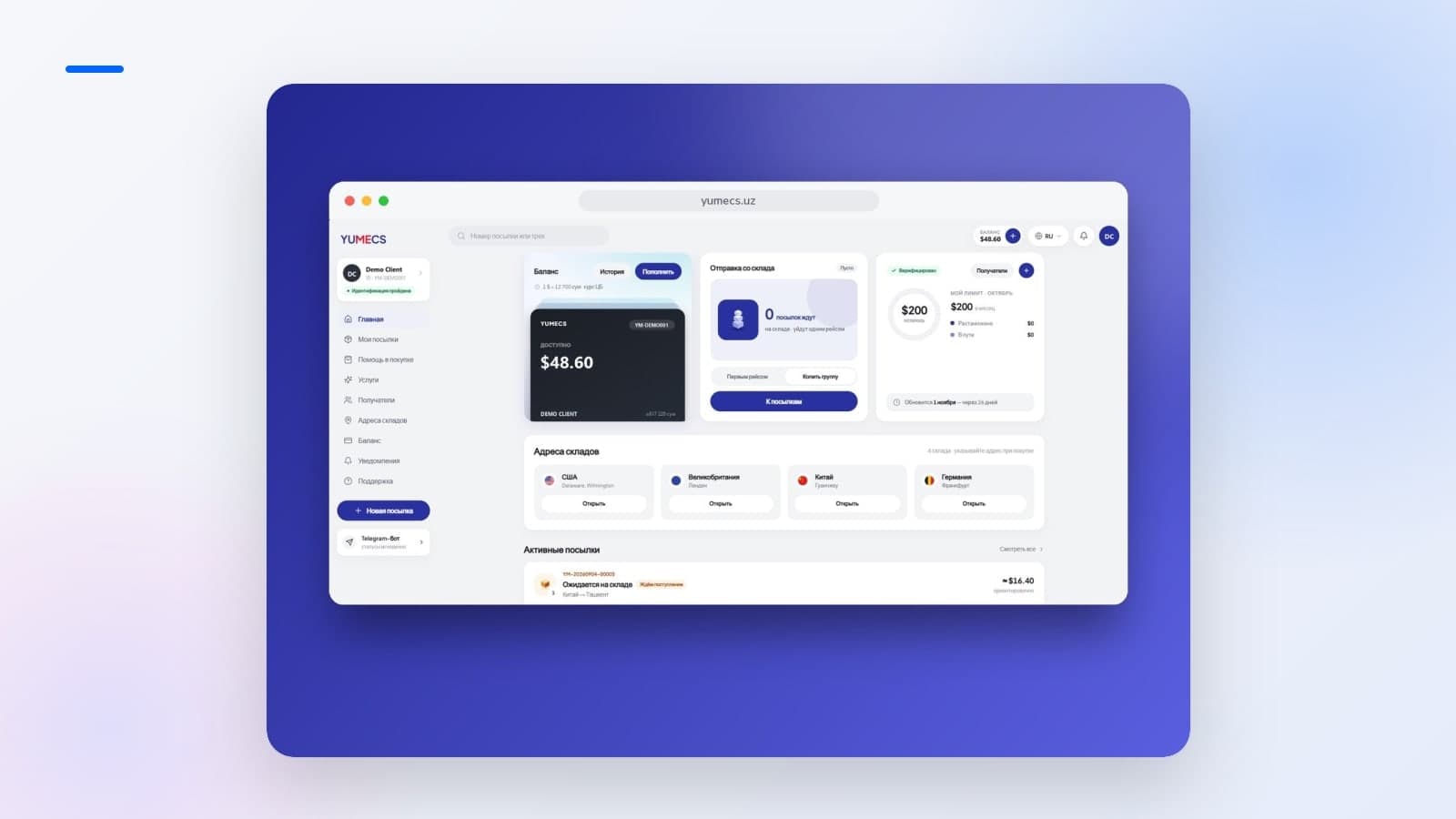
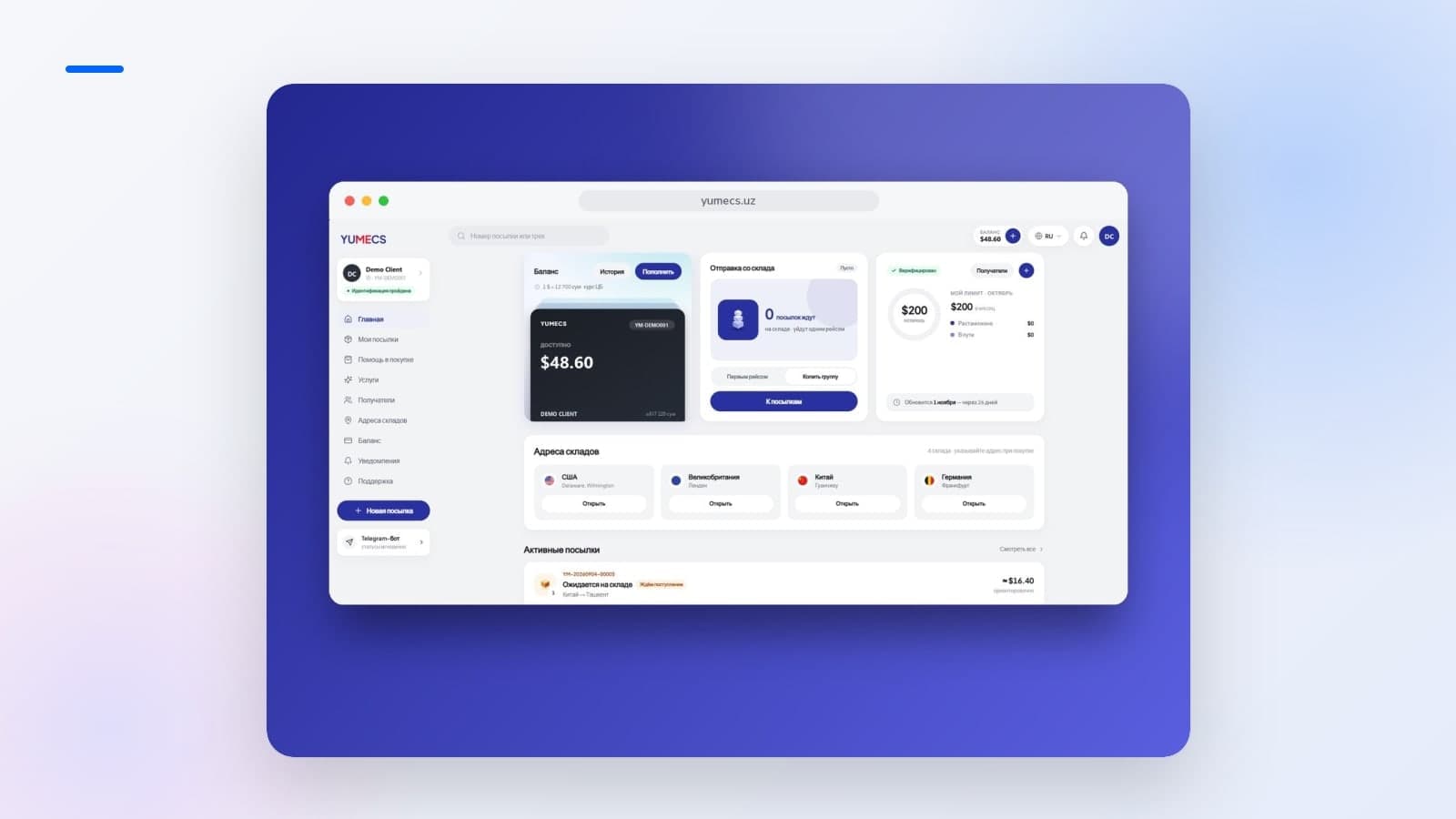
Whenever off-the-shelf software plugins fail to satisfy your business model — for example, if you require a branded customer loyalty mobile app or an internal portal for corporate catering contracts — bespoke software bridges are required. A representative build from our work is YUMECS, where we developed a secure client portal along with an internal management tool featuring real-time automated status alerts sent via Telegram. The same architecture for data exchange and real-time order tracking applies directly to online food delivery.
If you are planning an independent online storefront with mobile ordering, explore our capabilities in mobile application development, engineered to sync with hospitality point-of-sale systems through secure APIs.
Frequently Asked Questions
What is more cost-effective for a coffee shop in Tashkent: iiko or Poster?
Poster is substantially more economical for an independent coffee shop. Software pricing starts at 310,000 UZS (so'm) per month, and the system runs smoothly on a basic Android or iOS tablet combined with a 3,500,000 UZS (so'm) receipt printer. An entry-level iiko setup requires a Windows POS all-in-one terminal priced between 5,500,000 and 9,000,000 UZS (so'm), with monthly software plans starting from 484,000 UZS (so'm).
How long does a complete turnkey restaurant automation project take?
A single cloud tablet register can be configured, loaded with your menu, and connected to fiscal data pipelines in 3 to 5 business days. Enterprise-grade setups like R-Keeper or iiko with kitchen display stations, kitchen printers, and StoreHouse back-office accounting take from 2 to 3 weeks of deployment work.
Are virtual cash registers legally mandatory under Uzbekistan law?
Yes. Under Cabinet of Ministers Resolution No. 943, all hospitality and dining businesses must issue receipts containing official tax QR codes and verified MXIK (IKPU) product identification. Operating without an authorized virtual cash register integration constitutes a direct violation of state fiscal regulations.
Whether you are evaluating POS software for a new venue or want to connect your register to a custom mobile app and delivery portal, reach out to our team via our contacts page — we will analyze your technical goals and map out the right software architecture.
Sources
- Сеть заведений Mazzali (Ташкент) · sbg.uz
- Крупные франчайзинговые сети и холдинги (Pizza Hut, Hardee's, Sun Group в Узбекистане) · kafesoft.uz
- Тарифы и подключение iiko в Узбекистане — Enter Co
- Тарифные планы на обслуживание и поддержку R-Keeper — Busoft Uzbekistan
- Poster POS в Узбекистане — облачная система автоматизации кафе и ресторанов
- ПКМ №943 «О мерах по обеспечению применения онлайн контрольно-кассовых машин и системы виртуальных касс»