Taxes and Online Cash Registers for Uzum Market: Receipts, Didox, and soliq.uz
Discover why Uzum Market sellers do not need a separate cash register, how to configure my3.soliq.uz and Didox properly, and which gross amount turnover tax applies to.
To trade on the marketplace, a seller does not need to purchase a physical online cash register (online-KKM) or pay for a virtual cash register service. The marketplace operates under a commission agreement and generates electronic fiscal receipts on your behalf when orders are handed over to customers. However, you must calculate turnover tax on total retail sales before marketplace commission deductions.
In brief
- Uzum Market sellers do not need an independent online cash register: the marketplace issues receipts to customers through its own OFD operator.
- In your my3.soliq.uz account, you must link Uzum with both the "Online-KKT" and "Marketplace" flags; otherwise, tax authorities will issue a formal inquiry (talabnoma).
- Turnover tax is calculated on gross retail revenue, not on the net payout transferred to your commercial bank account.
- Closing documents and the Commission Agent Report arrive in Didox monthly by the 19th.
- Under Law No. ZRU-1108, effective January 1, 2026, e-commerce businesses pay standard turnover tax rates: 4% for LLCs and 1% for individual entrepreneurs (YATT) with annual turnover up to 12,000 BCV.
Do sellers need an online cash register for Uzum?
One of the first questions entrepreneurs face when launching a store is whether they must register an online cash register with the tax inspectorate. The short answer is no—provided you sell goods exclusively through the marketplace.
Under the platform's operational model, commerce proceeds under a commission agreement. According to Uzum E-Com, the marketplace (legal entity TIN 309376127) independently issues electronic fiscal receipts via an OFD service at the point of customer pickup or courier delivery. This receipt includes fiscal marks and product line items, directly reporting transaction data to the Tax Committee. Purchasing a dedicated physical terminal or subscribing to third-party virtual register software is unnecessary, causing redundant overhead and potential duplicate fiscal records.
Linking Uzum and Soliq.uz: two mandatory checkboxes
While purchasing a cash register is not required, notifying the tax authorities about your commission agent relationship is mandatory. This process is handled inside your personal taxpayer cabinet.
As outlined by Uzum Market for Business, sellers must log into my3.soliq.uz, navigate to "Formation of the register of commission agents (legal entities)," submit the marketplace's TIN (309376127), and enable two specific settings:
- The "Online-KKT" checkbox.
- The "Marketplace" checkbox.
Skipping either setting prevents the automated Soliq system from associating marketplace-generated receipts with your business TIN. Consequently, tax algorithms treat incoming bank transfers as unrecorded revenue or identify missing retail receipts, generating an automated desk-audit notice (talabnoma) demanding explanations or back tax assessments.
Gross revenue vs. bank deposits: calculating the taxable base
The most common financial mistake among newer sellers is calculating tax strictly on the net payout received from the marketplace into their corporate account. This represents a serious accounting violation.
As financial specialists at Azma Finance emphasize, turnover tax applies to the full retail value of goods sold (gross revenue)—before deductions for platform commissions, fulfillment, payment processing, or paid storage. The net deposit in your bank account reflects revenue minus marketplace service fees. Calculating turnover tax solely on that net figure artificially deflates your taxable base, leading to penalties and interest during tax audits.
Turnover tax rates starting in 2026
For several years, online merchants enjoyed discounted preferential tax rates (2% or 3% when e-commerce generated over 90% of revenue). According to Bux Sof, Law No. ZRU-1108 eliminated these concessions effective January 1, 2026. The standard taxation framework applies: a 4% turnover tax rate for legal entities (LLC) and a fixed 1% rate for registered individual entrepreneurs (YATT) whose annual revenue stays below 12,000 BCV.
Document workflow in Didox: Commission Agent Reports and e-invoices
To keep tax records balanced, closing documents must be reconciled monthly. According to BSS.uz, Uzum Market transmits a standard package of monthly documents through electronic document provider Didox by the 19th of each month:
- Commission Agent Report: detailing all delivered items, final retail values, and customer returns processed over the previous month.
- Certificate of Completion (Act of Acceptance): verifying marketplace services rendered (shipping, sorting, storage).
- Electronic Tax Invoice (ESF): detailing commission fees and related platform service charges.
Once verified, the seller signs these documents in Didox using an electronic digital signature (E-imzo). The Commission Agent Report determines gross turnover tax calculations, while the ESF substantiates commission expenses.
Comparing accounting workflow setups
| Metric | Manual tracking in Excel | Standard integration (MoySklad / Didox) | Custom integration (ERP / CRM) |
|---|---|---|---|
| Best suited for | New merchants with under 50 orders/month | Growing stores with steady volume and 1–2 channels | Omnichannel brands with retail stores and online sales |
| Setup cost | 0 UZS (so'm) | From 400,000 to 1,200,000 UZS (so'm) per month (SaaS subscription) | Our production builds show connector and custom ERP engineering costs range from 18,000,000 to 45,000,000 UZS (so'm) |
| Deployment time | 1 day | 2–4 days | 3–6 weeks |
| Risk of tax discrepancies | High (human error) | Minimal | Eliminated through end-to-end data validation |
If you are just starting
If you are newly expanding onto the marketplace, keep early administration lean. A focused foundation includes:
- Register an individual enterprise (YATT) or LLC and obtain an active E-imzo key.
- Upon signing your marketplace contract, log into my3.soliq.uz to connect Uzum's TIN (309376127), enabling both the "Online-KKT" and "Marketplace" checkboxes.
- Track cost of goods in a standard spreadsheet while monitoring your Didox profile regularly. Avoid purchasing a hardware cash register—saving between 2,500,000 and 4,000,000 UZS (so'm) during launch.
- Download the Commission Agent Report in Didox by the 19th of each month and forward the gross sales total to your accountant for the turnover tax filing.
If your business is already running
When fulfillment exceeds several hundred items weekly and you operate an online store alongside physical retail outlets and Uzum, manual data entry breaks down. At this stage, common challenges include inventory mismatches and duplicated fiscal transactions.
- Separate your fiscalization channels. Sales through your proprietary website or brick-and-mortar storefront require fiscalization through your own virtual cash register. Marketplace orders must not be refiscalized—they enter accounting records via the Commission Agent Report. If accepting card payments directly online, review best practices for connecting online payment gateways in Uzbekistan.
- Automate stock synchronization. Implement inventory software to synchronize stock levels across sales channels. To track margins after accounting for returns, storage, and platform fees, apply systematic analytics and unit economics for Uzum Market.
- Automate Didox reconciliations. Export acts and commission invoices into 1C or your primary database via API or batch integrations to prevent manual clerical discrepancies.
A real case: stabilizing tax records for 100+ stores
Scaling merchants on Uzum Market frequently encountered fiscal disorder. Manual transcriptions from Excel led to chronic mismatches between bank account statements and OFD receipt registries, delaying closing reconciliations in Didox.
According to fulfillment provider Sellium, the team rolled out a standardized reporting pipeline for over 100 active marketplace sellers. Technicians correctly mapped the commission agent within my3.soliq.uz with "Online-KKT" and "Marketplace" tags, automated monthly Didox document imports, and anchored all tax calculations directly to gross retail receipts.
As a result, merchants eliminated desk-audit penalties (talabnoma) from Soliq.uz for understated tax bases, while monthly accounting turnaround shrank from 4 days to 2 hours.
A real case: preventing duplicate fiscal receipts in omnichannel retail
Retail businesses operating across physical stores, direct e-commerce websites, and third-party marketplaces often faced duplicate fiscalization risks. Cashiers frequently re-entered orders through their in-store cash register for orders Uzum had already fiscalized.
According to MoySklad Uzbekistan, the solution involved implementing direct inventory integrations with Uzum Market using strict routing logic. Local retail transactions fiscalized through the company's virtual register, whereas marketplace orders booked strictly from automated Commission Agent Report imports without generating duplicate receipts.
This workflow eliminated double-taxation liabilities and streamlined automated reconciliation of inventory costs and product returns across Didox and my3.soliq.uz.
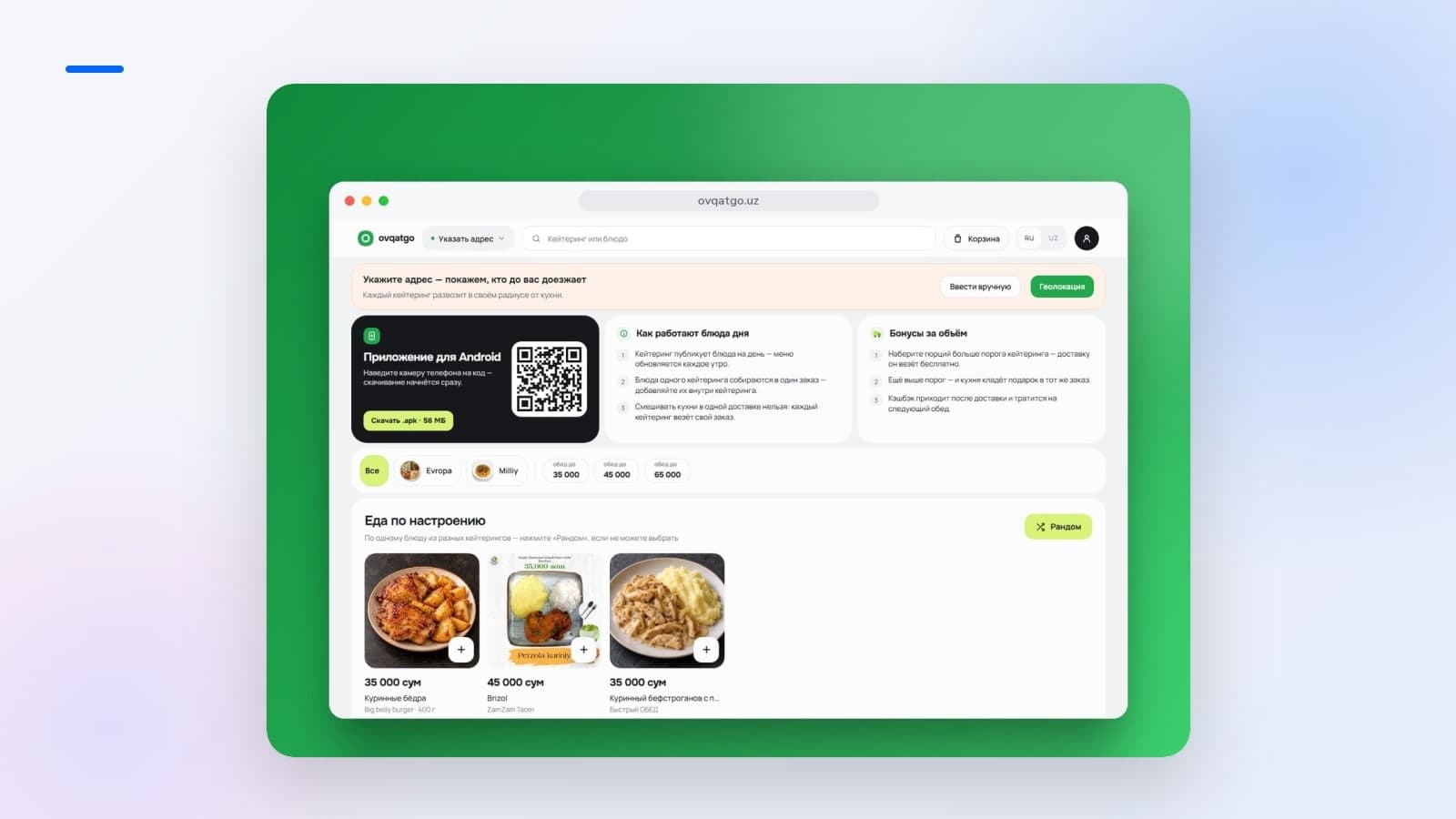
In custom development projects such as the Liboss apparel marketplace and the OvqatGo delivery application, we architect split-payment systems and vendor roles early on. This guarantees financial and fiscal tracking remains stable as platforms expand.
Frequently asked questions
Do I need to buy a cash register to sell on marketplaces in Uzbekistan?
No, buying a dedicated cash register is not required. Uzum Market operates under a commission agreement, meaning the marketplace issues and transmits fiscal receipts to the OFD upon order handover.
Which amount is turnover tax calculated on for Uzum Market sellers?
Turnover tax is calculated on the full retail value of items sold (gross revenue), as specified in the Commission Agent Report. Calculating tax solely on net payouts deposited into your bank account understates the taxable base and invites audit penalties.
What happens if I fail to select the commission flags in soliq.uz?
If you fail to activate both the "Online-KKT" and "Marketplace" checkboxes for Uzum's TIN in my3.soliq.uz, the tax portal cannot link the marketplace receipts to your company. Soliq will automatically issue a formal notice (talabnoma) regarding unrecorded revenue.
What turnover tax rates apply to marketplace sellers?
Effective January 1, 2026, preferential rates for e-commerce were discontinued. Standard turnover tax rates apply: 4% for legal entities (LLC) and 1% for individual entrepreneurs (YATT), assuming annual revenue remains within 12,000 BCV.
If you are expanding your business, developing a custom e-commerce platform, or integrating inventory software with online payment systems, contact our team through the NDC contact page. We engineer architectures that deliver dependable, transparent financial operations.
Sources
- Sellium (операционный партнер селлеров маркетплейсов, Ташкент) · uzfillment.uz
- МойСклад Узбекистан (интеграция для селлеров Uzum Market) · moysklad.uz
- Uzum E-Com — Фискализация расчетов для маркетплейсов
- Личный кабинет Uzum Market: E-imzo, ЭДО и комиссионер на soliq.uz
- Как продавать на Uzum Market: регистрация, налоги и учёт — Azma Finance
- Uzum Market: как зарегистрировать продавца, сколько комиссия и какие налоги — BSS.uz
- Налог с оборота 2026 в Узбекистане — ставки и расчет — Bux Sof