Wholesale Online Store: Development in Tashkent and Cost
Exploring B2B wholesale portal development in Tashkent: why retail shopping carts fail for wholesale, how to sync your site with 1C, and actual costs.
Developing a wholesale online store or B2B portal in Tashkent ranges from 32,000,000 to 80,000,000+ UZS (so'm), with launch timelines between 1 and 8 months depending on the depth of 1C integration and custom pricing logic. Unlike retail websites, a B2B platform functions as a gated dealer portal managing package quantities, supply contracts, and credit limits.
In brief
- A standard retail online store starts at 36,000,000 UZS (so'm), while a portal with role-based access and distributor accounts begins at 52,000,000 UZS (so'm) according to data from redbutton.uz.
- Turnkey solutions on 1C-Bitrix start from 32,000,000 – 35,000,000 UZS (so'm), while complex bespoke B2B platforms require from 30,000,000 to 80,000,000+ UZS (so'm) according to research by orio.uz.
- The core difference of a wholesale platform lies in custom contract pricing, package multiples (MOQ), and debt-based stop-lists synced directly from 1C.
- Two-way integration with 1C:Trade Management or 1C:ERP feeds warehouse stock levels to the portal while sending orders and inventory reservations back to the accounting system without manual entry by managers.
Why retail carts fail in wholesale
Attempting to sell wholesale through standard retail ecommerce engines often causes confusion. In retail, a shopper sees one price, adds three units to their cart, and pays via Payme or Uzcard. In wholesale and distribution, this workflow breaks at the very first step.
For a distributor, every wholesale client buys based on custom tier pricing: a Tier A dealer receives one discount, a sub-dealer another, and a supermarket chain buys off an approved specification price sheet. If dealers see public retail prices or competing discounts, trust in the supplier collapses. Furthermore, wholesale fulfillment often relies on package multiples: you cannot ship single units when products are packed 24 to a factory box.
Accounts receivable creates another hurdle. Wholesale buyers rarely pay by card on a website; they operate on deferred payment terms or pre-approved credit lines. If a partner's reconciliation statement shows overdue debt, the system must automatically block checkout or submit the order for manual manager approval.
Essential features for a B2B portal
A comprehensive wholesale portal contains several core modules designed to eliminate manual manager overhead:
- Gated authentication by Tax ID (INN): wholesale catalog prices remain hidden until business credentials and contracts are verified.
- Multi-tiered pricing and currencies: display custom pricing pulled straight from the client's agreement in 1C.
- Factory packaging increments (MOQ): cart quantity selectors step strictly by units, boxes, or pallets.
- Multi-warehouse stock levels: show live stock and reservations across regional warehouses in Tashkent and regional hubs.
- Dealer account dashboard: allow partners to download reconciliation statements and invoices, track order assembly, and view shipment histories.
- Credit limit enforcement (stop-lists): automated order holds if outstanding balances or overdue debts exceed contract terms.
If you are also building sales analytics and route planning for field reps, consider reviewing our guide on sales dashboards for distributors and compare strategic options in our article on wholesale CRM systems.
Comparing launch options
| Solution type | Timeline | Cost in UZS (so'm) | Best suited for |
|---|---|---|---|
| Catalog with inquiry cart | 3–6 weeks | From 25,000,000 UZS (so'm) based on our experience | Manufacturers with simple price lists and manager-led order processing |
| Standard B2B store (Bitrix) | 1–3 months | From 32,000,000 to 52,000,000 UZS (so'm) | Companies using standard 1C configurations and traditional dealer networks |
| Custom B2B portal | 3–8 months | From 52,000,000 to 80,000,000+ UZS (so'm) | Large distributors with branch networks, complex logistics, and credit limits |
1C integration: how data exchange works
As noted by systems integrator leading.uz, robust B2B integration with 1C:Trade Management or 1C:ERP demands real-time, two-way data exchange. Manually importing Excel spreadsheets becomes unmanageable when handling hundreds of dealers and thousands of SKUs.
Data sent from 1C to the website includes:
- Catalog taxonomy, attributes, SKUs, and units of measurement.
- Inventory levels segmented across regional warehouses.
- Price tiers and customized client agreements.
- Credit limits and outstanding debt balances.
The portal automatically sends back completed orders with inventory reservation flags, selected fulfillment warehouses, delivery addresses, and purchasing notes. Sales managers immediately see the processed document in 1C and can dispatch it straight to the warehouse floor.
If you are just starting
If your wholesale business is taking its first digital steps, avoid commissioning an elaborate six-month ecosystem right away. Excess features drain capital before your sales processes have settled into predictable routines.
- Clean up your 1C product database. Standardize SKUs, base units, packaging tiers, and barcodes. Integrations stall without clean foundational data.
- Launch a simple catalog with cart ordering. A password-protected catalog where dealers select items in box multiples and submit orders for sales review is enough to start. In our experience, this takes 3–5 weeks.
- Skip online payment gateways initially. Bank transfers against commercial invoices and contract terms feel natural to wholesale clients and require zero complex payment processing setups.
A real case: Jahon Invest Plast
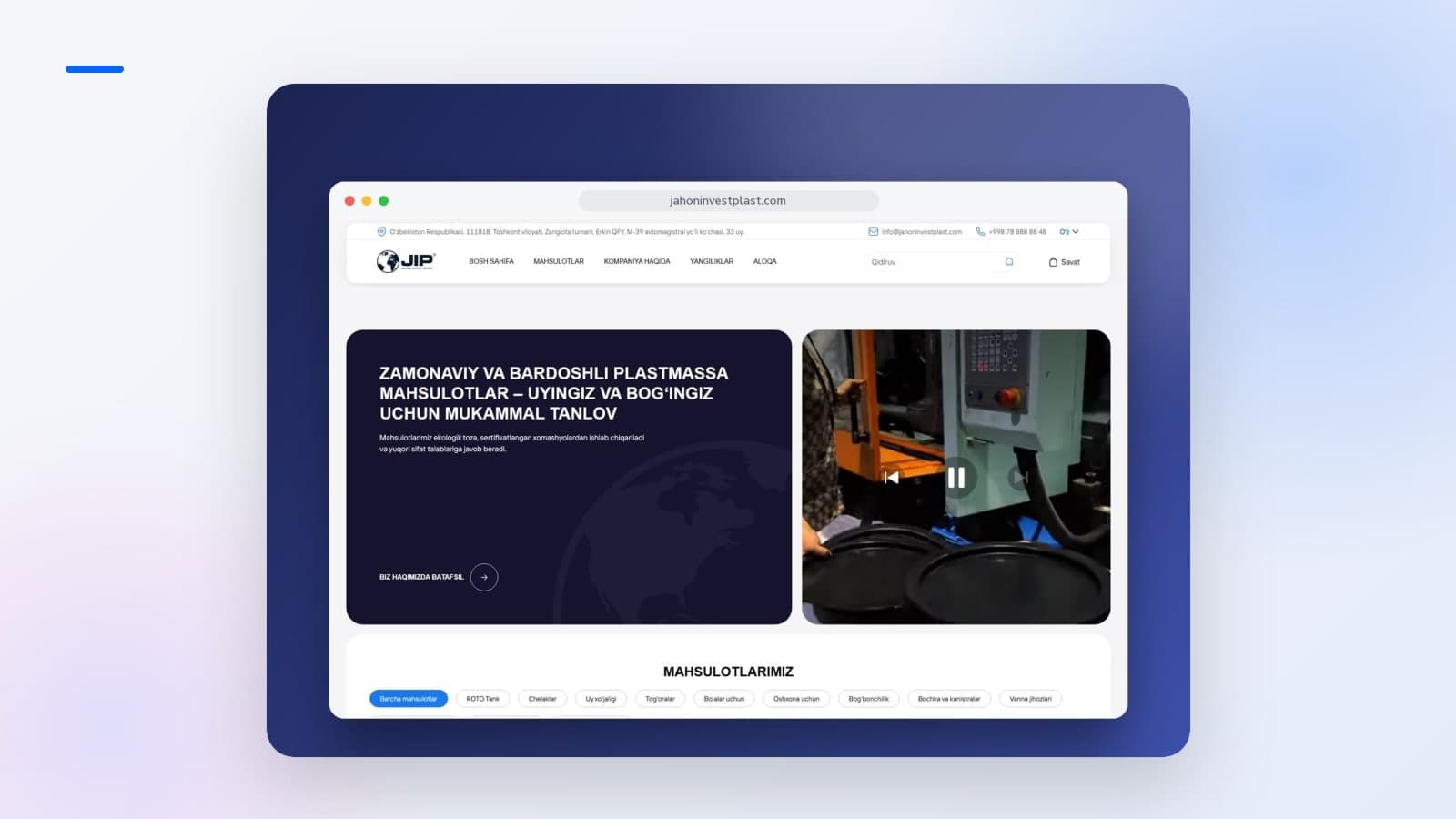
For Tashkent plastic goods manufacturer Jahon Invest Plast, the NDC team created a multilingual product catalog with cart functionality. The company offers hundreds of items across household, kitchen, and garden categories. Wholesale buyers needed a fast way to browse offerings and check exact dimensions alongside box pack counts.
We structured intuitive product cards displaying product dimensions and packaging specifications clearly. Orders are assembled through a shopping cart, with full localization across Uzbek, Russian, and English. The client manages catalog updates and specifications directly through the CMS without relying on developers.
If your business is already running
If you oversee an active distributor network with dozens of regional partners and sales reps who spend four hours a day taking orders over Telegram and checking warehouse balances, you need a dedicated B2B portal. According to digital agency redbutton.uz, establishing a B2B portal with dealer dashboards and 1C integration in Tashkent starts at 52,000,000 UZS (so'm), while custom web platforms can reach 80,000,000+ UZS (so'm) per data from orio.uz.
How to transition clients to the portal without disrupting fulfillment:
- Set up exchange via CommerceML or API. Connect the portal to 1C to sync stock levels on an automated schedule every 10–15 minutes, pushing new orders into your accounting software instantly.
- Standardize fulfillment business rules. Configure minimum order quantities (MOQ), package multiples, and checkout freezes for accounts with overdue invoices directly in portal logic.
- Onboard partners in cohorts. Start with 5–10 trusted, high-volume dealers. Gather usability feedback, refine interface bottlenecks, and then roll access out across your wider client base.
A real case: Ikarvon
Tashkent power tools and construction equipment supplier Ikarvon previously handled orders manually through their Usta Shirin street warehouse and fragmented communication channels, which overwhelmed account managers. According to developer alfalab.uz, the company launched an ecommerce platform featuring an 18-category catalog, SKU-based search, and distinct ordering paths for retail versus wholesale buyers. Consequently, the business shifted round-the-clock deliveries across Uzbekistan straight from warehouse stock, reducing manual order entry time.
A real case: KORRUS-TECH Asia
Road-building equipment distributor KORRUS-TECH Asia serves industrial enterprises across Uzbekistan, Kazakhstan, and Central Asia. The company needed a unified customer interaction channel. As reported by developer web-solutions.by, they implemented a 1C-Bitrix B2B portal featuring industry-tailored catalogs and personalized service workflows. This consolidated regional sales channels, prevented manager ordering errors, and unified request processing.
Frequently asked questions
How much does wholesale online store development cost in Tashkent?
A standard wholesale store built on 1C-Bitrix with accounting integration starts from 32,000,000 – 35,000,000 UZS (so'm) per data from oe.uz. A dedicated B2B portal with custom contract pricing, credit holds, and dealer accounts runs from 52,000,000 to 80,000,000+ UZS (so'm) according to figures from redbutton.uz and orio.uz.
Can we hide prices from unauthorized visitors?
Yes, this is standard practice for wholesale portals. Unregistered visitors only see a public product overview or corporate profile. Pricing, warehouse stock figures, and add-to-cart actions unlock only after legal entity verification by an administrator.
How does the B2B portal identify which price to show each dealer?
When a dealer signs in, the platform maps their account to their counterparty record in 1C. The site pulls the exact price column or custom commercial contract tied to that partner in the accounting system, ensuring every client views their agreed rates.
What happens if a wholesale buyer has overdue debt?
During checkout, the site checks live settlement balances in 1C. If the overdue balance or unpaid period exceeds the limits outlined in their contract, the portal displays an account warning and suspends checkout until the balance is resolved.
If you want to launch a wholesale ordering platform or sync online sales with your accounting back end, visit our online store development service page or reach out via our contacts. We will evaluate your business processes and recommend an efficient, cost-effective setup.
Sources
- Ikarvon (ikarvon.uz) · alfalab.uz
- КОРРУС-ТЕХ Азия (korrus-asia.com) · web-solutions.by
- Веб-разработка в Узбекистане: интернет-магазины и B2B-порталы — RED BUTTON
- Сколько стоит сделать сайт для бизнеса в Узбекистане — ORIO
- Разработка интернет-магазинов в Ташкенте — OE.UZ
- Синхронизация 1С с интернет-магазином и маркетплейсами — Leading.uz