Website development mistakes in Tashkent: 8 cost estimate traps
Why website development estimates double or triple: breaking down eight hidden costs in Uzbekistan and how to lock in your budget before signing a contract.
A web development estimate can easily double or triple when the contract outlines vague task descriptions instead of clear deliverables, missing out on page structures, finished copy, and technical integrations. In 2026, baseline pricing for website development in Tashkent starts from 1.5–5.9 million UZS (so'm) for a landing page to 10–36 million UZS (so'm) for an online store. However, unaccounted-for infrastructure, catalogue population, and localization quickly push initial budgets higher. You can lock in your final budget with a comprehensive technical specification that defines milestones and secures your ownership of the domain and source code.
In brief
- Offers under 3 million UZS (so'm) are typically bare-bones templates lacking mobile responsiveness, copy, and foundational optimization.
- Registering a .UZ domain costs 34,000 UZS (so'm) per year, local server hosting in Uzbekistan runs from 34,000 to 284,000 UZS (so'm) per month, and ongoing technical support starts from 1,000,000 UZS (so'm) monthly.
- Major hidden expenses include copywriting, Uzbek translations, product photography, and fiscalized online payment integrations.
- Unless functionality and architecture are milestone-defined in your contract, extra revisions are billed at hourly rates and can delay launch dates by months.
8 budget traps that inflate project estimates
In our experience, clients rarely face deliberate dishonesty. Unexpected costs usually stem from unspoken assumptions: a business owner assumes an essential feature is included by default, while the agency scopes purely for raw code.
1. Estimating costs without finalized content
Developers will not write persuasive copy about your services or photograph your inventory unless explicitly budgeted as separate line items. Once the structural framework is delivered, businesses often find themselves with an empty shell: copywriting, photography, and layout formatting are still needed. Consequently, projects stall for months while external content creator fees add up.
2. Overlooking dual-language versions (RU / UZ)
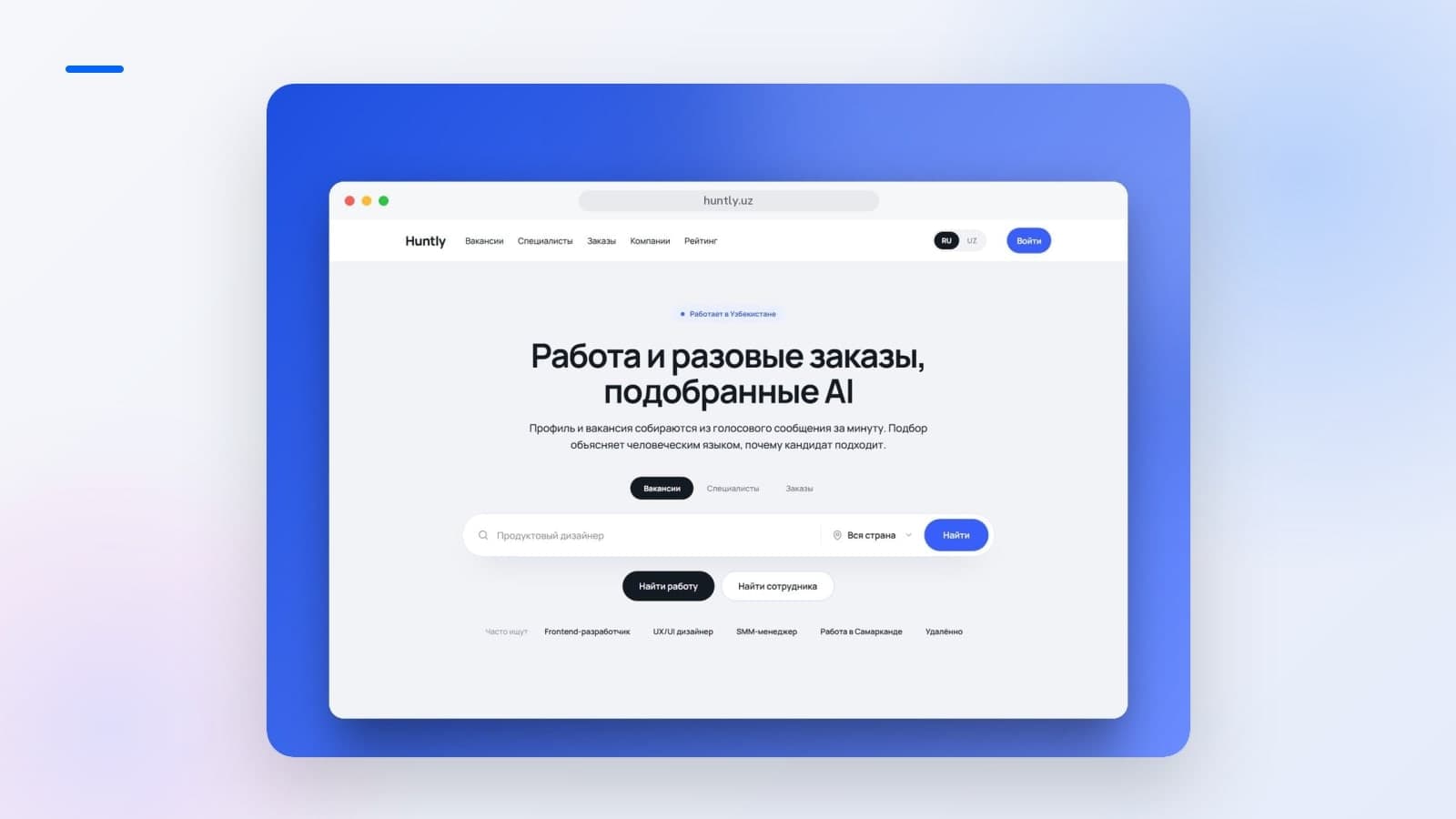
Reaching a broad audience in Uzbekistan requires at least two complete language versions. Assuming an Uzbek version is just a simple language switch button is a mistake. A second language doubles the workload for layouts, content population, and interface testing. In NDC's own product—the job platform Huntly—support for Russian and Uzbek was built into the core architecture from day one, covering voice message processing and automated user journeys across the app and Telegram bot. Attempting to bolt localization on as an afterthought forces developers to rebuild database architectures.
3. The misconception of free hosting and domain names
Domain registration and server infrastructure are outside an agency's labour costs. According to the official CCTLD.UZ registry, which holds over 182,600 domains, registration for a .UZ address is set at 34,000 UZS (so'm) per year. Renting local shared hosting within Uzbekistan data centres on Tas-IX/UZ-IX traffic networks, based on UzCloud pricing, ranges from 34,000 to 102,000 UZS (so'm) per month (408,000 – 1,224,000 UZS (so'm) annually). For a high-traffic store, a VPS/VDS will cost upwards of 284,000 UZS (so'm) per month. These are regular overheads every business must maintain.
4. Omitted integrations: payments, delivery, and fiscalization
A checkout button for Payme or Click requires far more than a basic link; it needs two-way server integration that generates compliant electronic receipts. Connecting payment gateways, courier APIs, or external databases is frequently billed as a standalone milestone. If these components are left out of your initial scope, expect supplementary invoices.
5. Missing responsive and cross-browser design
Over 80% of commercial web traffic in Tashkent originates from mobile devices. If your contract lacks explicit responsive design standards, an agency might hand over a site that only displays properly on laptop screens. Reworking code for smartphones and tablets after launch regularly adds 40–50% on top of your original budget.
6. Overlooked legal requirements
Under Article 27-1 of the Law of the Republic of Uzbekistan "On Personal Data" No. ZRU-547, collecting customer details via lead forms legally obligates website owners to obtain user consent and store this data securely on domestic servers. Omitting consent checkboxes, links to public offers, or privacy policies creates compliance risks and requires paid interface updates.
7. Forgoing post-launch technical maintenance
Once live, websites demand regular database backups, uptime monitoring, security certificate renewals, and bug fixes. According to the digital agency enzora.uz, baseline technical support in Tashkent starts from 1,000,000 UZS (so'm) per month. If your company lacks in-house developers, include these retainers in your operating budget right from the start.
8. Letting agencies register domains and accounts in their name
A frequent operational mistake is allowing a freelancer or contractor to register domains and hosting accounts under their personal details. If that contractor becomes unavailable, your company risks losing control over its web address, domain authority, and corporate mailboxes.
Current budget benchmarks in Tashkent
Evaluating vendor quotes objectively requires an understanding of standard price bands. According to web agency market research from Tipa, realistic base development figures for 2026 break down as follows:
| Project type | Development cost | Typical timeline | Best suited for |
|---|---|---|---|
| Single-page site (landing page) | 1.5 – 5.9 million UZS (so'm) | 3 – 14 days | Testing new offers, seasonal campaigns, single target audiences |
| Corporate website | 6.0 – 17 million UZS (so'm) | 12 – 21 days | B2B companies, manufacturers, professional services |
| E-commerce store with catalogue | 10 – 36+ million UZS (so'm) | 14 – 40 days | Retailers, direct consumer sales for standard product lines |
Custom corporate website development covers company presentation and initial lead generation. However, once business requirements introduce client portals or automated checkout calculations, architectural scope expands significantly.
If you are just starting
When you are validating market demand, spending tens of millions on an enterprise portal makes little financial sense. Early-stage development mistakes in Tashkent typically stem from trying to launch every feature at once.
- Define one core objective for your web presence: an inbound call or a consultation request. Postpone complex user portals, dynamic pricing calculators, and deep product filters for future updates.
- Register your own .UZ domain directly through an accredited registrar (34,000 UZS (so'm) per year) and open hosting accounts under your registered legal entity.
- Write draft copy and gather product photography before speaking with agencies. Outline your service offerings clearly in plain language.
- Set aside an initial budget between 3 and 6 million UZS (so'm) for a clean landing page or business card site. Plan for a 7–14 day delivery timeline.
A real case: hiring an unvetted freelancer
A Tashkent entrepreneur commissioned a local service website from an independent freelancer for 2 million UZS (so'm) without a detailed scope or written contract, hoping to launch ahead of peak season. The freelancer delivered a non-responsive, generic template, withheld source files, stopped answering calls, and registered the domain under their own passport. As documented by agency orio.uz, the business lost their 2 million UZS (so'm) advance and 1.5 months of lead time. Ultimately, the site had to be rebuilt from scratch with clear specifications, a binding contract, and the domain registered to the client's company.
If your business is already running
For established operations, the main priority is protecting ongoing sales during platform migrations and avoiding budget sprawl when connecting back-office software.
- Map your operational data flows: where incoming leads route (1C, CRM, Telegram, email), who manages warehouse inventory counts, and how client billing is generated.
- Decouple core site features from third-party add-ons. If an accounting sync involves non-standard logic, schedule it for Phase 2 once your primary catalogue is stable. For workflows with multi-step fulfilment, integrated CRM development and automation connects inbound traffic directly with sales teams.
- Establish clear content management responsibilities: verify whether your staff can handle page updates, or ensure your team gets a straightforward administrative panel that doesn't rely on coders.
- Anticipate budgets between 12 and 25 million UZS (so'm) alongside an implementation schedule of 4 to 6 weeks for a secure, modular platform.
A real case: a scalable catalogue for Bonito
Textile brand Bonito needed a corporate web presence with product showcases serving both wholesale accounts and retail shoppers. The primary challenge was preventing scope creep while planning for recurring seasonal collections and multiple languages. As detailed in the case study by Alfalab, the project was delivered in 14 days under a fixed corporate rate (starting from 17 million UZS (so'm)). Structuring modular catalogue sections and an intuitive administration dashboard allowed the brand's in-house team to update product lines independently without ongoing developer fees.
A real case: automated client accounts for YUMECS
International parcel forwarding company YUMECS helps customers order from overseas retailers through consolidation warehouses across the United States, United Kingdom, China, and Germany. Early on, account balances, exchange rates, and shipment milestones were handled manually by customer service staff. The NDC team engineered a dedicated client web portal backed by internal process automation: user balances recalculate against central bank rates, monthly customs thresholds are tracked automatically, and parcel status alerts dispatch straight to a Telegram bot. Structured data protocols enabled the business to support thousands of active shoppers without growing support headcount.
Pre-contract budget checklist
Before transferring any project deposits to an agency or independent contractor, verify their quote against these six parameters:
- Scope and page count: The exact tally of unique layout templates and inventory depths is explicitly documented.
- Content ownership: Roles are assigned for copywriting, product catalogue population, and Uzbek translation work.
- Asset ownership: Domain names, hosting logins, and raw source files transfer to your organization upon milestone completion.
- Device responsiveness: Performance standards across smartphones, tablets, and desktop browsers are defined in the technical brief.
- Third-party connections: Every integrated service is itemized (payment gateways, SMS providers, Telegram bots, accounting suites).
- Warranty terms: A post-launch bug resolution period is defined in writing (typically 14 to 30 days after deployment).
Frequently asked questions
Why does custom website development cost more than visual page builders?
Visual builders serve entry-level goals well, but they quickly hit limits with architectural scale, unique backend connections, and search engine optimization. Custom engineering guarantees optimized load performance, suits local business practices in Uzbekistan, and interfaces with regional platforms without recurring foreign subscription fees.
What are the most common hidden costs in web development?
Companies most frequently overlook ongoing hosting and domain registrations (starting from 450,000 UZS (so'm) per year), copywriting and translation fees, fiscalized payment processing, and ongoing technical support (from 1,000,000 UZS (so'm) per month). Leaving these out of initial planning results in mid-project budget increases.
What is the average cost to build a website in Tashkent?
In 2026, prevailing rates in Tashkent range from 1.5–5.9 million UZS (so'm) for a landing page, 6 to 17 million UZS (so'm) for a standard corporate portal, and 10–36 million UZS (so'm) for an integrated e-commerce store. Total project cost depends on content volume, language options, and backend complexity.
If you are planning an upcoming project or want an objective review of an existing proposal, reach out via our contacts page. We will help you identify what is genuinely required for launch and where expenses can be reduced without risk.
Sources
- Локальный сервис услуг (клиентский кейс Orion Studio) · orio.uz
- Текстильный бренд Bonito (кейс агентства Alfalab) · alfalab.uz
- Сколько стоит сайт в Ташкенте: цены 2026 — Типа агентство
- Цены на разработку сайтов в Ташкенте — Alfalab
- ТОП-10 ошибок при заказе сайта в Ташкенте — Sayt-Tashkent
- Цены на облачные серверы и хостинг в Узбекистане — UzCloud
- Администрация национальной доменной зоны .UZ — CCTLD.UZ
- Закон Республики Узбекистан «О персональных данных» — Lex.uz
- enzora.uz