Wholesale CRM in Tashkent: SFA, 1C, or a B2B Bot
A practical guide for wholesale companies in Uzbekistan: comparing SFA systems, 1C setups, and B2B order bots to cut overhead and track field sales.
A typical office CRM simply will not cut it for a distributor or wholesale business in Tashkent. Field reps require offline order entry and GPS check-ins, the warehouse demands real-time stock reservations in 1C, and leadership needs tight control over accounts receivable. Companies usually face three paths: adopting a ready-made SFA app on a monthly subscription, customizing a standard "1C:Trade Management" deployment with mobile clients, or building a dedicated B2B portal with a Telegram bot—where pilot implementations typically start from 10–25 million UZS (so'm) delivered in 14 days, according to regional integrators.
In brief
- Standard sales pipelines fail to solve distribution challenges: field reps need offline mode and mandatory GPS check-ins at each retail outlet.
- A base license for "1C:Trade Management for Uzbekistan" (PROF) costs 6,018,000 UZS (so'm), while a 5-user pack adds another 6,018,000 UZS (so'm) (as of November 2026).
- Accepting repeat replenishment orders directly from retail shops via a portal or Telegram cuts daily order processing from 4 hours down to 40 minutes.
- Teams with up to 5 reps do best starting with off-the-shelf software or a basic 1C bot, while companies with 15–20+ reps see custom B2B tools pay for themselves by cutting recurring subscription fees.
Why standard CRM software fails wholesale operations
Most commercial CRM tools are built around protracted office-based deal cycles: an account manager calls a prospect, emails a proposal, and closes a deal weeks later. FMCG distribution runs on an entirely different rhythm. A single field rep visits 15 to 30 retail shops every day, frequently dealing with basement outlets where mobile internet drops out completely. Within three minutes, the rep needs to confirm available stock, verify the store's outstanding balance, draft an order, and push it directly to the warehouse.
When an agent cannot book an order offline, they revert to pen and paper. Back at the office, dispatchers waste hours typing orders by hand, mixing up SKUs, and releasing shipments to retail accounts that have already blown past their credit limits. To fix this bottleneck, distributors turn to dedicated SFA software (Sales Force Automation) or integrate their back-office accounting directly into automated B2B ordering channels.
Comparing your options: SFA apps, 1C, and custom B2B bots
The right architecture depends on your field team size, reorder volume, and who submits the order: your rep in the store or the retail shopkeeper directly.
| Parameter | Off-the-shelf SFA | 1C:Trade Management | B2B CRM + Telegram bot |
|---|---|---|---|
| Primary purpose | Field rep oversight, route tracking, and retail visits | Warehouse, financial, and batch accounting | Direct 24/7 reordering by retail shops without rep intervention |
| Offline capability | Yes, built on an offline-first architecture | Limited (demands a stable database connection) | No (requires network access for Telegram or Web) |
| GPS visit verification | Built-in (geofence validation per store) | Requires custom mobile development | Optional (via messenger live location sharing) |
| Licensing costs | Ongoing monthly subscription per agent | From 6,018,000 UZS (so'm) for the base PROF license | From 10–25M UZS (so'm) per project, zero monthly software fees |
| Time to launch | 1–3 weeks | 3–6 weeks for adaptation | From 14 days for a working pilot |
According to regional franchise pricing as of November 2026, the base license for 1C:Trade Management for Uzbekistan PROF (single user) stands at 6,018,000 UZS (so'm). A 5-user client pack costs an additional 6,018,000 UZS (so'm), while a 10-user pack runs 11,176,000 UZS (so'm). Meanwhile, specialized platforms like Smartup SFA serve over 800 enterprises across Central Asia with more than 28,000 daily active users, where offline-first reliability and GPS visit tracking are non-negotiable requirements.
At the same time, regional integrators like Cloudplus in Tashkent note that deploying a proprietary B2B CRM synced to 1C—complete with full source code ownership—starts at 10–25 million UZS (so'm) for an operational pilot. For growing distributors, owning the software outright is often far more cost-effective than absorbing compounding monthly seat fees for dozens of reps.
If you are just starting
If you manage fewer than 3–5 field reps, running an extensive custom development project or investing in enterprise server racks is unnecessary overhead. Here is what you can execute this week:
- Clean up your product catalog. Build a single, standardized master SKU list with item codes and baseline inventory figures in 1C or a clean spreadsheet. Without unified product master data, software only accelerates warehouse fulfillment mistakes.
- Set strict credit rules. Establish clear trade credit boundaries: for instance, automatically halting fresh dispatches to any retail outlet carrying balances older than 14 days or exceeding your agreed credit ceiling.
- Adopt a cloud-based mobile app. Subscribe to an off-the-shelf field agent app for a few months. This lets you map physical retail accounts, organize sales territories, and test route enforcement without heavy upfront capital.
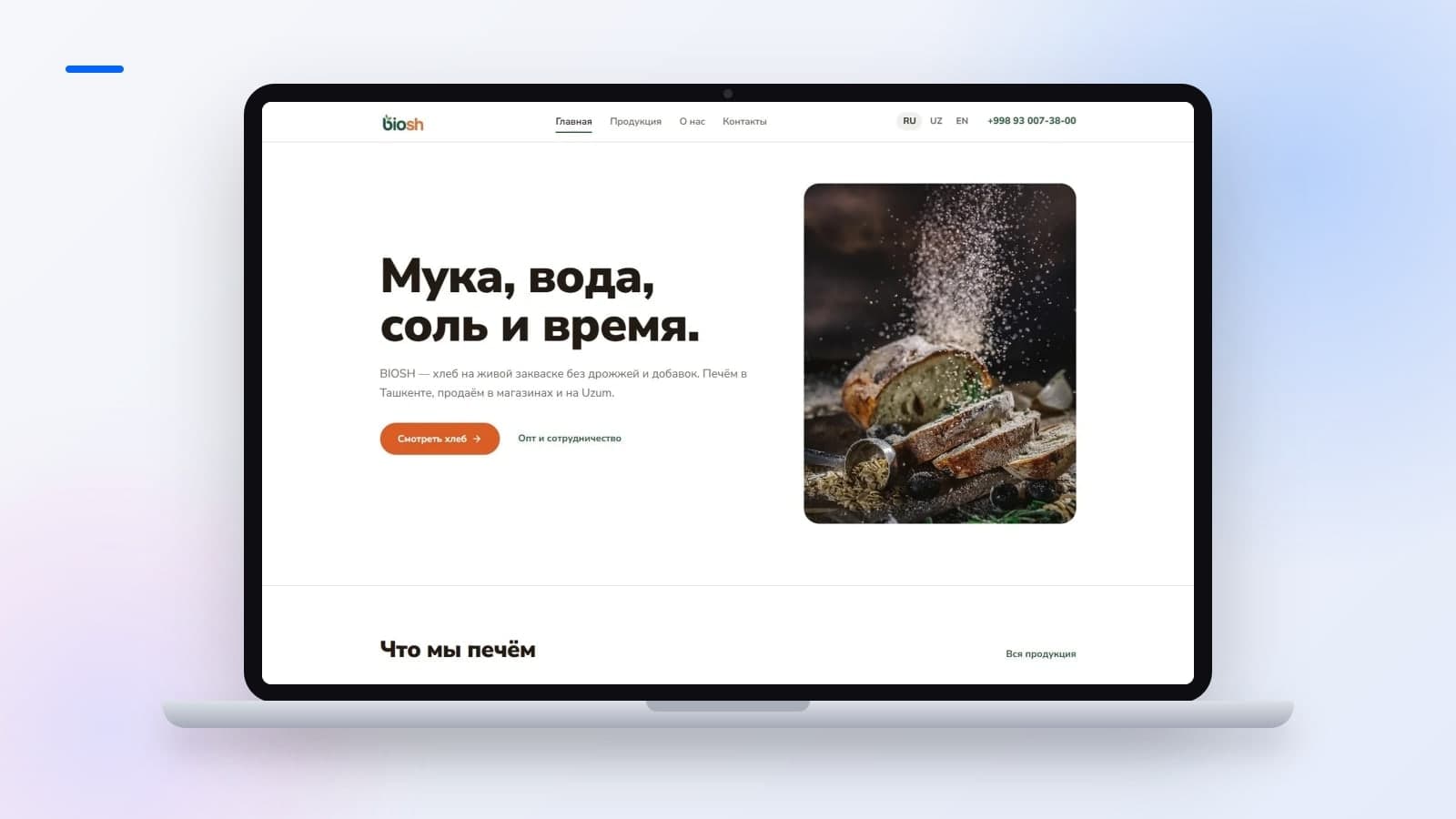
- Provide an easy direct order channel. If store owners place regular repeat orders themselves, set up a simple digital order sheet or product portal. For example, for the artisanal bakery BIOSH, we designed a trilingual wholesale ordering portal featuring wholesale commercial terms, transparent pricing, and instant contact routing.
If your business is already running
Once your sales operation scales past 10 field agents, hundreds of active retail stores, and a centralized warehouse, manual order entry strains working capital. Companies hit two main friction points: ballooning monthly software subscriptions and back-office staff drowning under manual re-keying from messaging apps into 1C.
Here is an upgrade roadmap you can begin rolling out this week without disrupting daily shipments:
- Make your accounting core the single source of truth. Inventory levels, allocated reserves, and trade pricing must live inside 1C or your primary database. External channels should only retrieve this data and return finalized sales orders via API.
- Deploy a direct ordering channel for retail stores. Move regular replenishment orders to self-service portals or Telegram bots. This frees field reps from acting as passive order-takers, letting them focus on visual merchandising, shelf share, and onboarding new stores.
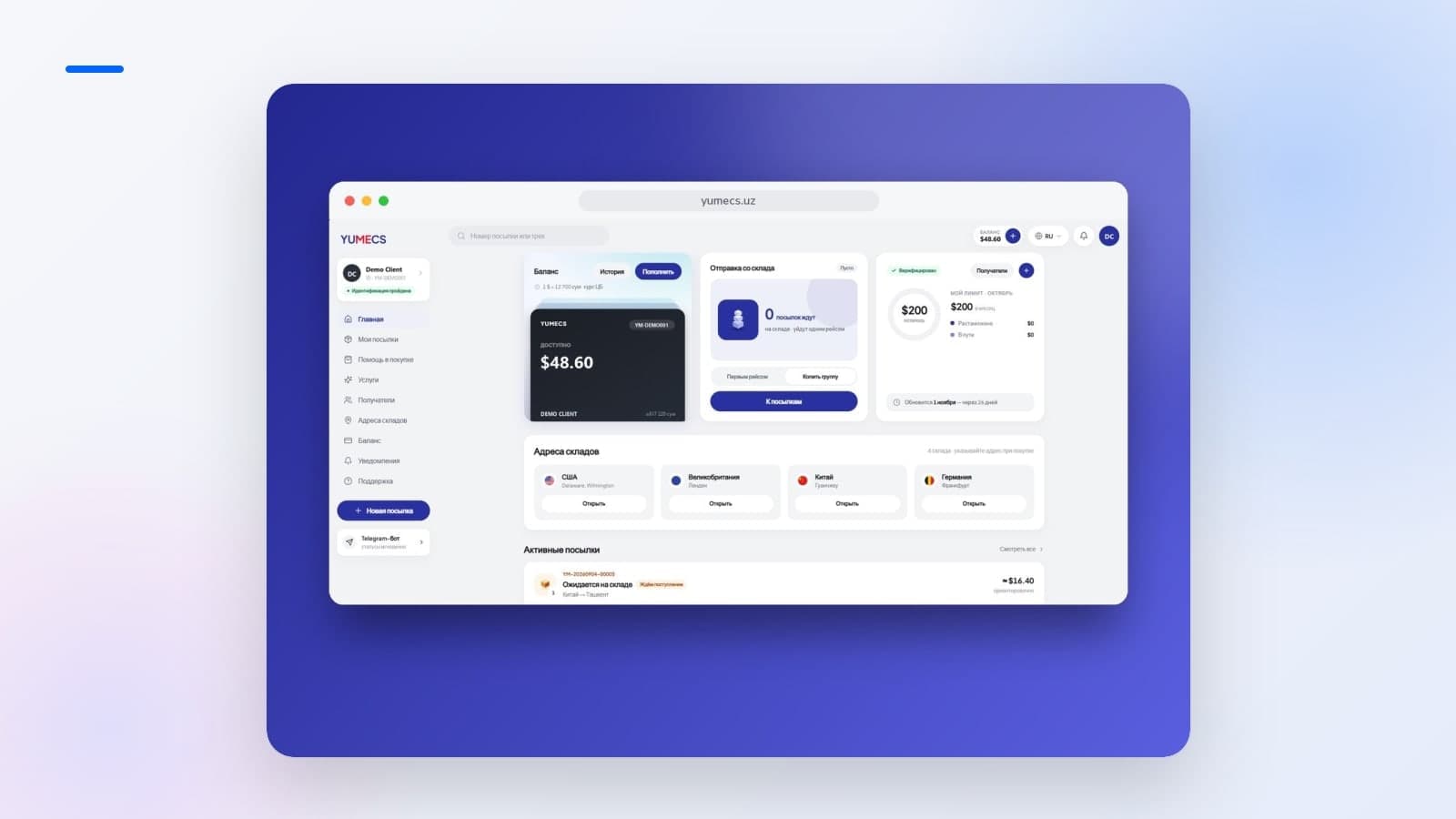
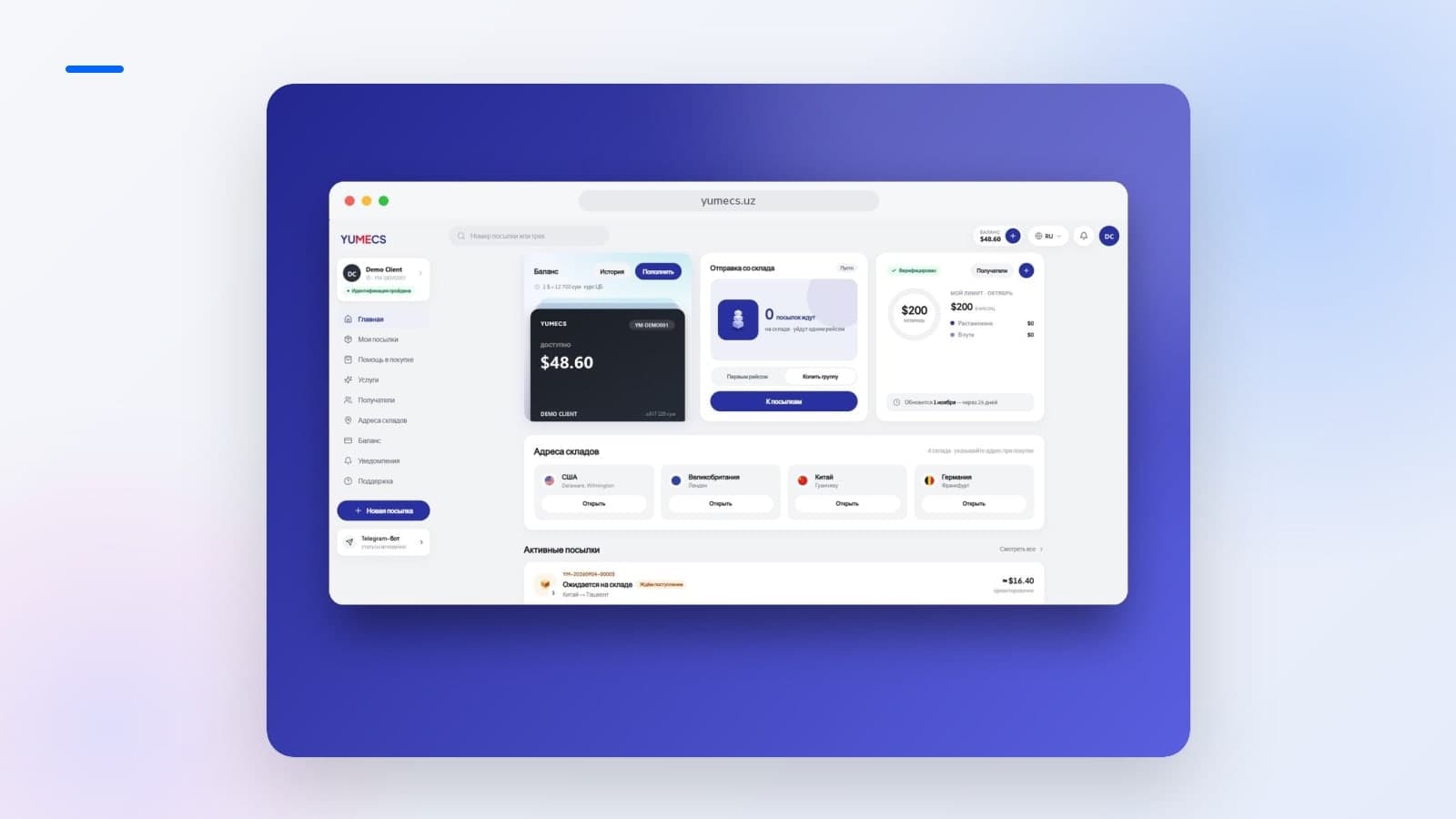
- Automate debt holds. Enforce hard system blocks preventing new order creation for any account with past-due balances or exceeded credit limits. In our work building complex operational platforms—such as the customer portal for international logistics provider YUMECS—real-time account balances and automated Telegram milestone alerts completely eliminated repetitive status inquiries to sales reps.
- Roll out in phases across territories. Start by launching the system in a single sales district or route during week one. Fine-tune warehouse order reservations, iron out edge cases, and then scale across your wider distribution network. Discover our delivery framework on our dedicated CRM development and implementation page.
A real case: Sayonar
An Uzbek food distributor was struggling with operational friction between field sales and fulfillment: mobile orders were disconnected from delivery routes, sales metrics reached leadership with chronic delays, and point-of-sale cash collections frequently clashed with open accounts receivable.
The company rolled out an offline-capable mobile SFA solution. Field reps began tracking assigned routes and must-have SKU assortments in the app, logging retail cash collections on the spot, and feeding verified data directly into executive sales reports. As a result, the distributor closed the operational gap between order intake and dispatch, securing end-to-end visibility over receivables and payments in real time (Sayonar case study on smartup24.com).
A real case: Baraka Distribution
An FMCG distributor in Uzbekistan faced severe bottlenecks in its order processing department: managers spent up to 4 hours every day manually transcribing orders from phone calls and messaging chats into 1C, sparking invoice discrepancies and delayed truck runs.
By deploying a 24/7 direct digital ordering platform fully integrated with warehouse stock, the company empowered retail stores to submit replenishment orders around the clock. This cut manual order handling from 4 hours down to 40 minutes per day and drove a 40% sales increase within the first 6 months of operation (Baraka Distribution case study on smartup24.uz).
Frequently asked questions
Which is better: an off-the-shelf SFA or a custom-built solution?
For teams with 5 to 10 agents, an off-the-shelf subscription or standard 1C setup is almost always more cost-effective. Once your team grows to 20 or more field reps, recurring license costs quickly catch up to the price of custom software development—which carries zero per-seat fees and conforms exactly to your company's operating workflows.
Why do field agents need an offline mode in their mobile app?
Basement retail shops, dense commercial markets, and outlying regions frequently have weak or nonexistent cell coverage. An offline-first app ensures reps can view catalogs, calculate customer-specific trade discounts, compile orders, and log GPS check-ins without internet access. The moment the device reconnects to a network, all pending orders instantly sync to the warehouse.
Can a Telegram B2B bot replace field sales reps entirely?
In wholesale FMCG, completely eliminating field reps is unrealistic: reps are essential for managing shelf space, negotiating product placement, and building store relationships. However, a Telegram bot or web portal is exceptionally effective at automating repetitive reorders from existing accounts, slashing back-office dispatch overhead several times over.
Looking to streamline wholesale fulfillment, connect Telegram to your inventory systems, or gain clear visibility over your field sales team? Reach out via our NDC contact page. We will review your current fulfillment workflows and design a lean, cost-efficient solution for your business.
Sources
- Sayonar (дистрибуция продуктов питания, Узбекистан) · smartup24.com
- Baraka Distribution (оптовые поставки FMCG в торговые точки, Узбекистан) · smartup24.uz
- Smartup SFA & DMS — автоматизация дистрибуции FMCG в Центральной Азии
- One King — 1С:Управление торговлей для Узбекистана: официальные цены и внедрение
- Cloudplus — CRM-системы и автоматизация торговли и дистрибуции в Ташкенте