E-Commerce SEO in Tashkent: Catalog Structure, Languages, and Budget
How to get your online store to rank at the top of Google and Yandex in Uzbekistan: faceted filters, a bilingual semantic core (uz/ru), protecting out-of-stock pages from 1C, and realistic budgets in UZS (so'm).
To get an online store to rank at the top of Google and Yandex in Tashkent, you need to optimize your catalog architecture for faceted navigation, build parallel landing pages in Uzbek and Russian, and keep product pages active even when stock updates. Monthly retainer budgets for search optimization across medium and large online stores run between 9,000,000 and 12,000,000 UZS (so'm) per month, with measurable sales growth typically emerging after 3 to 5 months of continuous optimization.
Quick Take
- Monthly SEO retainers for online stores in Tashkent start at 9M UZS (so'm) for catalogs with up to 5,000 pages and 12M UZS (so'm) for larger platforms (Optimize.uz).
- In Uzbekistan's e-commerce landscape, an organic search lead costs around $0.60, compared to $1.50–$2.50 from targeted social media ads (Wunder Digital).
- The biggest organic traffic driver for e-commerce websites is indexable filter combinations (such as "brand + category" or "feature + intent").
- The Uzbek version requires its own dedicated semantic core in both Latin and Cyrillic scripts, not automated product card translations.
- A .UZ domain costs between 25,000 and 35,000 UZS (so'm) per year (Optimize.uz), and local top-level domains offer an inherent advantage in regional search rankings.
What Holds Online Stores Back in Organic Search
Most e-commerce business owners run into the same roadblock: thousands of products are live, paid ad campaigns are spending money, but organic search delivers virtually zero visitors. The root cause usually lies in core technical issues with the e-commerce platform. Search engine crawlers see either empty category templates or an endless loop of duplicate products accessible under conflicting URLs.
The second major blind spot is neglecting local Uzbek-language search demand. Shoppers across the country are increasingly looking up products in Uzbek, using both Latin and Cyrillic script. If your store only offers a Russian interface or relies on machine translation without target keywords, you are missing out on up to half of your potential customer base across Tashkent and the regions.
Catalog Architecture: Faceted Search and Filters
Shoppers rarely search for broad terms like "buy air conditioner." They enter specific queries: "inverter AC 12 for bedroom" or "automatic 7 kg washing machine discount." To capture this demand, your catalog structure needs to generate dedicated, indexable landing pages for specific attribute combinations.
Faceted navigation lets shoppers filter items by criteria like brand, color, wattage, size, and type. When optimized, high-demand combinations turn into static pages with clean URLs, unique H1 tags, and dedicated meta tags.
- What to index: High-intent combinations backed by search volume (for instance, "category + brand" or "category + key attribute").
- What to block from indexing: Utility sorting options ("price: low to high," "newest"), combinations with three or more minor filters applied, and out-of-stock filter views, so you do not waste crawl budget.
- Canonical URLs: For product listings appearing across multiple subcategories, set an explicit rel="canonical" tag pointing to the master URL to stop search engines from flagging duplicate content.
Multilingual Setup: Uzbek and Russian Without Dropping Rankings
Running search engine optimization in Uzbekistan demands fully separate linguistic structures. Switching site copy dynamically via client-side JavaScript is not enough; Yandex and Google crawlers need distinct, clean URLs for each language.
In our experience, the cleanest architecture places the language identifier in the URL path (such as /uz/ for Uzbek and the root domain for Russian, or symmetrical /ru/ and /uz/ paths). Connect corresponding pages using rel="alternate" hreflang="uz" and hreflang="ru" tags. This explicitly signals which version to serve based on the user's search query and browser preferences.
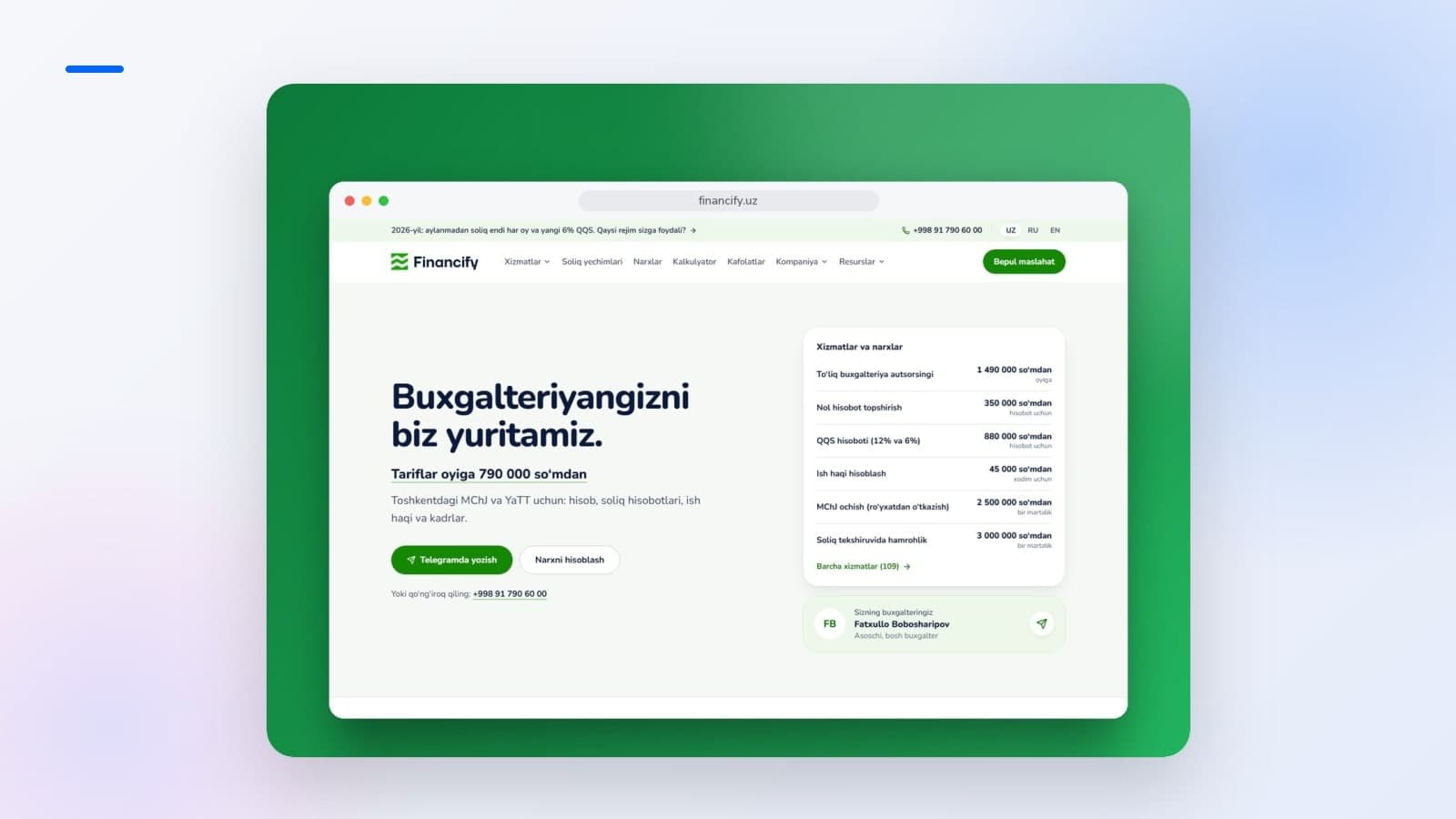
When building multilingual platforms—such as our corporate work on Financify or the travel portal for Khaleedj Travel—we segregate metadata and content hierarchies within the CMS to prevent localized pages from dropping out of the index during language switches.
1C Integration and Safeguarding Product URLs
Most e-commerce operations in Uzbekistan integrate their storefront directly with 1C or an equivalent inventory management system. When an item runs out of stock, many automated setups simply wipe the page or serve a 404 error. This destroys organic visibility: the moment a page disappears, Google and Yandex de-index it.
The golden rule of technical e-commerce SEO: pages for temporarily out-of-stock items must stay live and return a 200 OK status code. Simply disable the purchase button, label the product as "Out of Stock," and suggest alternative or related models. If an item is permanently discontinued, implement a 301 redirect to its parent category or the modern replacement model.
Comparing Approaches to E-Commerce SEO
| Criteria | Basic Contractor SEO | Comprehensive Technical SEO |
|---|---|---|
| Scope of work | Basic meta-tag edits, rented backlinks, generic blog posts | Catalog architecture, faceted page generation, hreflang tags, schema markup, site speed optimization |
| Language support | Russian only | Bilingual semantic core (Russian + Uzbek Latin/Cyrillic) |
| Monthly budget | 4,000,000 to 6,000,000 UZS (so'm) | 9,000,000 to 12,000,000 UZS (so'm) (Optimize.uz) |
| Break-even timeline | Low (rankings remain unstable) | 4–6 months with sustainable organic gains |
| Best fit for | Boutiques under 100 SKUs | Online catalogs from 500 to tens of thousands of SKUs |
If you are just starting
If you are launching a brand-new online store, avoid pouring your initial marketing budget into bulk backlink packages. Focus on solid technical foundations and clean site architecture instead.
- Register a local domain. A .UZ domain costs between 25,000 and 35,000 UZS (so'm) per year (Optimize.uz). All else being equal, local domains rank higher in local Uzbek search queries than generic international domains.
- Map out a starter keyword core. Identify how shoppers search for your products in both Russian and Uzbek. Configure programmatic Title and Description tags based on a clear formula: "[Product Name] — buy in Tashkent, price, delivery."
- Implement Schema.org structured data. Applying Product and Offer schema lets Google display live prices and in-stock badges directly in search snippets, dramatically lifting click-through rates.
- Claim local business profiles. Set up Google Business Profile and Yandex Business listings. Local shoppers frequently favor online stores that display verified pickup points or office addresses on the map.
For a new launch, technical setup and core website SEO optimization can be handled within your standard build budget, provided your platform is engineered correctly from day one without crawl bottlenecks.
If your business is already running
An established store managing a catalog of 1,000+ items needs systematic technical cleanup and structural expansion without disrupting active revenue.
- Audit indexation and duplicate pages. Check Google Search Console and Yandex Webmaster to see how many URLs in your XML sitemap are actually indexed versus discarded. Block non-essential utility pages (cart pages, internal site search results, sorting parameters) using robots.txt rules or noindex meta tags.
- Open high-demand filter pages to indexation. Convert closed JavaScript filters into indexable catalog landing pages for popular search combinations. Support them with concise descriptions and human-readable URLs.
- Bridge SEO with inventory and checkout workflows. Ensure organic visitors do not hit friction at checkout. We detailed the payment integration landscape in our guide on Online Payment Integration for E-Commerce in Uzbekistan: An Acquiring Guide. If you also sell via messaging apps, consider reviewing our breakdown on Telegram Bot Online Stores in Tashkent: Mini Apps, Pricing, and Payme/Click.
- Optimize Core Web Vitals. Convert all product images to WebP and enable robust server-side caching. Product pages that take longer than 3 seconds to load will lose both search engine rankings and checkout conversions.
Professional ongoing SEO management for an established catalog runs between 9,000,000 and 12,000,000 UZS (so'm) per month (Optimize.uz). The process generally takes 3+ months to mature, paying for itself by reducing your reliance on expensive paid ad channels.
A real case: Eliminating Technical Duplicates at Arba.uz
A major Tashkent online grocery retailer was struggling with flat organic search traffic caused by widespread duplicate product URLs. The team conducted a thorough technical audit, cleaned up duplicate listings with canonical tags, implemented 301 redirects from mirrors, optimized the robots.txt file and XML sitemap, turned on server-side GZIP compression, normalized header hierarchies, and implemented e-commerce tracking in their analytics stack. These fixes resulted in organic traffic more than doubling, driving a 56% increase in online orders from organic search (Arba.uz · spot.uz).
A real case: Scaling the Catalog for an Electronics Superstore
After merging three independent retail categories (home appliances, household goods, and children's products) backed by installment plans, an online retailer in Uzbekistan needed to unify its websites into a single marketplace and capture top rankings for high-volume keywords. Engineers restructured the unified catalog around local search demand, optimized category semantics and faceted filters, and fixed migration errors across the combined domains. This drove a 250% increase in organic search traffic (metrics-agency.com).
Frequently Asked Questions
How much does e-commerce SEO cost in Uzbekistan?
Monthly SEO retainers for small to medium catalogs (up to 5,000 pages) in Tashkent start from 9,000,000 UZS (so'm) per month. For large platforms in competitive niches, retainers average 12,000,000 UZS (so'm) per month (Optimize.uz). Acquiring a customer via organic search costs around $0.60, compared to $1.50–$2.50 via paid social ads (Wunder Digital).
How long does it take for an online store to rank in search results?
In search engines like Google and Yandex, measurable results generally appear within 3 to 5 months. This timeframe covers debugging technical issues, restructuring catalog layouts, and allowing search bots to recrawl and re-index updated pages.
Should I optimize for Yandex if Google dominates Tashkent?
Yes, you should optimize for both. While Google commands the vast majority of mobile traffic across Android and iOS devices, Yandex drives significant desktop purchasing traffic and holds strong market share within the Russian-speaking segment in Tashkent. Both engines evaluate technical quality and page speed under similar standards.
Why should an e-commerce catalog be translated into Uzbek for SEO?
Shoppers outside central Tashkent and an increasing share of capital residents search for products primarily in Uzbek. Building indexable pages with Uzbek titles and metadata in Latin script gives your store access to lower-competition search queries with high purchase intent.
If you are planning to launch or upgrade an e-commerce platform, explore our Corporate Website and Online Store Development services or reach out via our Contact page to schedule an architecture audit for your catalog.