Integrating Uzcard and Humo for MFI Websites: Loan Payouts and Auto-Debits
How microfinance organizations in Uzbekistan can set up instant loan disbursements to Uzcard and Humo cards, recurring auto-debits, and fiscal receipt generation.
Integrating Uzcard and Humo for an MFI website requires a two-way fintech gateway: the platform must not only accept loan repayments, but also disburse borrowed funds directly to customer cards and automatically collect scheduled payments via card tokenization. A turnkey digital loan origination pipeline in Tashkent typically costs between 25 and 45 million UZS (so'm) and takes from 3 to 6 weeks to deploy. Card payout processing fees range from 0.8% to 1.2%, while incoming acquiring fees sit between 0.5% and 1.5%.
In brief
- Standard e-commerce merchant acquiring does not fit an MFI: you need a gateway that supports card payout APIs (A2C) and recurring auto-debits.
- Interoperability between Uzcard and Humo networks has made dual processing an industry standard; your service must handle both systems seamlessly (humocard.uz).
- Card binding with OTP verification enables automatic collection of scheduled payments under the loan agreement.
- Basic integration of a single payment gateway costs from 4–8 million UZS (so'm), while an end-to-end MFI lending pipeline runs between 25–45 million UZS (so'm) (premium.uz).
How microfinance payment gateways differ from regular online stores
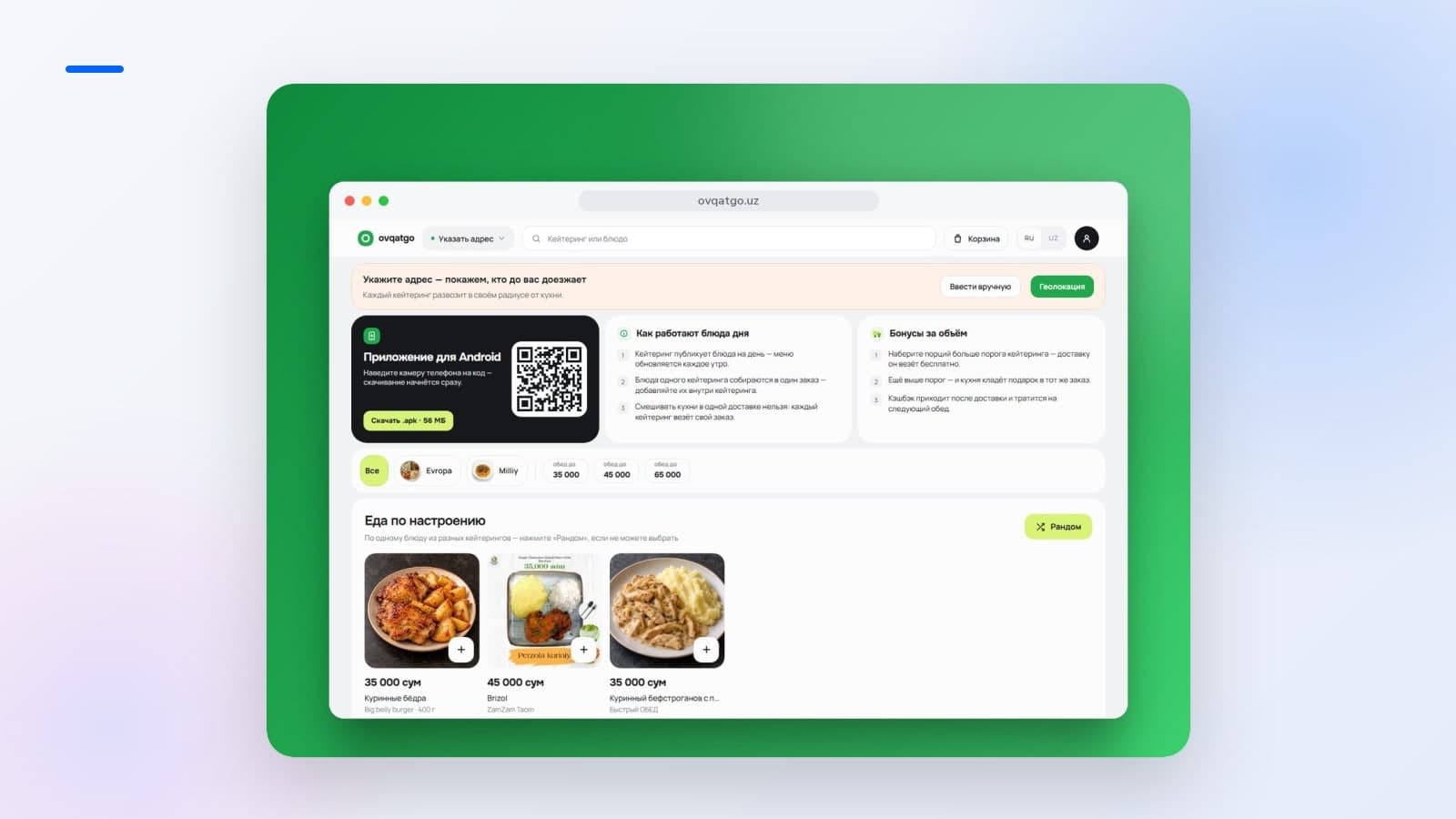
Standard e-commerce only requires a one-way flow of funds from the buyer to the merchant. When we build online stores or marketplaces — such as the food delivery marketplace OvqatGo, where users assemble an order and pay online — the transaction ends as soon as payment is confirmed. In microfinance and fintech, the financial architecture is fundamentally different.
An MFI platform requires a bi-directional payment module handling three core tasks:
- Loan payouts to borrower cards (A2C / payouts API). Once automated scoring completes and the loan agreement is signed via SMS, the system releases funds from the MFI settlement account directly to an Uzcard or Humo card within seconds.
- Tokenization and recurring auto-debiting. The borrower links their card once by confirming it with a one-time SMS password (OTP). The gateway securely saves an encrypted token, allowing the MFI to collect payments strictly according to the repayment schedule without re-prompting for card details.
- Core banking sync and fiscalization. Every payout and repayment is synced in real time with the core banking system or 1C, instantly generating electronic fiscal receipts via the national fiscal data operator.
Payment provider fees for incoming acquiring (loan repayments) range from 0.5% to 1.5%, while bulk card payout fees fluctuate between 0.8% and 1.2% (azma.uz).
Automatic collections and security guidelines
Recurring payments for microloans rely on card tokenization. The borrower consents to the repayment plan and authorizes the card binding with an SMS OTP code. The platform receives an anonymized token and the legal authority to trigger scheduled debits via payment processors.
When configuring recurring debits, compliance with local financial regulations is essential. A statutory minimum reserve rule applies to non-consensual bank debits starting April 15, 2026 — requiring at least 3 BCAs (1.236 million UZS (so'm)) to remain on the customer balance. However, scheduled loan repayment debits backed by an explicit customer card-linking agreement verified via one-time OTP codes are processed under standard recurring acquiring protocols (spot.uz).
If the account lacks sufficient funds on the due date, the gateway initiates automated retry logic — either performing balance availability checks in increments or scheduling repeated debit requests the following day.
Integration options and cost
| Solution | Scope of work | Timeline | Development cost |
|---|---|---|---|
| Basic payment gateway | Incoming web payments via card form or hosted redirect | 1–2 weeks | 4–8 million UZS (so'm) |
| Full MFI lending pipeline | Payout API, tokenization, auto-debit, customer dashboard, 1C/core banking integration | 3–6 weeks | 25–45 million UZS (so'm) |
Professional corporate website development and fintech platforms require robust transaction queuing architecture to eliminate duplicate debits or stuck payouts during temporary banking downtime.
If you are just starting
When launching a digital lending operation from scratch, there is no need to engineer custom mobile apps or proprietary card processing from day one. Start with a lean, compliant web infrastructure.
- Open settlement and transit accounts with a partner bank and sign an agreement with an internet acquiring aggregator (such as ATMOS, Payme Business, or Click).
- Build a secure borrower dashboard where applicants complete identity verification (OneID / Face ID) and link their card via OTP.
- Integrate the card payout API and connect automated fiscal receipt generation for loan repayments.
- Sync payment status webhooks directly into your operational 1C database.
The budget for deploying a basic loan disbursement and collection cycle via an off-the-shelf gateway starts at 25 million UZS (so'm), with a setup timeline of about 3–4 weeks. We broke down general online payment fundamentals in our guide on accepting online payments for e-commerce in Uzbekistan, but microfinance necessarily adds instant payout capabilities.
A real case: launching digital loans for UnaMoliya
Microfinance institution UnaMoliya needed to digitize the complete customer journey: issue microloans online in minutes and automate payment collections without branch lines or manual bank statement reconciliations.
Through payment provider ATMOS, the company integrated a two-way settlement gateway: Uzcard and Humo card tokenization compliant with PCI DSS 4.0.1, an API for instant loan payouts to cards, and automated recurring debits aligned with the repayment schedule.
As a result, UnaMoliya deployed an end-to-end digital lending cycle running 24/7 with zero manual payment reviews, decreasing default rates through automated retry collections (gazeta.uz).
If your business is already running
Established MFIs frequently suffer from liquidity bottlenecks caused by manual payouts: operators take hours preparing bank payment orders, while borrowers delay repayments due to forgetfulness or bank branch queues.
To transition to an automated pipeline without disrupting active credit portfolios:
- Segment your portfolio: continue servicing legacy loans under conventional channels while routing all new disbursements through card tokenization.
- Implement bulk card disbursements via transit account APIs, removing cashier intervention from approved loan transfers.
- Configure automated background debits following calendar payment schedules 1 day before the due date and on the due date itself.
- Set up instantaneous fiscalization of incoming funds and automatic debt clearance reporting to the credit bureau.
Upgrading your infrastructure and integrating it with your core banking system costs between 25 and 45 million UZS (so'm), taking 4 to 6 weeks to roll out (premium.uz). In time, this operational pipeline can be bundled into a branded customer portal via mobile app development.
A real case: automating the Variant credit service
Variant, an operational installment and microlending provider, was handling growing transaction volumes and facing cash flow delays alongside operational errors from manual bank transfers to borrowers.
The company rolled out an integrated fintech setup: an automated API gateway for bulk transit account payouts to borrower cards and automated recurring charges from Uzcard and Humo cards based on repayment calendars.
Variant automated over 90% of loan collections, eliminated disbursement delays, and removed human error from clearing bulk payment registries (atmos.uz).
Frequently Asked Questions
How much does it cost to build and integrate an MFI payment gateway?
Basic setup of a standard incoming payment gateway costs 4–8 million UZS (so'm). A turnkey lending pipeline with card tokenization, API disbursements, and 1C or core banking integration costs between 25 and 45 million UZS (so'm) and takes 3 to 6 weeks (premium.uz).
What fees apply to microloan payouts and repayment collections?
Payment aggregators charge an average fee of 0.5% to 1.5% for incoming Uzcard and Humo acquiring. Instant loan disbursements to borrower cards (A2C API) incur a fee ranging from 0.8% to 1.2% per transaction (azma.uz).
How can an MFI legally collect loan payments without manual borrower action?
For automated recurring debits, the borrower binds their Uzcard or Humo card in their account dashboard and confirms loan agreement acceptance using a one-time SMS OTP code. This registers a secure token for recurring collections handled under standard recurring acquiring rules (spot.uz).
If you are planning to digitize loan disbursements or automate payment collections, reach out to us via our contacts. We will evaluate your system architecture, select the right payment gateway, and deliver an exact project timeline.
Sources
- UnaMoliya · gazeta.uz
- Variant (сервис рассрочки и микрокредитования) · atmos.uz
- Uzcard ограничила автоматическое списание платежей по долгам с банковских карт — Spot.uz
- Национальная платежная система объявляет о завершении интеграции платежных систем HUMO и UZCARD — Humocard.uz
- Как подключить интернет-эквайринг для бизнеса в Узбекистане: пошаговое руководство — Azma.uz
- Интеграция платежных систем в Ташкенте — Premium Digital
- Разработка платёжной системы и финтех-решений для МФО — W-Lab