IT for Travel Agencies in Uzbekistan: Websites, CRM, and Telegram Bots
The cost of building a website, CRM, and Telegram bot for a travel agency in Uzbekistan: how to launch and set up cost-effective online tour payments.
To launch a travel agency's IT infrastructure in Uzbekistan, a CRM funnel and a Telegram channel or a simple landing page are enough at the start. A basic website launch costs from 4–8 million UZS, and CRM setup costs 6 to 18 million UZS. A complex portal with online booking and a search engine makes sense later, once the flow of regular enquiries exceeds what managers can handle manually.
In brief
- Starting a travel agency in Uzbekistan follows a notification procedure via my.gov.uz / license.gov.uz, rather than the licensing required of tour operators. This lets you invest straight into marketing and sales (Gazeta.uz).
- Licences for industry-specific CRMs cost from $29 per month (around 380,000 UZS) or 1.8–2.5 million UZS per year per user, while basic integration setup costs 6–18 million UZS (Celion News).
- A landing page for last-minute destinations costs 4–8 million UZS; a multi-page portal with a search engine costs 18–35 million UZS (WebGO).
- Accepting online payments via Payme, Click or Uzum carries a 1.5–2% commission and requires a fiscal receipt with the travel service's IKPU code for the amount of the deposit or the full price (lex.uz).
10 questions owners ask about digitalising a travel agency
1. Do I need a licence before launching a website and advertising?
Travel agency activity in Uzbekistan follows a notification procedure via the my.gov.uz or license.gov.uz portal, unlike tour operators, who need a separate licence (Gazeta.uz). This spares you months of regulatory approvals: you can register the legal entity, launch the website and set up advertising right away.
2. What should come first: a website or a CRM?
If the budget is limited, start with a CRM. Without one, enquiries from Instagram Direct, phone calls and Telegram get lost in managers' personal chats. You can begin collecting leads with just a social media ad account and a Telegram channel, but managers should handle them in a single workspace where every agreement is recorded.
3. How much do a website and CRM implementation cost for a travel agency?
According to the Tashkent market, a landing page for seasonal tours costs 4–8 million UZS, and a multi-page portal with filters and a catalogue costs 18–35 million UZS (WebGO). An annual licence for a specialised CRM costs 1.8–2.5 million UZS per user, and setting up the funnel and communication channels costs 6–18 million UZS (Celion News).
| Tool | Cost (UZS) | Launch time | Best for |
|---|---|---|---|
| Landing page with an enquiry form | 4–8 million | 1–2 weeks | New agencies, seasonal charters (Hajj, Antalya, Dubai) |
| Multi-page website with a catalogue | 18–35 million | 4–6 weeks | Established agencies with a wide range of destinations |
| Turnkey CRM setup | 6–18 million | 2–3 weeks | Teams of 2–3 managers or more with a steady flow of leads from social media |
| Telegram bot for tour selection | based on our projects: 8–20 million | 2–4 weeks | Agencies with frequent standard requests and last-minute tours |
4. Should I add a tour search aggregator to the website right away?
For a young agency, this is usually unnecessary. Aggregators require monthly payments for modules and complex technical support. Most travellers in Uzbekistan still prefer to ask a manager clarifying questions before booking. At the start, it is more practical to showcase your key offers with a direct link to a conversation.
5. How does a Telegram bot help a travel agency?
Telegram is the country's main messenger. A bot can automatically collect a traveller's preferences (country, dates, budget, number of guests), serve up selections of last-minute tours and pass contact details to the CRM. This saves managers up to 70% of the time they spend on the initial questions.
In our projects, we often build notifications through this very channel. For example, for the international delivery service YUMECS, we set up a personal account and a Telegram bot: customers track parcel status and balance without calling a manager. The same principle works in tourism: a bot can keep clients informed about the status of their visa, flight tickets and vouchers.
6. How do I connect online tour payments, and what about taxes?
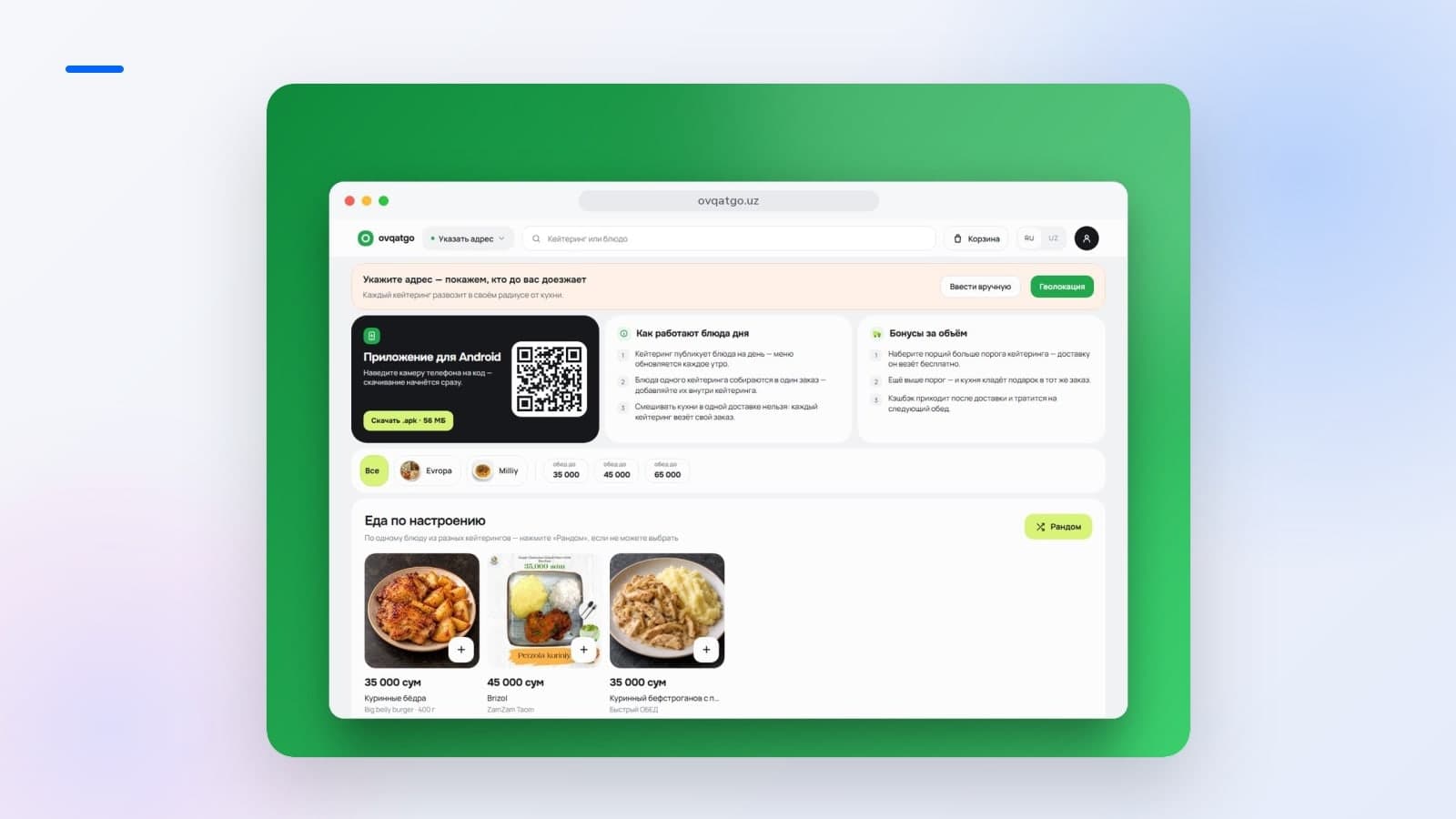
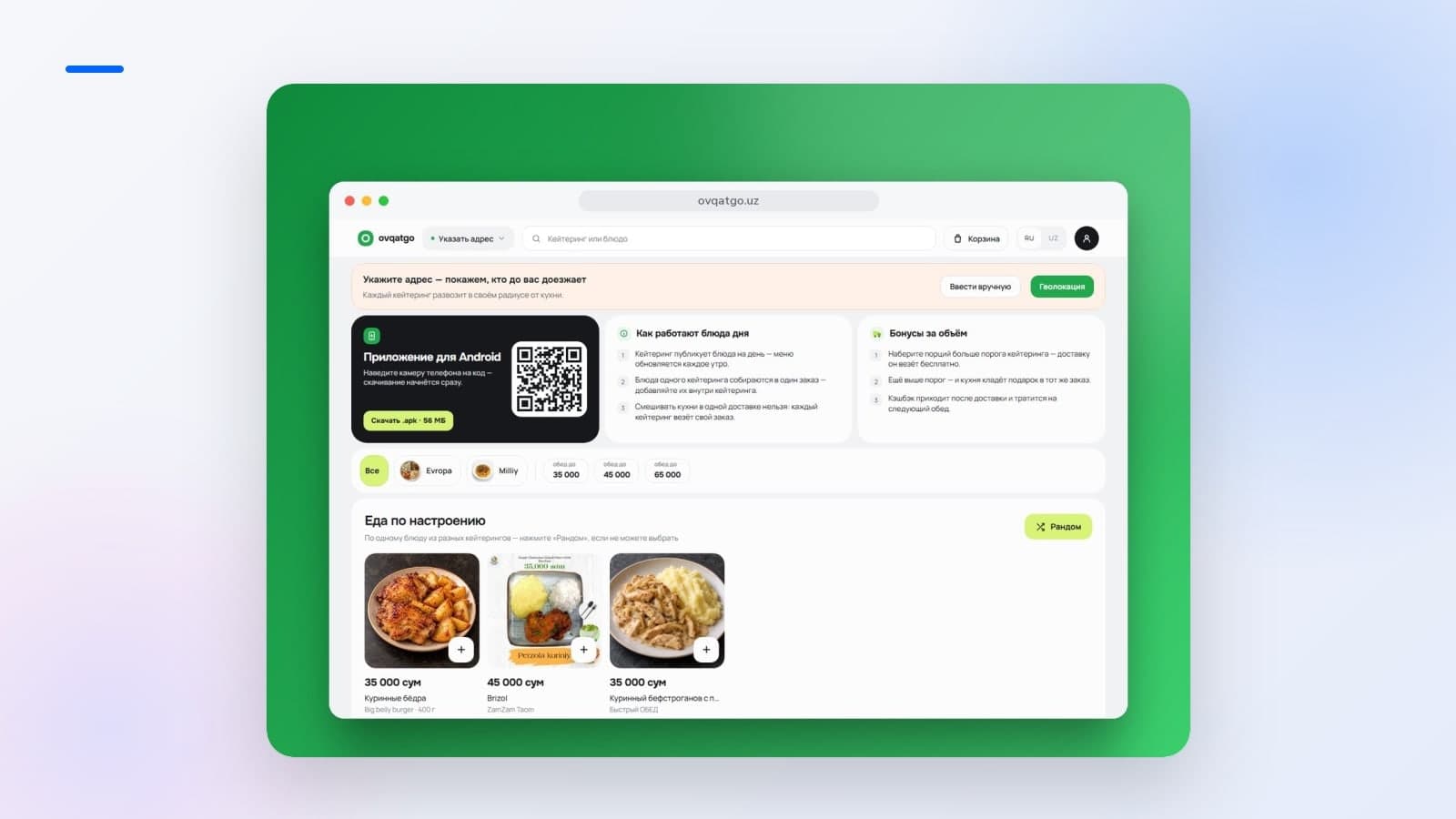
A travel agency can accept prepayments and card payments via Payme, Click or Uzum with a 1.5–2% commission (lex.uz). The law requires the company to fiscalise each payment: the online cash register must instantly issue a receipt with the IKPU (service identification code) for the amount of the deposit or full payment in UZS. We implemented Payme and Click payment integration for the delivery service OvqatGo, where payments are transparently tied to order statuses.
7. Which CRM should I choose: industry-specific or general-purpose?
Industry-specific systems (U-ON.Travel, MoiTuristy) are convenient because they already include fields for international passports, tour operator integrations and contract templates. General-purpose platforms such as amoCRM or Bitrix24 are stronger in advertising analytics and in the reliability of their Instagram and telephony integrations. The choice depends on where your bottleneck lies: in paperwork or in enquiries from advertising being lost.
8. How do I avoid losing the client base when a manager leaves?
The main risk of working through personal messengers is staff walking away with the client base. Once a CRM is in place, all conversations go through corporate accounts connected to the system. A traveller's phone number can be hidden from front-line staff, while the communication history and passport data remain the company's property.
9. Why does a travel agency need IP telephony?
A virtual PBX links calls to the CRM: on an incoming call, the manager sees who is calling and where they have travelled before. The head of the agency can listen to selected call recordings to monitor sales scripts and understand why bookings fall through.
10. Can a travel agency realistically use a mobile app instead of a website?
A standalone mobile app makes no commercial sense for a small travel agency. Travellers buy tours once or twice a year and will not keep the app on their phones. The only exception is large flight ticket aggregators. For an agency, a website combined with a Telegram bot delivers the same reach at a fraction of the cost.
If you are just starting out
- Register your business through the notification procedure on my.gov.uz.
- Launch a one-page website on a proven solution for 4–8 million UZS (WebGO), focused on your 2–3 main seasonal destinations.
- Subscribe to a basic cloud CRM plan (from $29 per month per user) and set up automatic lead capture from Instagram Direct and Telegram (Celion News).
- Hold off on complex tour selection modules until the flow of enquiries becomes stable.
If your business is already running
For established travel agencies, the bottleneck becomes routine chaos: travellers wait hours for replies, while managers retype passport data into contracts by hand.
- Bring your communication channels together. Move WhatsApp, Telegram, Instagram and telephony into a professional system through CRM development and implementation.
- Launch a multi-page portal for 18–35 million UZS (WebGO) or a corporate website through corporate website development to attract organic traffic from Google and Yandex.
- Set up a Telegram bot with a showcase of last-minute destinations and departure information.
- Connect online acquiring with automatic receipt generation via a fiscal data operator, so that you can accept prepayments remotely.
Case study: UC Travel (Tashkent)
The travel agency UC Travel received enquiries through social media and direct calls. Processing was manual, calls were not recorded, and management had no analytics by destination.
The team implemented amoCRM with a funnel running from the first enquiry to the closed tour, linked Direct and Facebook Messenger to deals, and added virtual telephony and demand analytics by country.
As a result, the agency stopped losing leads from social media, the processing cycle for a tour selection request was cut in half, and management gained end-to-end sales statistics (nexgroup.uz).
Case study: Bronix.uz
The travel agency Bronix.uz scaled its tour sales from Tashkent and Samarkand. It needed to keep travellers informed about current prices and flights around the clock without expanding its staff.
A web platform with a low-fare calendar was deployed, a Telegram bot with a subscription to last-minute deals was launched, and online payment by Uzcard, Humo, Visa and Mastercard was connected.
This automated initial enquiries and the issuing of booking codes, freeing the team from routine consultations and letting it focus on visa processing and closing deals (bronix.uz).
Frequently asked questions
How much does it cost to build a travel agency website in Tashkent?
A landing page for last-minute destinations costs from 4–8 million UZS. Developing a multi-page portal with a custom catalogue and search widgets ranges from 18 to 35 million UZS (WebGO).
How can I legally accept payment for tours via Payme and Click?
You need to sign an internet acquiring agreement (1.5–2% commission) and connect fiscalisation through a virtual cash register. At the moment of payment, the service must transmit to the tax authorities a fiscal receipt with the IKPU of the travel service for the payment amount (lex.uz).
Which CRM is best suited to tourism in Uzbekistan?
For small teams, U-ON.Travel or MoiTuristy (from $29 per month per licence) are convenient, as they come with ready-made templates for travel documents. Agencies that rely heavily on targeted advertising and social media sales more often choose amoCRM or Bitrix24 (Celion News).
If you are planning to launch or digitalise a travel agency and would like to estimate the stages of work in advance without unnecessary costs, get in touch via our contacts page for an initial discussion of your project.