Manufacturing ERP in Uzbekistan: Cost, Software, and Shop Floor
How much does it cost to implement an ERP at a factory in Uzbekistan, why heavy monolithic platforms often fail, and how to digitize the shop floor without halting machinery.
Implementing a comprehensive monolithic ERP at a factory in Uzbekistan typically requires from 350–500 million UZS (so'm) and 9–18 months. Meanwhile, for mid-sized workshops, a modular setup combining an inventory system with Telegram bots or floor tablets costs 45–90 million UZS (so'm) turnkey and takes just 2–3 months. The right choice depends on the maturity of your standards: if bills of materials and raw material tracking are not clearly mapped out, a system worth hundreds of millions runs the risk of grinding to a halt during pilot runs.
In brief
- A base software license for "1C:ERP Enterprise Management 2" in Uzbekistan starts from 197,437,000 UZS (so'm) for the software alone, excluding servers and custom deployment.
- A complete turnkey monolithic ERP rollout for a large enterprise usually starts from 350–500 million UZS (so'm).
- For plants with up to 50–100 workers, a modular combination of "1C:UNF" (licenses starting at 4,814,000 UZS (so'm)) paired with mobile workstations for 45–90 million UZS (so'm) is far more practical.
- The core reason 90% of shop-floor automation projects fail is trying to roll out software before standardizing bills of materials and scrap write-offs.
Monolithic 1C:ERP vs. modular shop-floor systems
When factory executives decide to streamline operations, their first thought is usually "1C:ERP". It is a mature, robust platform designed for end-to-end planning in heavy industries like metallurgy or chemicals. However, for a light manufacturing plant, a metal fabrication workshop, or a packaging facility with 50–100 employees, a classic monolithic platform often turns into a stalled, drawn-out build.
Workers on the production floor cannot and will not navigate complex forms packed with dozens of fields. If a shift supervisor spends 20 minutes filling out a transfer log for semi-finished parts, they will put it off until the end of the shift. As a result, data enters the system with major delays, live operational visibility is lost, and workers revert to paper notebooks.
| Parameter | Monolithic 1C:ERP | Modular ERP (1C:UNF + web/bots) |
|---|---|---|
| License cost | From 197,437,000 UZS (so'm) (ba-it.uz) | From 4,814,000 UZS (so'm) (perfect-solutions.uz) |
| Total project budget | 350–500+ million UZS (so'm) (1cservice.uz) | 45–90 million UZS (so'm) (perfect-solutions.uz) |
| Deployment timeline | 9–18 months | 2–3 months |
| Floor operator terminal | Desktop PC on the floor, heavy client | Tablet at the machine or Telegram bot |
| Best suited for | Enterprises with 200+ workers, continuous cycles | Workshops and plants with 15 to 100 workers |
Why heavy ERP systems fail
According to system integrators, the primary reason 90% of ERP projects fail in Uzbekistan's manufacturing sector is the urge to launch software before digitizing technical specifications and sorting out raw material write-offs (ba-it.uz). Software only accelerates your current operations—digitizing chaos simply yields faster chaos.
- Outdated bills of materials (BOM). If the system assumes a part requires 1.2 kg of sheet metal, but the operator actually cuts 1.5 kg due to blade wear, your actual product cost will instantly deviate from your recorded cost.
- Unmeasured scrap and waste. If scrap percentages are estimated and written off by rule of thumb at month's end, the system cannot accurately forecast procurement demands.
- Overly complex interfaces. A lathe operator or injection molding technician working in oiled gloves will not sit down to type logins and passwords into a desktop client. Shop-floor data must be captured by scanning a batch barcode in two taps on a rugged tablet.
If you are just starting
If your factory recently opened or is in its first year of operation, investing in heavy enterprise management suites makes little sense. During this stage, manufacturing workflows change constantly, raw material suppliers are still being evaluated, and your operational cost structure is still taking shape.
- Document your routing and BOM sheets. Map out your exact bill of materials per finished product unit and establish standard baseline waste margins in a clear spreadsheet.
- Set up basic inventory tracking. Introduce a foundational accounting setup like "1C:UNF" (software packages starting from 4,814,000 UZS (so'm), according to perfect-solutions.uz) to gain clear visibility into current warehouse balances.
- Establish direct operational channels. Route incoming client inquiries and internal approvals through CRM development and automation alongside dedicated team chats.
Based on our project delivery experience, setting up this foundational operational loop takes 2 to 4 weeks with a budget of 15 to 30 million UZS (so'm), completely bypassing the need for expensive server hardware.
If your business is already running
For an active manufacturing plant with 40–150 employees and a fleet of machinery, the primary goal is linking accounting, warehouses, and shift assignments into one unified network without delaying customer shipments.
- Audit stock and standardize master data. Master reference data—including nomenclature, material consumption ratios, and standard operations—must be cleaned and finalized before integration begins.
- Equip workstation zones with terminals. Instead of installing expensive industrial PCs, place durable tablets or handheld barcode scanners with lightweight web dashboards right at quality control points.
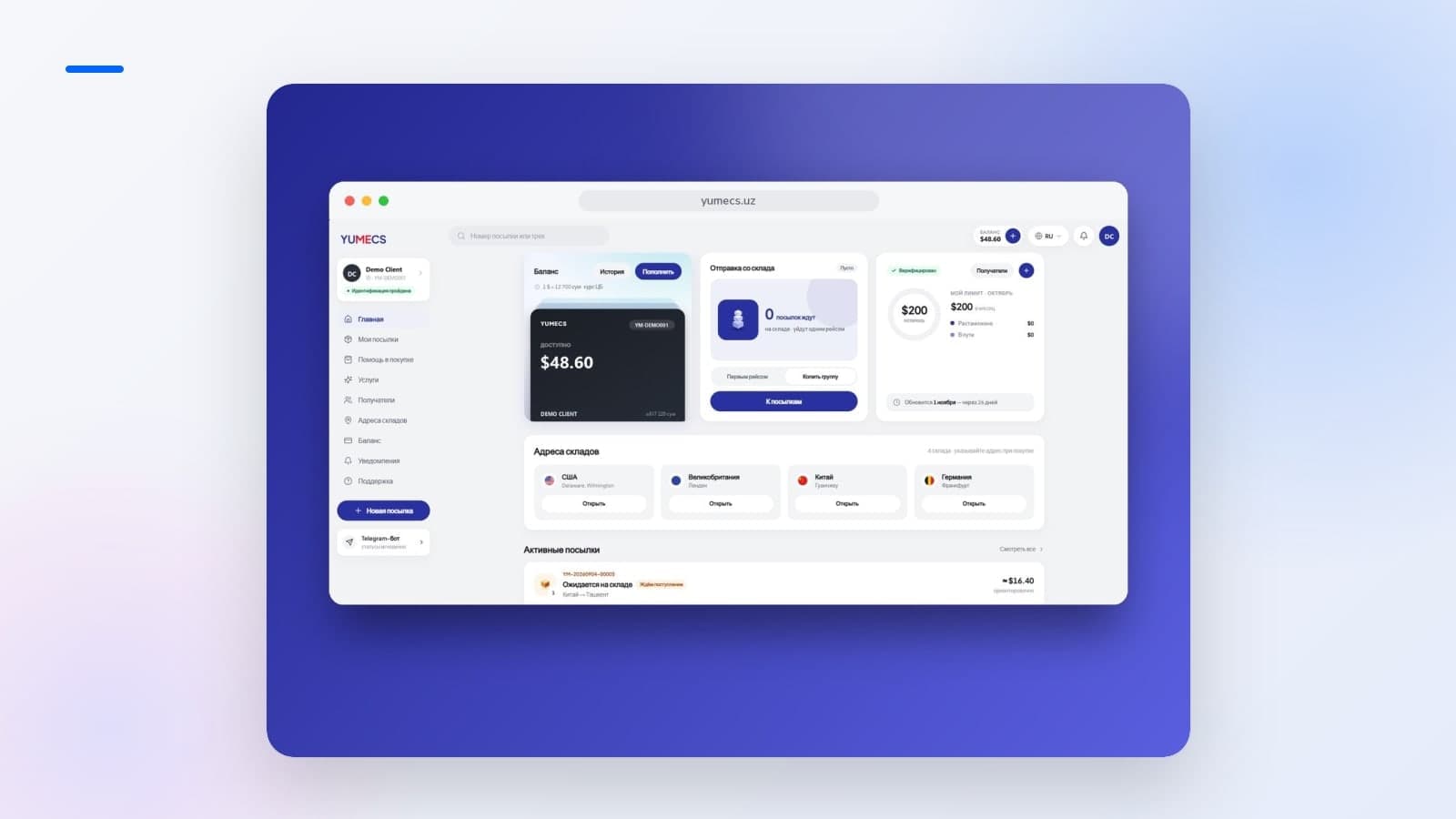
- Connect floor logs to financial accounting. Material transfers and shift outputs should flow straight into your core ledger to calculate real-time unit costs and piece-rate payroll. We applied a similar approach in the YUMECS project, where custom portals for staff and clients were integrated with backend operations and a Telegram bot, drastically reducing routine staff workloads.
- Roll out the system shop by shop. Avoid trying to transition the entire plant overnight. Begin with the cutting/prep section or the work-in-progress (WIP) storage area first.
For a business handling several manufacturing stages, such an implementation in Tashkent typically costs between 45 and 90 million UZS (so'm) and takes about 2–3 months (perfect-solutions.uz).
A real case: unified operations for an industrial plant
Large-scale industrial enterprises operating hundreds of workstations require deep, unified automation. For instance, Tashkent Pipe Plant named after V.L. Galperin, a joint venture, needed to unify multi-stage pipe manufacturing, raw material oversight, and product dispatches into a cohesive setup. The plant rolled out "1C:ERP Enterprise Management", automating 81 technical and administrative workstations. This established seamless, end-to-end accounting from incoming raw coil procurement all the way to finished pipe dispatches, removing the disconnect between the accounting department and the shop floor (1c.uz).
A real case: cost accounting in continuous production
Shurtan Gas Chemical Complex (SGCC), which processes up to 3.9 billion cubic meters of natural gas annually and produces 150 grades of polyethylene, historically managed operations across fragmented software tools and spreadsheets, leading to duplicate manual entries. Integrator First Bit deployed "1C:ERP Enterprise Management 2.5", connecting technical manufacturing lines, storage yards, and financial reporting. Consequently, administrative data processing workloads dropped by 30%, giving the enterprise real-time operational budget control (gazeta.uz).
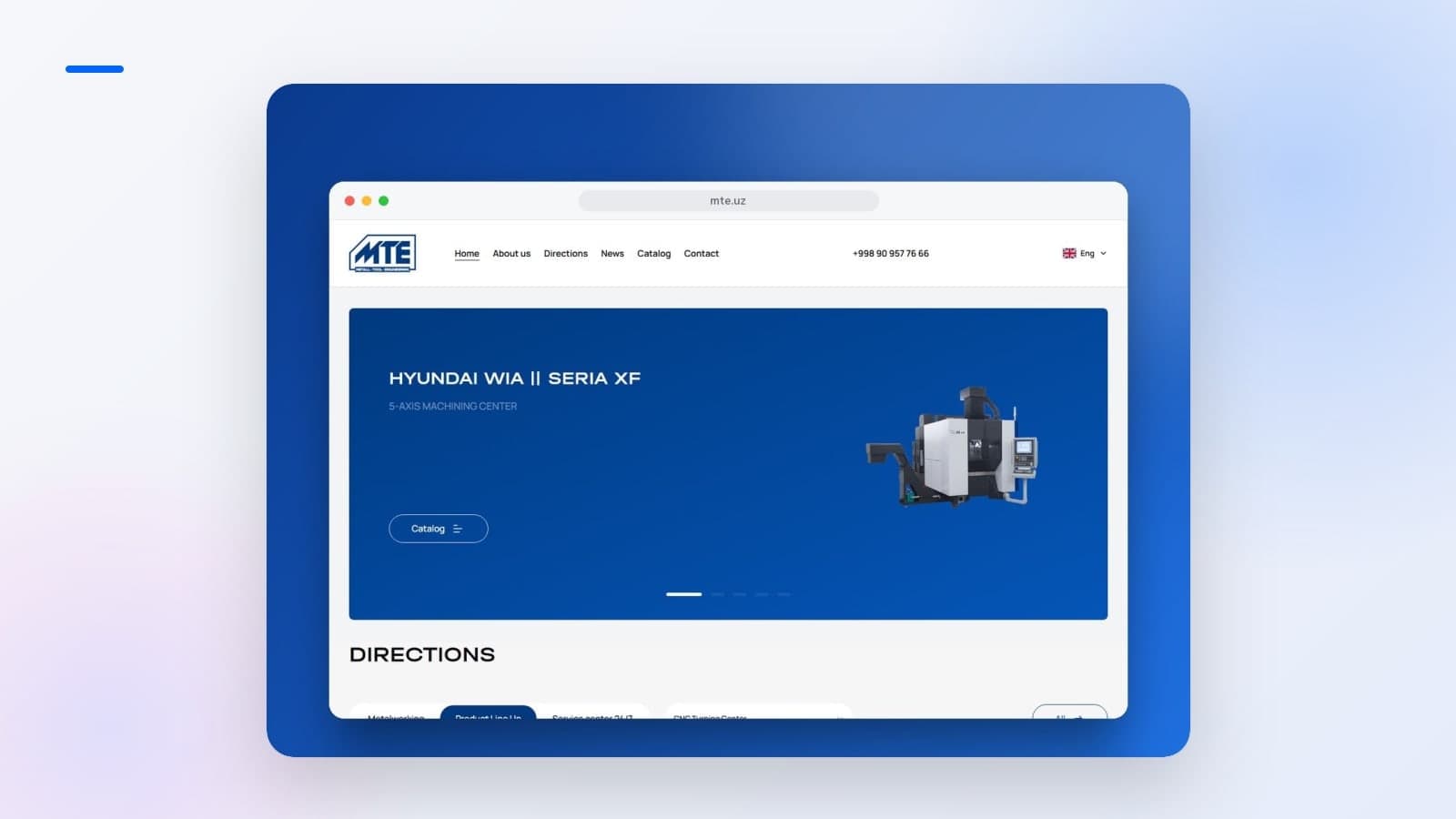
If your company also manages extensive equipment catalogs or diverse component supply chains, reviewing setups from adjacent sectors can be very useful—such as the equipment catalog structure in our MTE project or logistics operations highlighted in our guide to ERP systems for logistics companies in Uzbekistan: choosing 1C or a TMS.
Frequently asked questions
How much does it cost to implement an ERP at a factory in Tashkent?
An official base software license for "1C:ERP" in Uzbekistan starts from 197,437,000 UZS (so'm) (ba-it.uz), while full turnkey rollouts covering discovery, system design, and deployment start at 350–500 million UZS (so'm) (1cservice.uz). Modular solutions built on lightweight engines for mid-sized production floors typically cost 45–90 million UZS (so'm) (perfect-solutions.uz).
Which is better: 1C:ERP or a 1C:UNF setup paired with mobile apps?
If your enterprise employs more than 150–200 people, handles multi-stage chemical or continuous production runs, and requires deep enterprise scheduling, a monolithic ERP is necessary. If your team is under 100 workers and your primary focus is tracking live material stock, order statuses, and shift output, a modular "1C:UNF" setup with shop tablets launches 4–5 times faster at a fraction of the cost.
Why use Telegram bots on the factory floor alongside an ERP?
Telegram bots and streamlined mobile web interfaces serve as friction-free tools for shift leads and line operators. Instead of navigating confusing multi-layered desktop programs, an operator scans a batch QR code and taps a status: "In Progress", "Completed", or "Defect". The update posts directly to your ERP database without needing a full PC station at every machine.
If you are planning to modernize your manufacturing workflows or need guidance on the right architecture, reach out to us via our contacts. We will evaluate your operational flow and recommend a practical, cost-effective rollout plan.
Sources
- СП ООО «Ташкентский трубный завод имени В.Л.Гальперина» · 1c.uz
- ООО «Шуртанский газохимический комплекс» (ШГХК) · gazeta.uz
- 1С:ERP в Узбекистане: купить, цена, внедрение 2026 | Perfect Solutions
- Техническое задание на внедрение 1С:ERP и прайс-лист лицензий | BA-IT Ташкент
- Внедрение 1С:ERP в Ташкенте: этапы и стоимость | Aiva Group