Real Estate Agency CRM: Property Database and Commission Splits
How real estate agencies in Uzbekistan can choose a CRM, unify inquiries from OLX and Telegram, eliminate duplicate calls, and automate commission splits between brokers.
For a real estate agency in Uzbekistan, the most effective approach is deploying an industry-specific CRM that links OLX listing scrapers, instant messengers, and an internal property catalog. Cloud-based real estate solutions launch within 14 days, with subscription plans ranging from 150,000 to 700,000 UZS (so'm) per month. The investment quickly pays for itself by preventing agents from taking databases with them and enabling instant property matches to a buyer's budget.
In brief
- Industry-specific CRMs deploy in 14 days with ready-to-use integrations tailored for the local market.
- Entry-level plans start at 150,000 UZS (so'm) per month (Cliento CRM), while advanced Business tiers cost up to 700,000 UZS (so'm) per month (UpGrid, data as of September 2026).
- A unified workspace prevents brokers from poaching leads and eliminates duplicate calls for the same listing.
- Automated commission splitting saves management from disputes between listing and selling brokers.
Core operational challenges in real estate
Most real estate agencies in Tashkent lose deals not from weak marketing, but from fragmented communication channels. A common scenario: an agent finds an apartment, notes it down in personal phone memos or in Excel, and handles inquiries from ad portals inside their personal Telegram. When that agent leaves, the seller and buyer databases walk out the door with them.
The second challenge is duplicated effort. Without a shared inventory, two agents from the same firm can independently advertise the same apartment at different prices across portals and call the owner at the same time. This destroys the seller's trust in the agency.
The third bottleneck is internal conflict over commission splits. Closing a deal often takes two specialists: one who secured the exclusive listing (listing agent) and one who brought the buyer (selling agent). Manually calculating these splits at month-end triggers disputes and payroll errors.
Essential features for a real estate CRM
Generic sales systems rarely fit real estate agencies without extensive rework. An industry-specific platform is built around two synchronized registries: the property inventory and the buyer database.
- Multi-channel lead capture. Messages from OLX, Instagram forms, incoming phone calls, and bot conversations instantly generate a customer card tagged with its traffic source.
- Centralized grid and listing catalog. Filters tailored to Tashkent districts, floor plans, building levels, renovation condition, and legal documentation status.
- Hidden property owner contacts. Regular agents can see property specs and organize showings, but the direct owner number remains masked or restricted to the listing broker, with every view logged for security.
- Automated property matching. When entering requirements for a new client, the system displays matching listings from your inventory and compiles a showcase link ready to send via Telegram.
- Commission split calculator. Automatic calculation of shares for the agency, the listing agent, and the selling broker as soon as a deal reaches completion.
- Integration with specialized portals. Managing listings through a single corporate account on local platforms. For instance, Urbo.uz introduced agency accounts with centralized balances in 2026, keeping listings secure even when staff members leave.
Comparing implementation options
When selecting software, agencies generally weigh local specialized platforms against customized generic systems or bespoke database development.
| Option | Cost in UZS (so'm) | Launch timeline | Best suited for |
|---|---|---|---|
| Local specialized CRM | 150,000 – 700,000 UZS (so'm)/month subscription | 10–14 days | Small to mid-sized agencies with 3 to 20 agents |
| amoCRM with custom setups | Based on our project experience: setup from 12,000,000 UZS (so'm) + licensing | 3–5 weeks | Agencies with strong sales teams selling developer new-builds |
| Custom web platform | Based on our project experience: from 45,000,000 UZS (so'm) | 2–3 months | Large networks with proprietary portfolios and sub-agent networks |
If you are just starting
If your agency employs 2 to 5 people, building custom software right now is unnecessary. Spending millions on complex software before stabilizing standard operating procedures carries unnecessary risk. Here are your action items for week one:
- Register a company account on an established platform. An entry tier starting at 150,000 UZS (so'm) per month on Cliento CRM or a similar tool is sufficient to begin.
- Connect a corporate phone line and a unified company Telegram account so that all initial inquiries flow through a shared system rather than personal agent messengers.
- Ban paper notebooks for property records. Every new listing must be entered into the platform within two hours of inspection, or no commission is paid on that deal.
If your business is already running
For an agency managing 10 or more brokers and historic spreadsheets, transitioning requires strict order to safeguard in-flight deals.
- Data audit and cleansing. Group seller and buyer contacts before migration. Delete duplicate numbers and stale apartments sold months ago.
- IP telephony integration. Linking telephony logs calls and attaches audio recordings directly to client cards. This removes any argument over who registered a buyer first.
- Role-based access permissions. Set clear roles: an intern sees only their assigned leads, a senior broker accesses their district inventory, and management oversees all analytics and financial reports.
- Workflow automation via messaging apps. Telegram integration allows agents to send ready-made property presentations to clients without hunting through their phone's camera roll.
When an agency handles both secondary market resales and primary off-plan developments, basic pipelines might fall short. In these situations, we deliver tailored CRM development and implementation, bridging developer lot grids with internal commission tracking.
A real case: streamlining operations for 12 brokers
At a Tashkent real estate agency with a team of 12 agents, every team member maintained their own records in Excel and personal Telegram chats. Incoming inquiries from OLX and Instagram were routinely missed, and clients frequently received duplicate calls from different agents about the exact same apartment.
The agency implemented a specialized real estate CRM within 14 days: automated lead capture from OLX and social networks, a centralized listing catalog with district and price filters, IP telephony with call logs mapped to contact cards, and automated commission splitting between listing and selling brokers.
In the first quarter post-launch, closed transactions increased by 45% (UpGrid case data, September 2026). The agency stopped losing incoming leads and ended internal friction caused by overlapping buyer outreach.
The NDC approach: centralized data and client portals
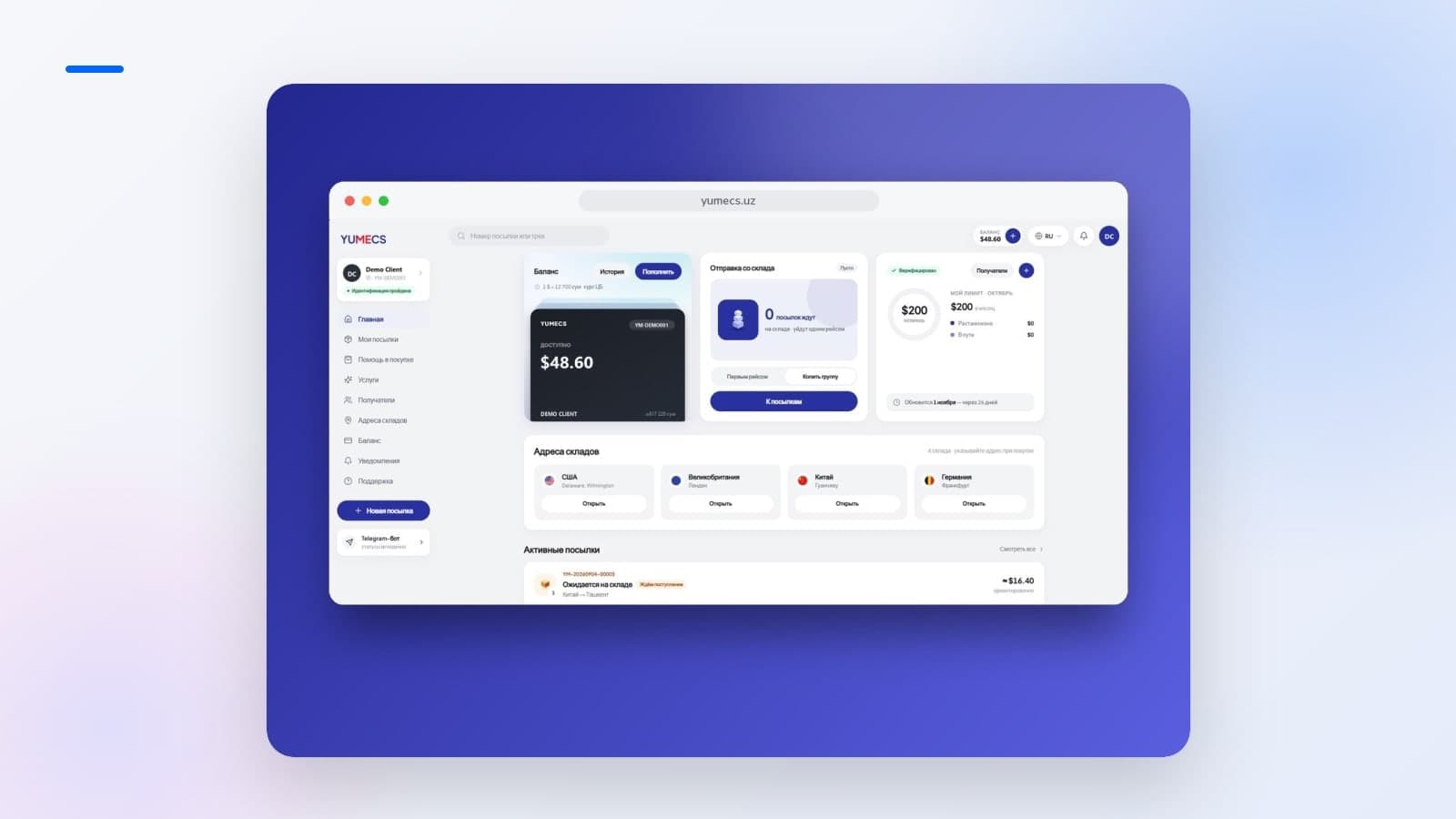
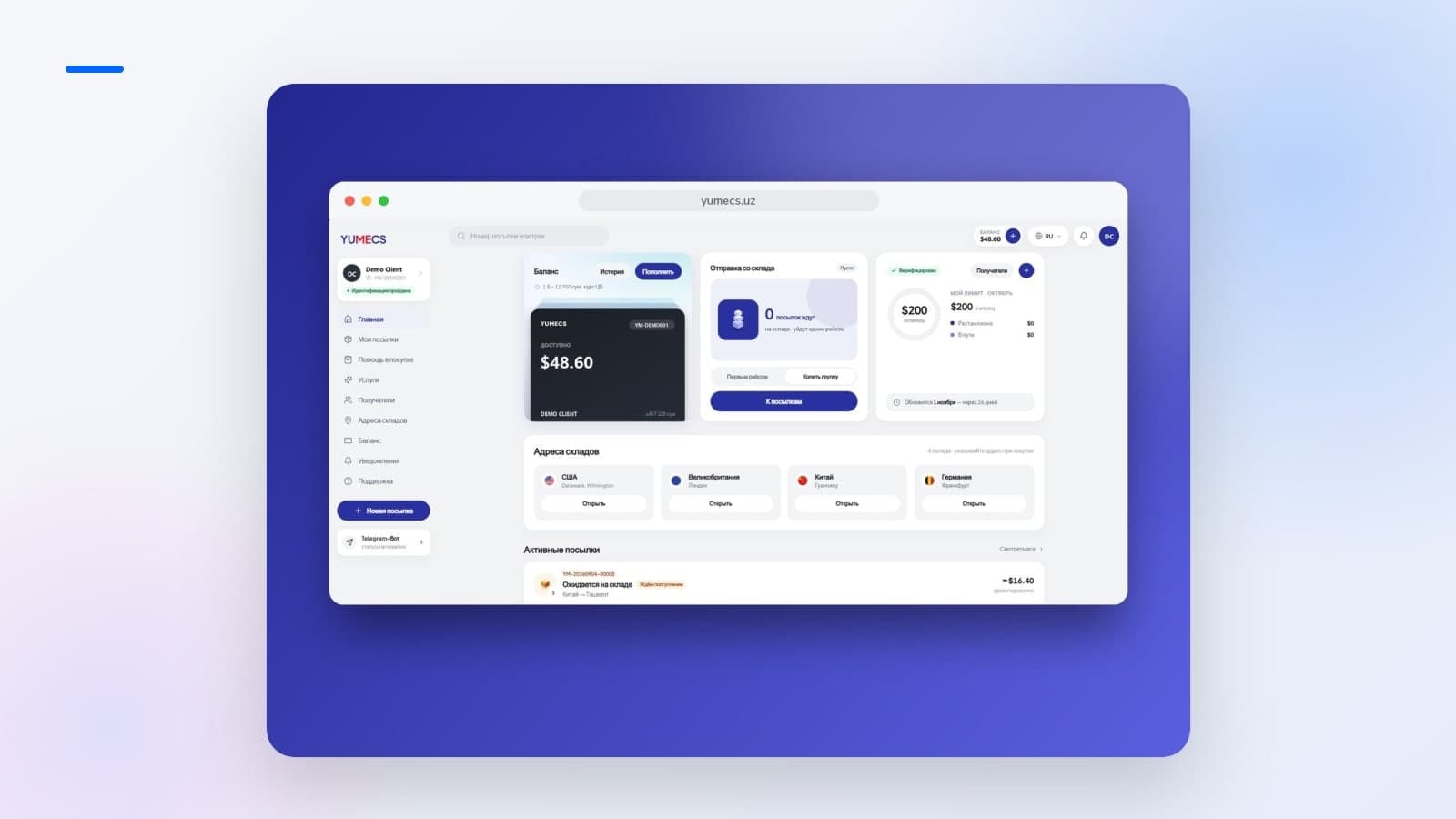
Managing high-volume data streams requires clean, transparent user interfaces. For international shipping provider YUMECS, we built a business automation platform featuring a dedicated customer portal. From one dashboard, users track packages, check their USD balances matched to Central Bank rates, and manage recipients, with real-time updates pushed directly to a Telegram bot. The same core principles—a single-window workspace and secured data permissions—work just as reliably for real estate inventories.
When an agency transitions to digital contract signing with clients, dedicated web software makes the difference. In the Hesap project, we engineered a web platform for mutual online contract execution, saving parties from physical paperwork and courier handoffs.
Operational discipline in real estate shares key dynamics with other service industries. For an in-depth look at deadline management and structuring team accountability, read our guide on CRMs for law firms.
Frequently Asked Questions
Is amoCRM a good fit for real estate agencies in Uzbekistan?
amoCRM handles incoming lead management and pipeline progression smoothly, especially for primary developer sales. However, it lacks an out-of-the-box property catalog or listing scraper. To run an agency smoothly on it, you will need a third-party real estate inventory widget and custom commission formulas set up by an integrator.
Which is better: a real estate agency CRM or Excel?
Spreadsheets are only workable when an agent operates completely solo. As soon as you hire a second person, Excel fails to protect your assets: any employee can copy your owner contact list in seconds. A real estate CRM secures sensitive contacts, controls access tiers, and automatically triggers reminders for upcoming property viewings.
How long does it take to deploy real estate software in Tashkent?
Deploying a turnkey industry solution typically takes 10 to 14 days. This timeframe covers connecting business phone numbers, integrating lead channels (OLX, Telegram, website), migrating existing apartment databases, and conducting core pipeline training for agents.
If you want to organize your property database, automate lead capture, or explore custom integrations for your team, reach out via our contacts page. We will review your current workflows and suggest an effective solution without unnecessary overhead.