ERP for a Textile Factory in Uzbekistan: Cutting, Piecework, and Budget
How textile manufacturers in Uzbekistan can automate fabric batch tracking, seamstress piecework, and raw material inventory with seamless 1C integration.
When automating textile manufacturing in Uzbekistan, businesses typically face two options: a tailored 1C-based industry solution for the shop floor priced between 60M and 120M UZS (so'm), or an enterprise-grade manufacturing ERP costing 300M to 450M+ UZS (so'm) for full-cycle operations. The right choice depends on where your main leaks occur: during cutting and piecework payroll, or across yarn processing and dyeing stages. Implementation usually takes from 2 to 12 months when rolled out in phases without pausing production lines.
Quick take
- Uzbekistan’s light industry encompasses over 2,800 enterprises where manual logbook tracking directly chips away at export margins (promrobot.uz).
- Basic inventory and production tracking for a sewing workshop with up to 50 workstations costs between 60M and 120M UZS (so'm) over 2–4 months (Syntra Systems).
- A full-cycle textile plant requires an investment of 300M to 450M+ UZS (so'm) and 6 to 12 months (Syntra Systems).
- The system must integrate seamlessly with E-aktiv, electronic invoicing, electronic consignment notes (ETTN), and the national Asl Belgisi digital labeling system (lex.uz).
The Nuances of Textile Accounting: Why Standard Systems Fail
Generic accounting software struggles with textiles due to the physical nature of the materials. Yarn and raw fabric absorb and release moisture, shifting in weight; rolls from the same batch often vary in shade (dye-lot variance); and the cutting process inevitably produces pattern scrap and roll-end remnants. If you write off knitted fabric based on average theoretical standards, the actual cost of a finished batch gets distorted.
For textile and garment facilities, four core industry modules are essential:
- Batch-level roll tracking: Capturing weight, length, shrinkage rate, and dye-lot shade for every individual roll via barcode upon intake.
- Bills of materials (BOM) and cutting sheets: Automatically recalculating fabric, thread, button, and zipper consumption across the entire size and color matrix.
- Barcode-based piecework payroll: Issuing route tickets (cut bundles) with barcodes to operators; scanning tasks upon completion eliminates padded records and duplicate payouts.
- Stage-by-stage traceability: Tracking work-in-progress across every workshop (knitting, dyeing, cutting, sewing, ironing/finishing, and packing).
Comparing Automation Options
| Solution | Timeline | Budget in UZS (so'm) | Best suited for |
|---|---|---|---|
| 1C:Garment / Workshop module | 2–4 months | 60–120M UZS (so'm) | Sewing workshops up to 50–70 workstations, toll manufacturing |
| 1C:ERP / Textile Industry ERP | 6–12 months | 300–450M+ UZS (so'm) | Full-cycle facilities (spinning, knitting, dyeing, and finished garments) |
| Custom web system with Telegram bots | 3–5 months | 80–180M UZS (so'm) | Plants with unique dispatching workflows and distributed teams |
To learn more about selecting the right platform, read our guide on ERP for manufacturing in Uzbekistan.
If you are just starting
If you run a compact workshop or a contract sewing facility, avoid starting with heavy enterprise ERP suites. Complex systems will tie up working capital and overwhelm your staff. A lean starting configuration will cost around 60M to 120M UZS (so'm) (Syntra Systems).
- Standardize basic BOMs for your top 5–10 high-volume models: specify fabric consumption per unit, interlinings, and accessories.
- Implement a ticket system for seamstresses. Print a route sheet alongside each cut bundle, allowing operators to scan task barcodes at their workstations.
- Organize bin-location inventory for fabric rolls and trims so that materials are written off against specific production cut orders rather than general monthly averages.
If your business is already running
For an established factory with 100+ employees and multiple manufacturing stages, the top priority is eliminating pooled, unsegmented cost accounting without interrupting deliveries to clients. Budgets for this tier range from 300M to 450M+ UZS (so'm) (Syntra Systems).
- Integration with regulatory systems: Set up automated data sync with electronic invoices, ETTN, MXIK/IKPU inventory tracking in E-aktiv, and Asl Belgisi compliance codes (lex.uz).
- System decoupling: Manage production phases (knitting output, dye-house batches, piecework labor) in a streamlined shop-floor interface, transferring only consolidated shift summaries to 1C accounting. This keeps your accounting databases fast and stable.
- Dye-lot management: Linking individual rolls to specific dye-house batches lets cutters assemble homogeneous fabric lots for each order, eliminating shade discrepancies in finished garments.
A real case: JV LLC "MS-Barer Textile"
A major producer of knitted fabrics and yarn faced hurdles in workflow dispatching, manual equipment load scheduling, and elevated scrap rates across knitting, dyeing, and finishing units.
The company joined an industry pilot spearheaded by the Uztextileprom Association alongside tech integrator Shaoxing Huangxi Intelligent Group, implementing a specialized textile ERP combined with automated fabric quality inspections (promrobot.uz).
As a result, the enterprise fully digitized batch routes, enabled real-time monitoring of raw material processing, and significantly minimized material losses during dyeing and finishing operations (promrobot.uz).
A real case: "UZTEX GROUP" Holding
A vertically integrated textile group (spinning at "UZTEX TASHKENT", knitting and dyeing at "UZTEX CHIRCHIK", garment manufacturing at "EUROTEX GLOBAL") relied on aggregated cost methods that led to delayed month-end closes and discrepancies between workshop records and central accounting (tadviser.ru).
The holding rolled out a centralized manufacturing ERP architecture with modules for inventory control, production scheduling, and cost accounting, fully harmonized with Uzbekistan’s national accounting standards (NAS/BHMS) (tadviser.ru).
This initiative eliminated aggregated cost allocation, established precise stage-by-stage costing (from raw cotton to the finished T-shirt), and achieved a smooth data migration without duplicating staff workload (tadviser.ru).
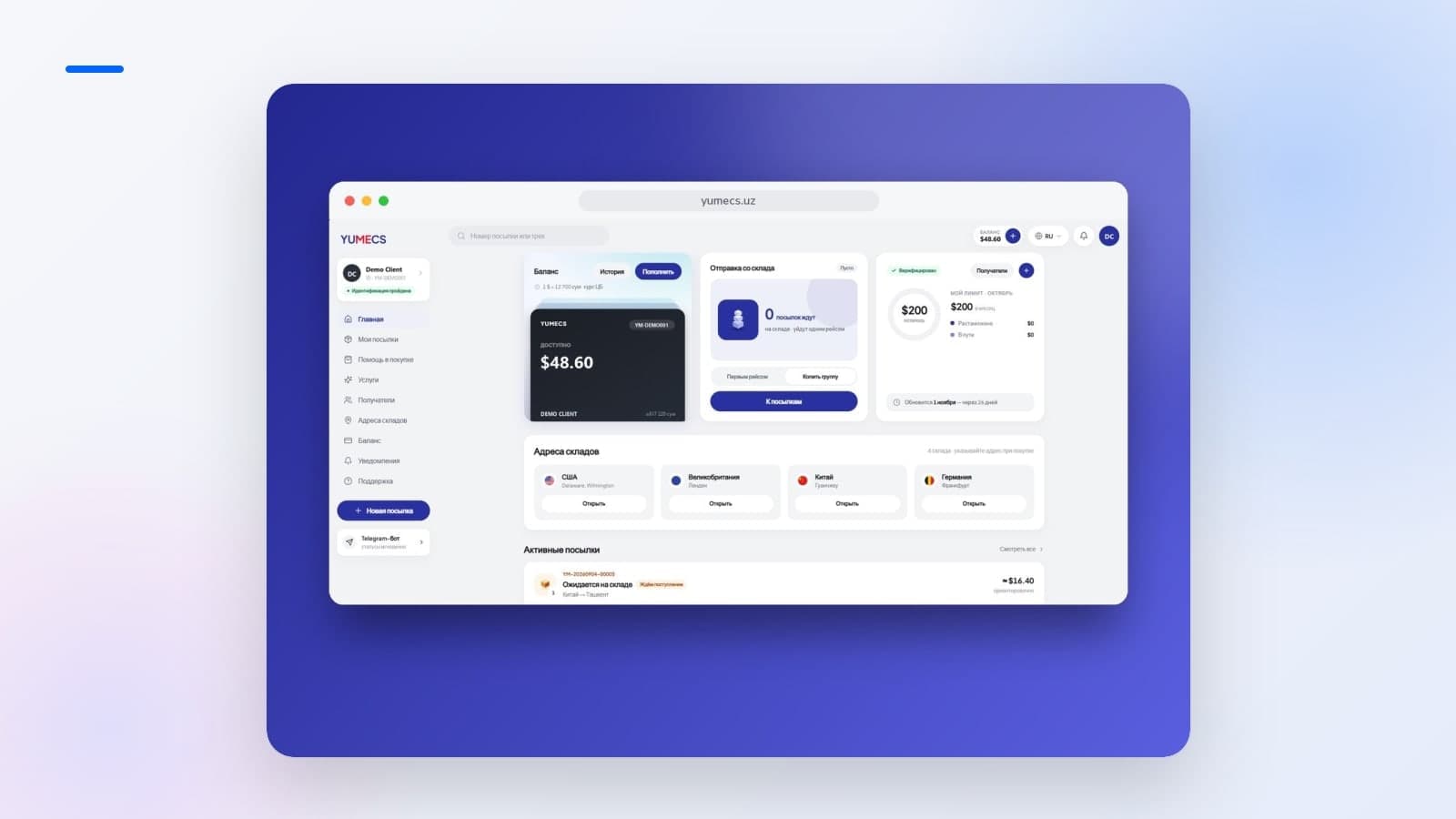
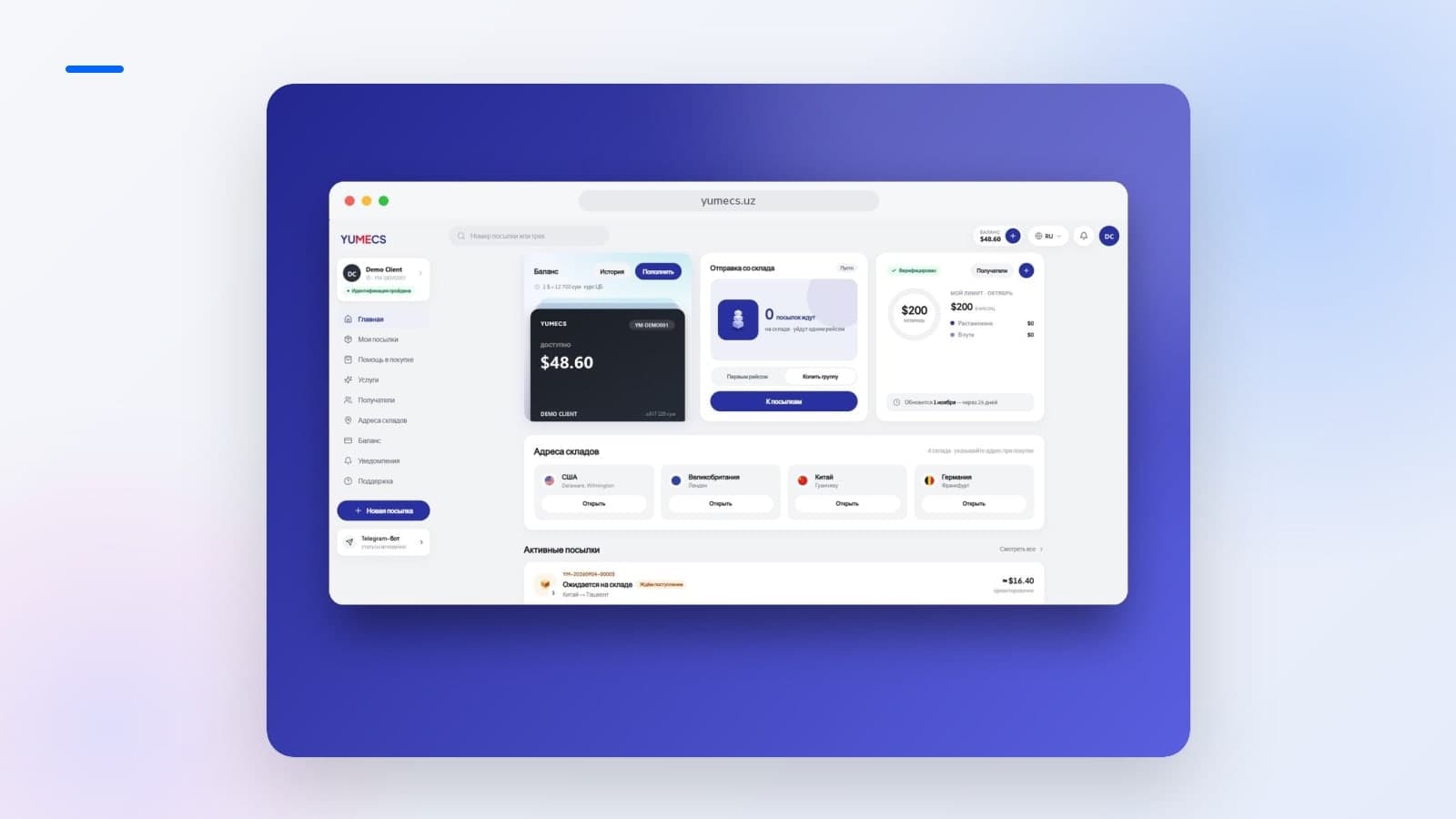
At NDC, we regularly engineer lightweight web interfaces and automated bots that relieve operational teams of manual data entry. For instance, for the courier service YUMECS, we built custom client portals and automated parcel tracking statuses, taking pressure off operational managers without burdening internal databases. In a similar way, textile mills use simple tablet stations for shift supervisors.
Frequently Asked Questions
How much does it cost to implement an ERP for a garment factory in Uzbekistan?
For a sewing workshop with up to 50 workstations, a core implementation ranges between 60M and 120M UZS (so'm) over 2 to 4 months. For larger full-cycle operations with spinning, knitting, and finishing units, budgets typically fall between 300M and 450M+ UZS (so'm) and take 6 to 12 months (Syntra Systems).
How does the software handle dye-lot variation and cutting waste?
Every inbound roll is tagged with a barcode specifying its actual shade, density, and shrinkage. The ERP groups rolls into cutting batches with matching parameters, preventing mixed-tone fabric cuts within the same production run.
Do we need to stop the plant during implementation?
No. Based on our project experience, deployments proceed stage by stage: starting with warehouse inventory for fabric and trims, progressing to the cutting room and barcode-based piecework tracking, and finally connecting planning and corporate accounting.
How can we track piecework pay without queues at scan terminals?
Each cut bundle carries a routing slip with detachable coupons or a single master QR code. Operators scan their assigned task from a smartphone or a stationary barcode scanner directly on the sewing line, updating payroll metrics in real time.
If you are planning to deploy or modernize your production management system, explore our expertise in CRM and workflow automation at NDC, or get in touch through our contact form to review your factory’s technical workflows.