1C:ERP Agricultural Complex in Uzbekistan: Fields, Fuel, and Sowing
How an agricultural cluster can link field logs, fuel consumption standards, and machinery operations directly into 1C without padded hours or cash leaks.
Deploying the industry-specific solution “1C:ERP Agricultural Complex” in Uzbekistan connects field activities, machinery waybills, and resource write-offs across field boundaries with standard accounting. According to specialized software integrators, implementation costs range from 102–105 million UZS (so'm) ($8,000) for individual operational modules to 320–515 million UZS (so'm) ($25,000–$40,000) for a comprehensive cluster-wide system, with projects typically spanning 3 to 9 months.
In brief
- An industry ERP ties operational expenses (fuel, fertilizers, seeds, tractor working hours) directly to a specific cadastral field contour.
- Basic material inventory and waybill tracking starts at 102–105 million UZS (so'm), while a full-scale agricultural cluster setup with weighbridges and integrations starts at 320 million UZS (so'm), based on 2026 data from syntrasystems.com.
- The core technical requirement in Uzbekistan is a direct connection between operational documents, standard “1C:Accounting for Uzbekistan”, and government systems such as Soliq and E-aktiv.
- A phased rollout is the safest approach: start with warehouse stock control and fuel/seed issuance, follow with equipment waybills and piece-rate pay, and conclude with planned vs. actual crop cost analysis.
Where Agribusiness Loses Money Without End-to-End Accounting
Most agricultural companies maintain records after the fact. Agronomists write down activities in paper notebooks, weighbridge operators record tonnage by hand, and tractor drivers submit waybills only once every two weeks. Accountants then enter generalized totals at month-end. This gap produces common cash leaks:
- Writing off fuel using rough estimates: Fuel is deducted using generic averages instead of actual work per field contour, ignoring soil density and hitched implements.
- Lost seeds and agrochemicals: Materials exit the warehouse, but verifying where, on which plot, and at what dosage rate they were applied is nearly impossible.
- Discrepancies with E-aktiv: Primary write-off invoices for inventory often deviate from the company's official balance sheet for months.
- Distorted production costs: Management cannot determine the actual cost per ton of wheat or cotton from a specific field because machinery depreciation and repairs are smeared evenly across the entire farm.
An agricultural ERP resolves these issues by marrying field mechanics directly with standard bookkeeping entries. We reviewed similar principles of tracking direct operational costs in our guide on manufacturing ERP in Uzbekistan.
What an Industry Agribusiness ERP Delivers
The “1C:ERP Agricultural Complex 2” product family and its related modules include specialized subsystems: crop production accounting by field plot and crop rotation, tractor and combine driver waybills, fuel write-offs linked to output per hectare, weighbridge terminal integrations, and piece-rate payroll calculations for field workers (1solution.uz). The system unites four core operational blocks:
| Module | What It Does | What It Prevents |
|---|---|---|
| Field Cadastre & Crop Rotation | Stores crop history, technological maps, and field boundary coordinates. | Breaches of agronomic technology and repeated sowing of soil-depleting crops on the same plot. |
| Waybills & Fuel Management | Calculates fuel consumption per hectare based on plowing depth and machinery implements. | Fuel theft and machinery operators padding recorded hectare counts. |
| Material Flow & Inventory | Logs seed, fertilizer, and spare part issuance against specific field operations. | Unrecorded stock balances and theft at intermediate storage yards. |
| Weighbridge & Grain Elevator Integration | Captures gross and tare vehicle weights automatically without manual data entry. | Artificially understated yields and manipulated moisture or impurity readings. |
For agribusinesses in Uzbekistan, seamless communication between operational logs, the standard “1C:Accounting for Uzbekistan” configuration, and Soliq / E-aktiv tax services is vital. Otherwise, primary resource write-offs accumulate systemic discrepancies (1cbit.ru).
Costs and Choosing the Right Implementation Format
Turnkey agricultural ERP pricing in Uzbekistan begins at $8,000 (~102–105 million UZS (so'm)) for basic operational modules and reaches $25,000–$40,000 (~320–515 million UZS (so'm)) for full-scale cluster automation involving weighbridges, GLONASS/GPS telematics, and grain elevators (syntrasystems.com). Drawing on our integration experience, we recommend phasing deployment so you capture returns before the entire rollout concludes.
If you are just starting
If you have just assembled your land bank or merged several farms, avoid rolling out an expansive ERP all at once. Begin by organizing material inventory control:
- Digitize field contours: map the actual physical area of every plot rather than relying on outdated cadastral certificates.
- Establish strict warehouse controls for seeds, crop protection chemicals, and fertilizers, releasing goods only against a designated field brigade leader's signature.
- Deploy standard waybill tracking for farm equipment using baseline fuel consumption guidelines.
This foundational setup with out-of-the-box modules typically costs around 102–105 million UZS (so'm) ($8,000) and takes 2 to 3 months to go live. Tractor telematics and satellite NDVI imagery can wait until next season.
If your business is already running
An active agricultural cluster operating 20 to 30+ machines across more than 1,000 hectares needs an uninterrupted, end-to-end integration during the farming season:
- Connect the core database with fuel level sensors and GPS units mounted on tractors and combines.
- Automate weighbridges: number-plate recognition cameras combined with electronic platform scales that feed weight data straight into 1C remove human error during harvest.
- Set up mobile workstations for agronomists and brigade managers on tablets or web portals so task completion can be signed off right in the field.
- Synchronize operational write-offs with statutory accounting and E-aktiv on a daily schedule.
A full-scale migration and deployment project usually falls between 320–515 million UZS (so'm) ($25,000–$40,000) and takes 6 to 9 months, including an essential pilot run on a single operational division.
Real-World Cases
A real case: End-to-end accounting on a Samarkand farm
“QO`SHRABOT - AGRO STAR” LLC in the Samarkand region previously maintained operational records across disconnected files. The company needed rigorous material tracking, transparent supplier reconciliations for agrochemicals, and clear piece-rate wage calculations for seasonal workers (1c.ru).
The farm implemented an industry-tailored 1C system covering operational production runs, machinery driver waybills, and statutory reporting under Uzbekistan regulations. As a result, the business achieved clear end-to-end inventory visibility, timely month-end cost closures, and exact reconciliation against supplier contracts in a unified database (1c.ru).
A real case: Digital field monitoring in Namangan
Farms and clusters in the Namangan region struggled with scattered field contour data, irrigation schedules, and fertilizer allocations recorded across paper logs and Excel spreadsheets (eurosoft.uz).
The Eurosoft / AgroAI team deployed digital field monitoring, integrating watering plans and water-conservation registers with mobile tools for agronomists across a 500-hectare pilot area. The project brought field logs, satellite monitoring, and actual resource consumption together into a single executive dashboard (eurosoft.uz).
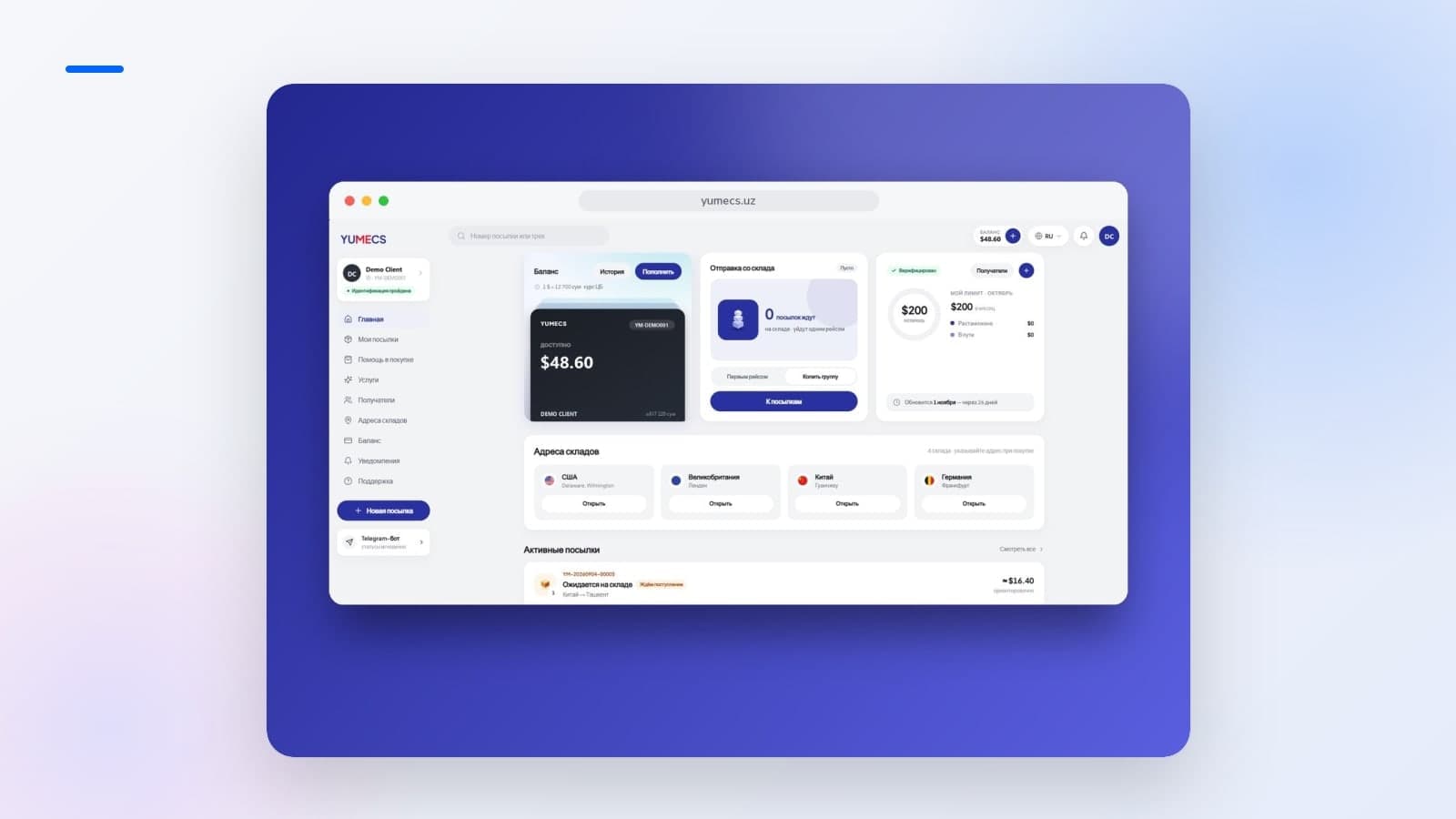
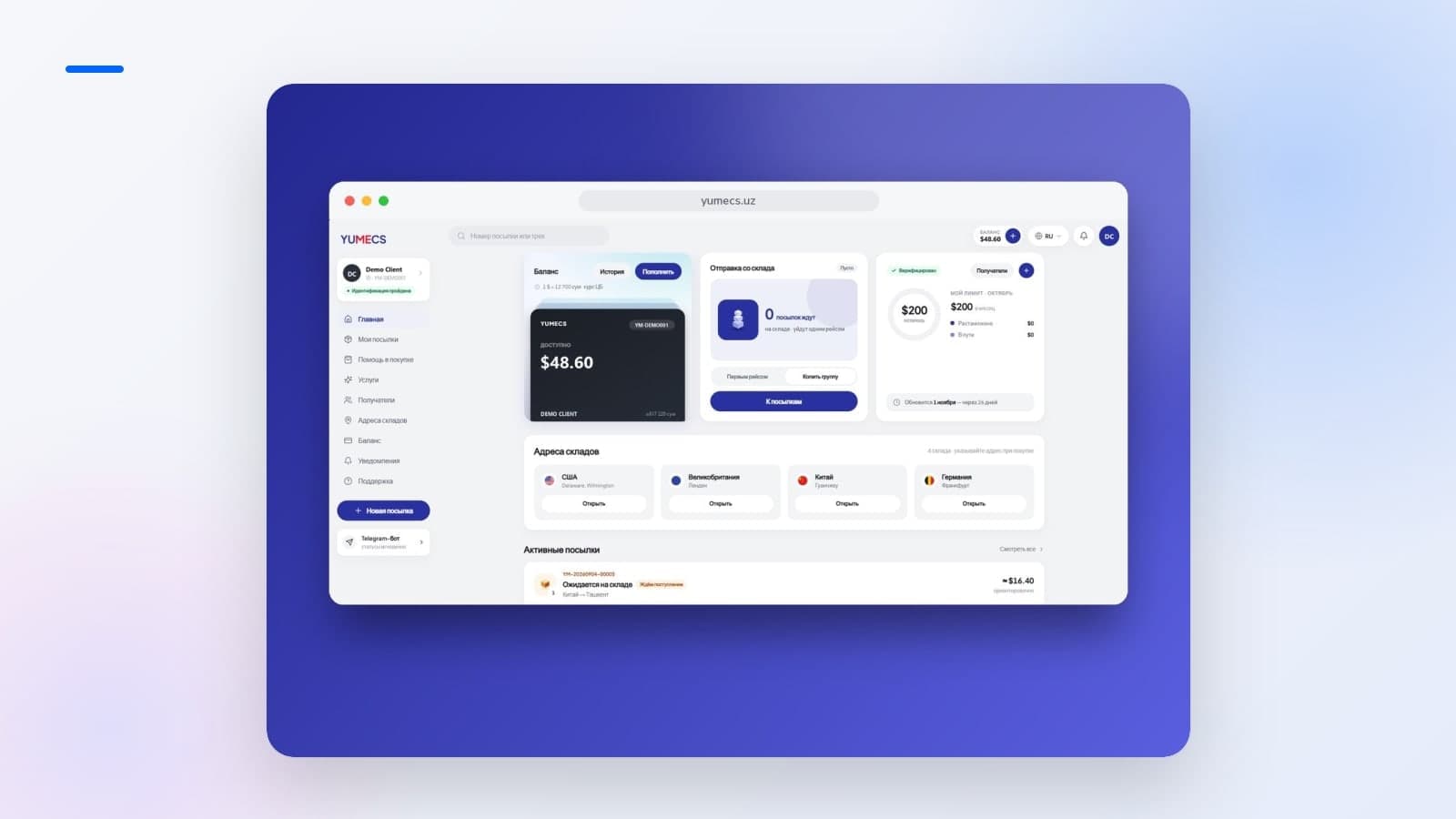
When digitizing distributed workflows, the user experience of frontline staff determines adoption success. For example, while building a customer portal and automation engine for the logistics company YUMECS, we routed quick status updates and alerts through a Telegram bot. A similar strategy in agribusiness allows field brigade leaders to confirm work orders via secure messaging tools or lightweight web forms without wrestling with a heavy ERP interface.
Common Pitfalls in Agribusiness Automation
- Buying software without clear field procedures: If operators do not submit waybills on time and refuelers pump diesel without digital identity tags, software will merely record losses after they happen rather than preventing them.
- Launching in the middle of harvest: Overhauling accounting workflows should happen during the off-season (winter), training staff thoroughly before spring field work begins.
- Neglecting tax integration: Running operations in a disconnected custom program without links to the national chart of accounts and E-aktiv forces accountants to re-enter every document manually. You can read more about fleet and transport logistics workflows in our article on ERP for transport companies in Uzbekistan.
Frequently Asked Questions
How does an agricultural 1C ERP differ from regular accounting software?
Standard accounting groups expenses across general ledger sub-accounts for the entire business. An agricultural ERP tracks costs per field contour: the cost of every kilogram of harvested produce incorporates the exact seeds, fertilizers, tractor hours, and machinery depreciation applied to that specific plot under clear operational norms (1solution.uz).
How do you monitor machinery operators and fuel consumption?
Control is built by linking waybills with fuel allowance standards per hectare for each operation (such as plowing, harrowing, or spraying). Connecting GPS/GLONASS trackers lets the system compare processed area from the vehicle's track against declared fuel usage, instantly highlighting discrepancies or padded figures.
How long does an ERP implementation take for an agricultural cluster?
A basic operational workflow goes live within 2 to 3 months. A full-scale deployment featuring weighbridges, elevators, crop rotation planning, and piece-rate payroll takes 6 to 9 months. We recommend initiating work in November or December so the platform is battle-tested by the start of spring sowing.
If you are planning an enterprise resource management rollout or need to connect field workflows with your accounting core, explore our CRM and business automation services at NDC, or get in touch through our contacts page to discuss your project roadmap.