CRM for microfinance organizations in Uzbekistan: loan origination pipeline and project estimate
We examine choosing and deploying a CRM for microfinance organizations in Uzbekistan: KATM integration, debt service ratio calculation, scoring, and auto-debits.
Off-the-shelf CRMs do not fit a microfinance organization in Uzbekistan: issuing loans requires direct integration with the KATM database, calculating the DTI debt burden ratio, identity verification via MyID, and handling delinquencies. Deploying a specialized CRM with a loan origination system (LOS) module costs between 30,000,000 and 220,000,000 UZS (so'm) according to industry registries and market practices, taking between 6 and 12 weeks to launch.
In brief
- Generic sales funnels without KATM and MyID integrations lead to regulatory penalties and uncollected loans.
- The microloan limit for individuals is 100 million UZS (so'm), and the sum of all penalties and fees cannot exceed 50% of the loan principal per year under law ZRU-765.
- An MVP loan origination pipeline with basic scoring costs 30,000,000–50,000,000 UZS (so'm).
- A full-scale system with Uzcard/Humo recurring debits, 1C integration, and a debt collection module costs 90,000,000–220,000,000 UZS (so'm).
Why generic CRMs fail in microfinance
When an MFO tries to set up a standard sales funnel in amoCRM or Bitrix24, the process quickly stalls. An ordinary system can record leads and remind managers about calls, but it knows nothing about financial regulations. Uzbekistan has over 128 registered microfinance organizations and 93 pawnshops that transmit data and check borrowers via government and credit registries (infokredit.uz).
Under the regulations of the Central Bank of Uzbekistan, all credit and microfinance institutions must integrate automated scoring and verify an individual's debt-to-income (DTI) ratio through the Credit Information Analytical Center (KATM). If a loan officer inputs data manually or skips a query to the credit bureau, the firm breaches prudential norms.
Furthermore, strict legal boundaries apply. Under Presidential Decree No. PP-364 and the Law "On Non-Bank Credit Organizations and Microfinance Activity" (lex.uz), the microloan ceiling for individuals is 100 million UZS (so'm), while microcredits for entrepreneurs reach up to 300 million UZS (so'm). Simultaneously, law ZRU-765 stipulates: the total amount of all interest, commissions, and penalties cannot exceed 50% of the outstanding loan principal per year. These formulas must be embedded directly into the system's calculation core; otherwise, the software may accrue excess penalties, triggering regulatory warnings.
Core modules of a fintech CRM
An industry-grade system for an MFO unites three operational loops: lead acquisition (CRM), loan origination pipeline (LOS), and portfolio management with debt recovery (LMS and Collection).
- Verification and KYC: The module connects with MyID via API, verifies the customer's face using biometrics, and pulls passport details without manual entry by operators.
- Loan origination pipeline and KATM integration: The platform automatically requests credit reports from the bureau, verifies active loans, evaluates debt burdens, and calculates a credit score. Decisions on routine applications are rendered within 1–2 minutes.
- Contracts and disbursement: Digital contract signing via SMS OTP or electronic digital signatures. To keep paperwork seamless, companies often deploy self-service portals like those built for our Hesap project, where users sign legal documents securely online.
- Payment processing and disbursement: Integration with Uzcard and Humo cards for instant disbursements and scheduled direct debits. Read more about this mechanism in our guide to connecting Uzcard and Humo for an MFO website.
- Debt collection (Hard / Soft / Legal): Automated reminders to borrowers 3 days prior to due dates via SMS and messengers, task routing for call center agents when arrears occur, and automated generation of court filings.
Comparing implementation paths
| System option | Included features | Timeline | Cost in UZS (so'm) | Best suited for |
|---|---|---|---|---|
| Cloud MVP on a pre-built core | Basic pipeline, KATM API integration, manual loan issue and payment tracking | 6–8 weeks | 30,000,000 – 50,000,000 | New MFOs with a single branch processing up to 50 applications daily |
| Turnkey industry-specific origination system | MyID, automated KATM scoring, Uzcard/Humo auto-debits, collection module, 1C | 8–12 weeks | 90,000,000 – 220,000,000 | Operating MFOs, branch networks, and online fintech microloan providers |
If you are just starting
For an emerging MFO, keeping capital expenditures lean before establishing an initial loan book is essential. In the early stages, focusing on digital intake and statutory compliance checks is plenty.
- Connect the mandatory credit bureau data exchange gateway via KATM to operate legally.
- Set up baseline scoring: reject applications with non-compliant DTI levels or active defaults automatically, without routing them to a risk officer.
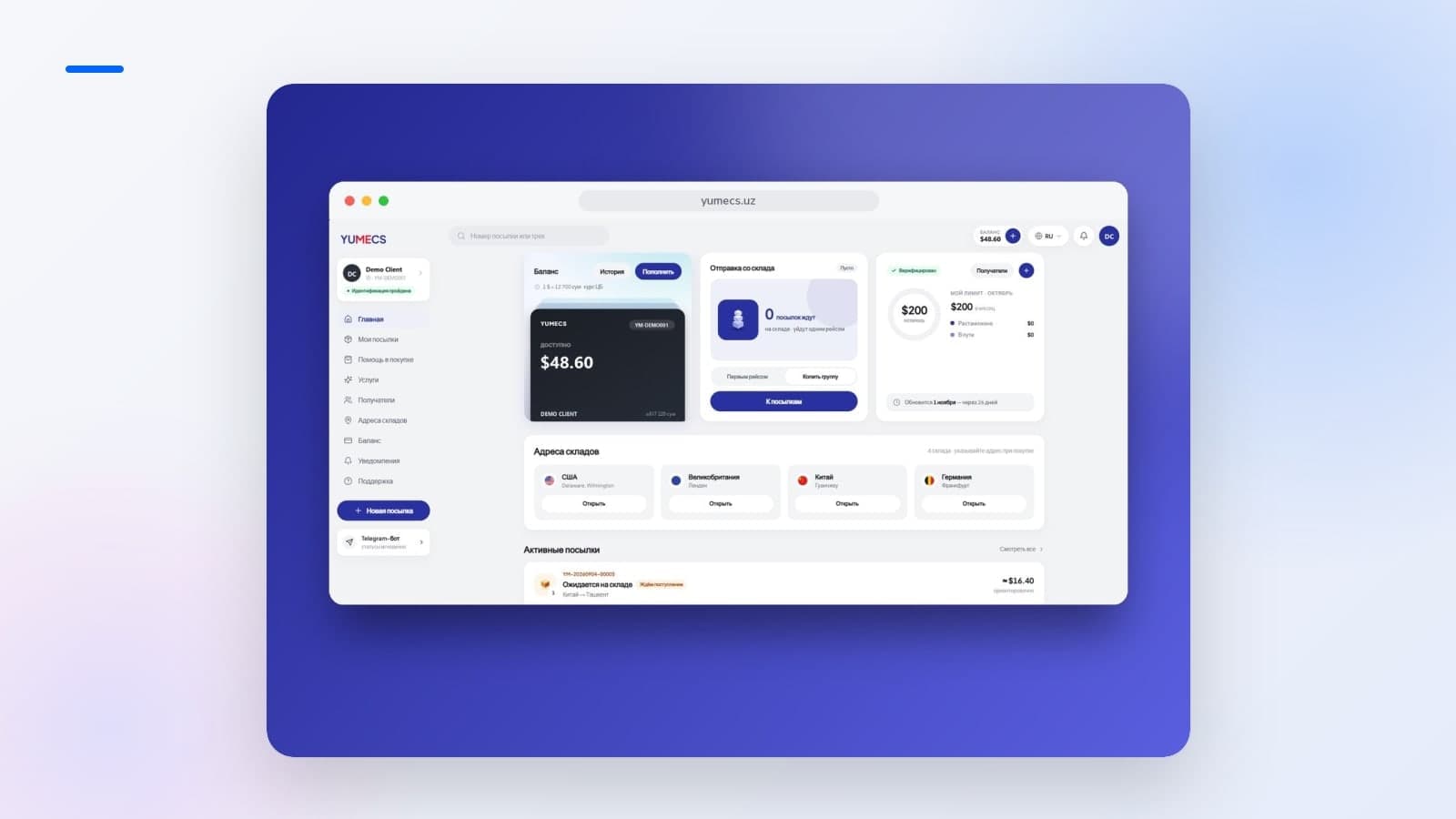
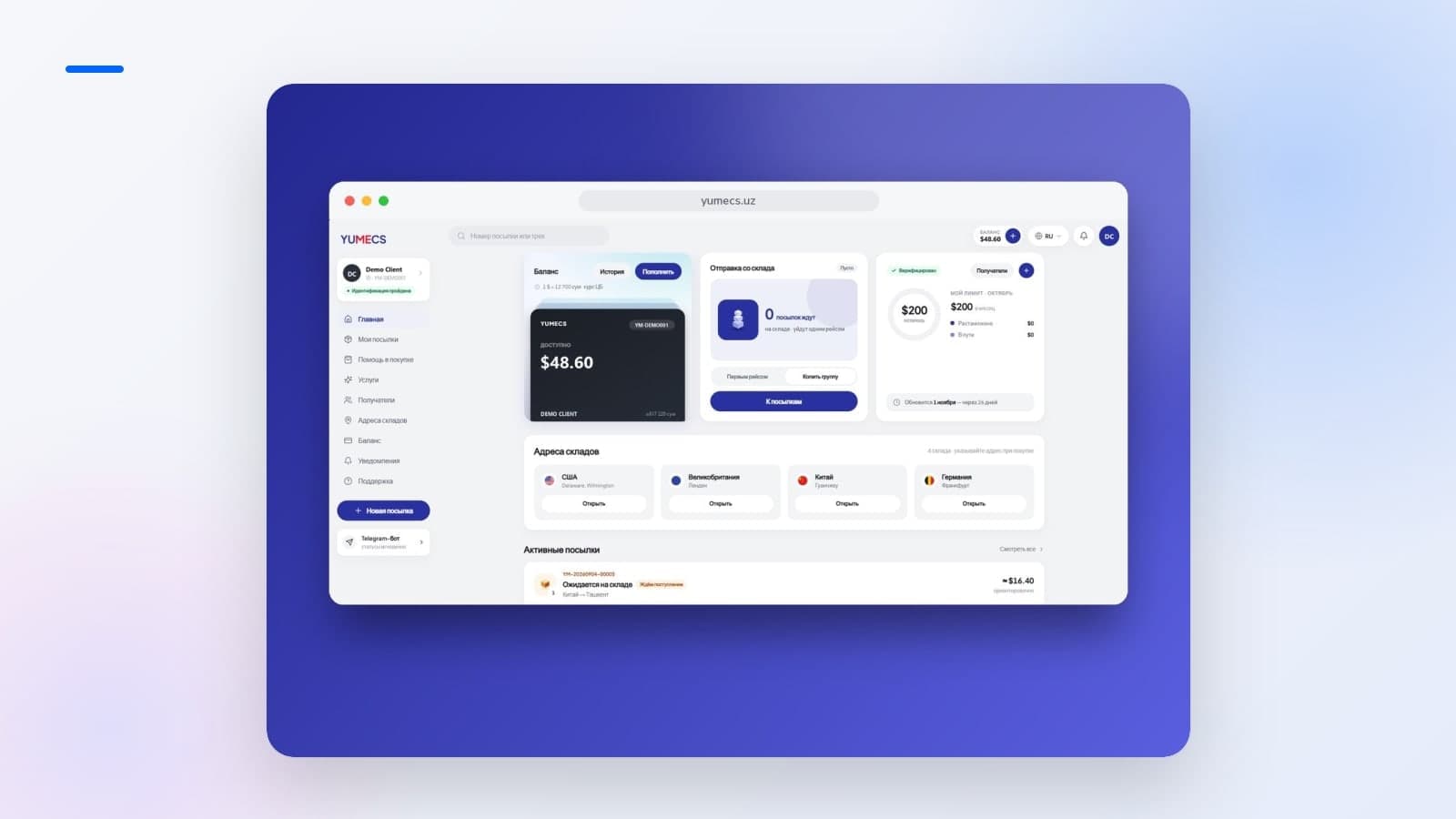
- Launch lead intake through a website or a secure bot. Drawing on our experience with projects like the YUMECS portal with Telegram alerts, borrowers value transparent status tracking and quotes without calling customer support.
- Maintain repayment schedules with built-in caps to ensure total yearly penalties never exceed 50% under ZRU-765.
The minimum budget to deploy an entry-level loan pipeline ranges from 30,000,000 to 50,000,000 UZS (so'm) according to data from the Central Bank of Uzbekistan, taking around 6 weeks to roll out.
If your business is already running
Established credit institutions run into different bottlenecks: clients are served across disjointed branches, staff manually copy application forms into Excel, and payment records fail to reconcile with 1C accounting on time.
- Unify the borrower database from separate spreadsheets and local branch databases into a single CRM profile.
- Shift from manual underwriting to automated scoring: standard applications should secure preliminary approvals or rejections without human intervention.
- Configure automated payment gateways: the system places holds and debits monthly installments from linked Uzcard or Humo cards right on the scheduled date.
- Automate collections: as soon as a payment lapses, the borrower's file switches stages automatically and gets routed to an assigned recovery officer with complete call logs.
Migrating an active MFO to an enterprise system generally takes 8–12 weeks and costs between 90,000,000 and 220,000,000 UZS (so'm). The migration is handled in planned phases without disrupting daily disbursements across existing offices.
A real case: nationwide microfinance automation
MFO "Biznesni rivojlantirish mikromoliya tashkiloti" needed to automate its lending operations across Uzbekistan, remove manual underwriting, and consolidate KYC, scoring, and loan accounting inside a single console to accelerate small business funding (gazeta.uz).
The institution implemented the FB NKO enterprise platform featuring CRM, a digital loan origination pipeline, integrations with KATM, the KADR registry, the Garov.uz collateral database, and an AML/CFT module. As a result, average application turnaround times dropped to 2 minutes, manual underwriting for standard credit cards was completely eliminated, and end-to-end tracking was secured from customer onboarding through loan maturity.
A real case: unified retail lending pipeline
At Agrobank's retail division, loan requests arrived through fragmented channels across 170 branches and 248 mini-banks. The bank lacked a centralized borrower profile, and the lending process relied on heavy manual handling, slowing credit delivery (cleverik.kz).
The bank rolled out a unified CRM environment on Creatio, integrating national identity services via MyID, eGov, core banking gateways, and automated risk scoring. Ultimately, a single customer view was established for over 3.6 million retail clients, MyID validation eliminated physical document checks by branch staff, and loan processing times became uniform across all regional offices.
Frequently asked questions
How does a loan origination pipeline in a CRM differ from a standard sales pipeline?
A standard sales funnel tracks conversational milestones with prospects. A loan origination system (LOS) is an algorithmic workflow: it verifies IDs via MyID, polls credit reports from KATM automatically, evaluates the DTI ratio, runs scoring models, and delivers an instant lending decision without an operator.
Is integration with KATM mandatory for a microfinance organization?
Yes. Under the regulatory requirements of the Central Bank of Uzbekistan, all MFOs and pawnshops must submit data on issued loans and check borrower debt profiles through the KATM database. Operating without this integration violates banking regulations.
How does a CRM enforce interest and penalty limits under law ZRU-765?
The loan management system (LMS) enforces hard programmatic caps: the calculation engine stops accruing fees, penalties, and interest the moment their collective sum hits 50% of the loan principal in a calendar year.
If you are planning to build or upgrade your microfinance operations, discover our service for CRM development and deployment at NDC. We will help map your pipeline stages, design the technical architecture, and integrate the essential fintech services.
Sources
- МФО «Biznesni rivojlantirish mikromoliya tashkiloti» (дочерняя структура Банка развития бизнеса) · gazeta.uz
- Агробанк (направление розничного и микрокредитования) · cleverik.kz
- Центральный банк Республики Узбекистан: Реестр микрофинансовых организаций и пруденциальные нормативы
- Кредитное бюро «Кредитно-информационный аналитический центр» (КАТМ) — сервисы скоринга и отчетности
- Закон Республики Узбекистан «О небанковских кредитных организациях и микрофинансовой деятельности» (ЗРУ-765)
- Постановление Президента Республики Узбекистан № ПП-364 «О дополнительных мерах по развитию рынка микрофинансовых услуг»