CRM for Auto Repair Shops: License Plate Tracking, Work Orders, and Inventory
How to organize repair shop records by license plate, automate spare parts inventory, and bring car owners back on time for maintenance.
For an auto repair shop in Uzbekistan, choosing between a ready-made cloud tool and custom software development comes down to the scale of your service bays. Small garages do well with specialized cloud platforms costing from 150,000 to 480,000 UZS (so'm) per month, while large service centers and multi-location networks need custom setups integrated with 1C and Telegram. Deploying an off-the-shelf service takes 3–7 days, whereas building custom software takes 4 to 8 weeks based on our project experience.
In brief
- Without vehicle service history and mileage tracking, auto repair shops lose up to 75% of repeat visits on average.
- Standard sales pipelines like amoCRM are not built for work orders, standard labor hours, or parts tracking without extensive custom work.
- Ready-made niche cloud platforms in Uzbekistan range from 150,000 to 1,056,000 UZS (so'm) per month.
- The most reliable way to bring drivers back for oil changes and seasonal service is automated mileage-based Telegram reminders.
Why standard CRMs do not work for repair shops
Typical sales platforms revolve around deals and customer contacts. In an auto repair shop, the core record is the car itself. A single vehicle may change owners, or a corporate client might bring in a fleet of ten cars. The system must tie repair history not just to a phone number, but to the license plate, make, model, and VIN.
As specialists at CloudPlus point out, generic CRMs (such as amoCRM or Bitrix24) are designed out of the box for standard lead pipelines. They lack vehicle-specific features: separating labor and parts on a work order, deducting consumables from stock, calculating standard labor hours, and tracking mileage logs. Without these tools, service advisors end up duplicating entries in paper notebooks or Excel spreadsheets.
In a purpose-built automotive CRM, a single work order ties together four critical components: vehicle specs with mileage, customer complaints, assigned mechanical jobs per technician, and spare parts deducted from inventory.
Available options: cloud platforms vs. custom development
The market in Uzbekistan offers both local and international solutions that accept payments in national currency, as well as the option to build a system around your own specialized workflows.
| Solution | Cost in UZS (so'm) | Setup timeline | Best suited for |
|---|---|---|---|
| Local cloud platforms (Auto-nazorat) | 150,000 to 350,000 UZS (so'm)/mo | 2–5 days | Bays, 1–3 technician garages, LPG conversion stations |
| Industry-specific platforms (emyCRM) | 192,000 to 1,056,000 UZS (so'm)/mo | 3–7 days | Workshops with 3–10 bays, shops with on-site parts retail |
| Custom software / Telegram Mini App | Project estimate | 4–8 weeks | Multi-branch networks, multi-brand centers running 1C |
According to pricing data as of October 2026, the localized platform Auto-nazorat offers work order management, technician payroll calculations, LPG inspection reminders, and Road24 integration starting at 150,000 UZS (so'm) per month on the Small plan and 350,000 UZS (so'm) on the Medium plan. Another provider, emyCRM, which supports Click, Payme, and Uzum, costs from 192,000 UZS (so'm) per month for up to 10 staff members to 1,056,000 UZS (so'm) per month for the advanced version as of September 2026.
If your operations go beyond off-the-shelf logic—for instance, requiring complex component rebuild tracking, inventory sync with a customized 1C database, or a dedicated customer portal—it is far more practical to invest in tailored CRM development and automation.
If you are just starting
When launching a new garage or tire shop with 1–2 service bays, heavy software deployments make little sense. Your immediate goal is capturing inbound drive-ins and collecting contact details quickly.
- Replace paper reception logbooks with a smartphone or tablet.
- Sign up for an entry-level cloud plan for 150,000–192,000 UZS (so'm) per month.
- Make key intake fields mandatory: license plate number, current mileage, owner's name, phone number, and requested services.
- Keep a simple live inventory of fast-moving items: filters, motor oils, and brake pads.
A real case: mobile check-in at service bays
A chain of express oil-change and tire shops in Tashkent used to handle intake and customer balances in paper notepads. This routine pulled mechanics away from the car lifts, and driver contacts regularly vanished during shift handovers. The shop switched to the Bip Business mobile app directly on technicians' smartphones: recording license plates, odometer readings, and service checklists was reduced to 30 seconds. As a result, the team dropped paper logs entirely, cut intake time down to half a minute, and set up automated customer reminders for seasonal tire changes and routine maintenance.
If your business is already running
For an established auto repair shop, keeping existing clients coming back is your biggest lever for revenue growth. According to Cliento CRM data as of June 2026, Tashkent auto centers (including large automotive hubs like Sergeli) see repeat visit rates averaging only around 25% when they operate without dedicated vehicle histories and mileage records. Car owners simply forget where they changed their oil or pull into the nearest shop when maintenance is due.
To modernize your workflow without disrupting daily shop floor operations, roll out changes step by step:
- Export existing data. Move collected phone numbers and vehicle lists from spreadsheets or accounting exports into a centralized database.
- Sync inventory with 1C. Set up automatic parts deductions: as soon as a technician closes a work order, the parts are deducted from stock without requiring a manual recount by the bookkeeper at the end of the shift.
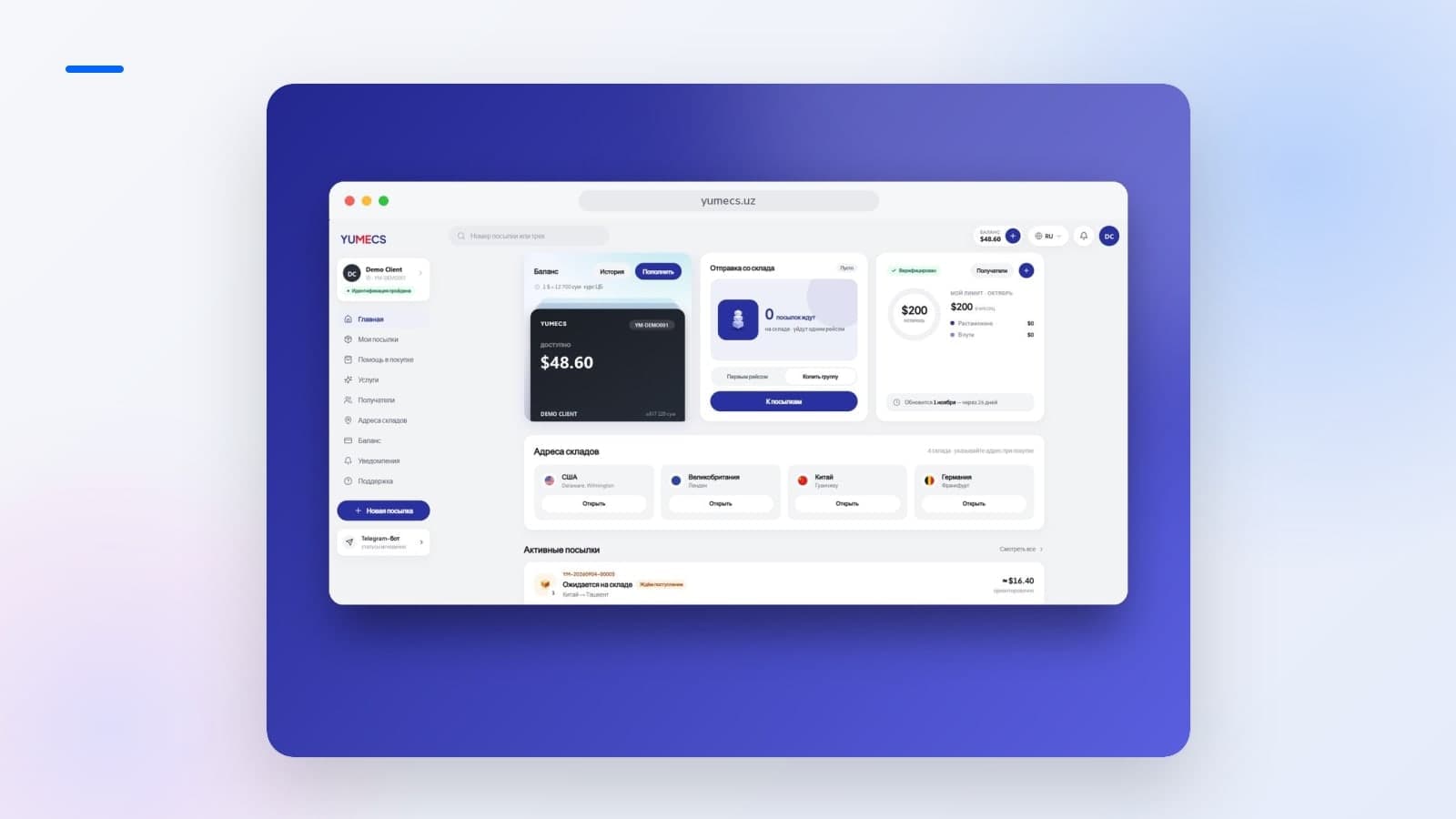
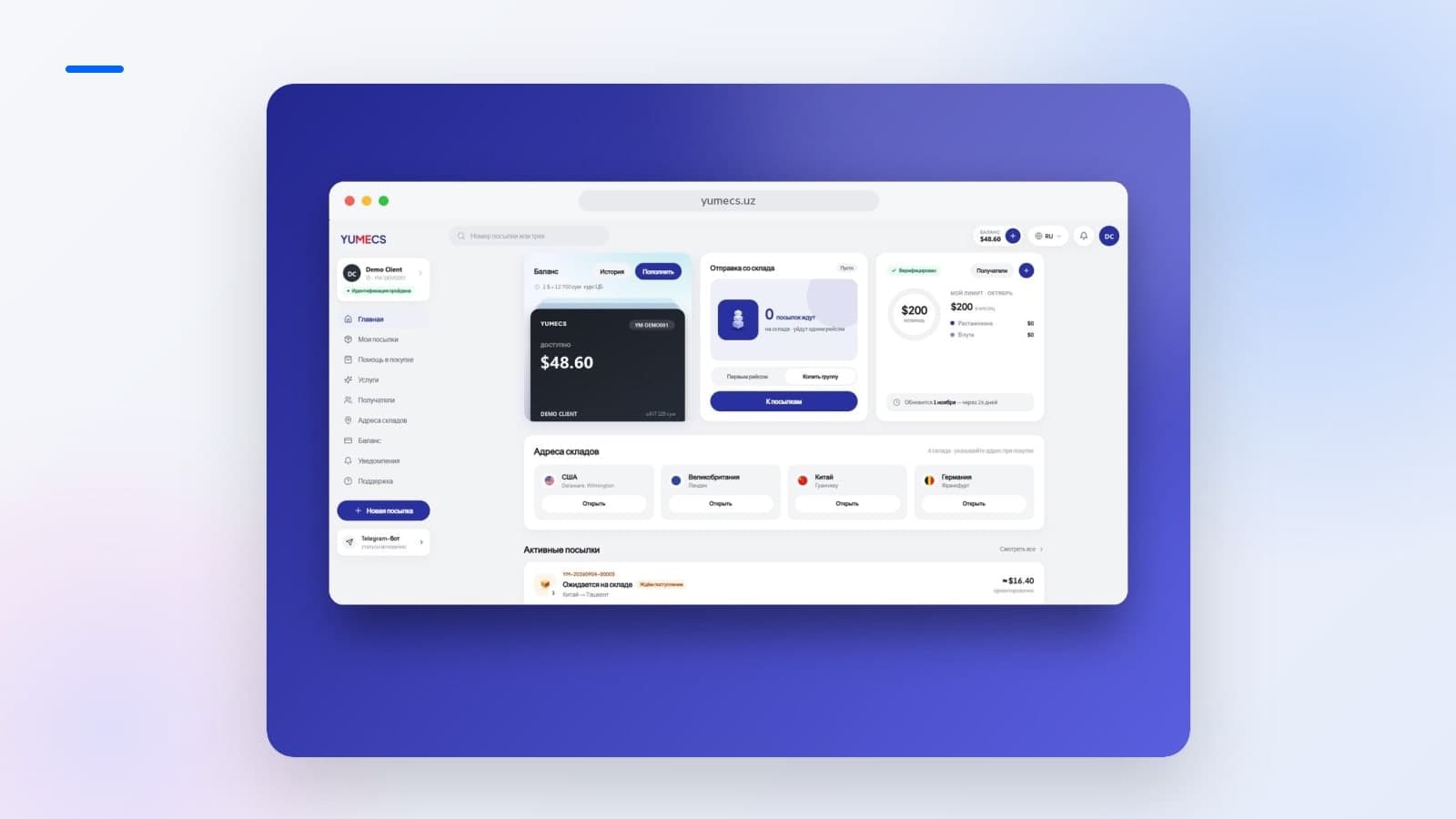
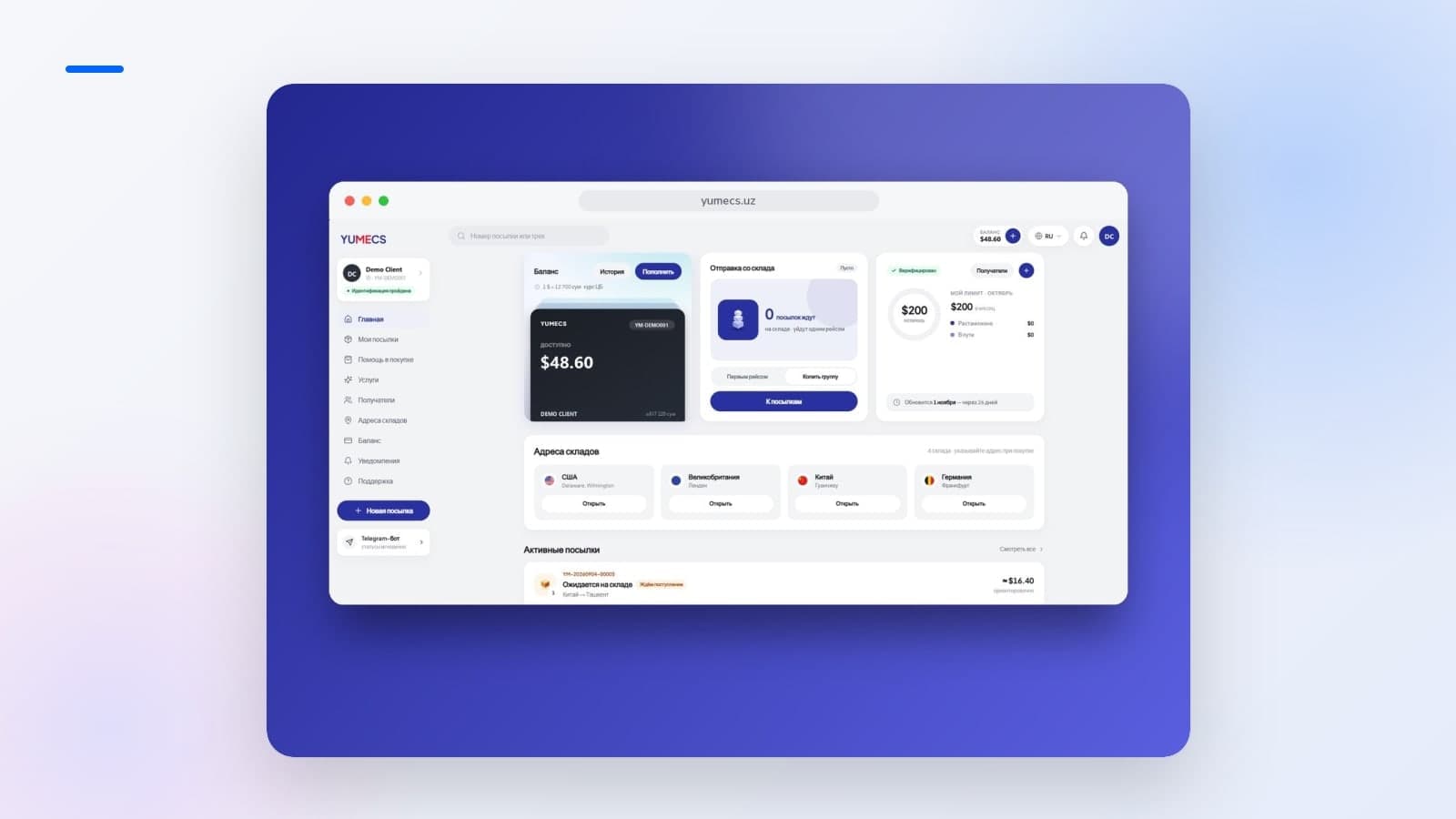
- Connect communication channels. Hook your system into Telegram. Drivers find it far easier to approve additional repair estimates from photos and get vehicle-ready notifications right in their messenger. We regularly build these workflows: for example, in the YUMECS project, all customer status notifications and operational updates were routed through a Telegram bot, completely freeing managers from repetitive manual check-ins. We outlined a similar strategy when detailing how to build a CRM for training centers, where automated messaging replaces manual call lists.
- Launch maintenance triggers. Calculate your average service interval (typically 7,000–10,000 km or 6 months). The system should automatically send drivers timely reminders: "It has been 5 months since your last oil change—book an inspection today."
A real case: boosting repeat visits in Sergeli
Rustam’s repair shop in Sergeli (Tashkent), operating 2 lifts with 4 mechanics, handled around 130 cars monthly with an average ticket of 380,000 UZS (so'm) and monthly turnover of roughly 49 million UZS (so'm). Without a central service history database or mileage tracking, only a quarter of customers ever came back, leaving revenue flat for over two years. After adopting an automotive CRM with digital license-plate records and scheduled maintenance logs, the shop set up automatic Telegram reminders for recurring fluid and filter replacements. According to Cliento CRM, this helped digitize their regular customer base and noticeably increased repeat business without spending a single sum on paid ads.
Common pitfalls in repair shop automation
- Forcing mechanics to do complex data entry. A technician in work gloves next to a vehicle lift should not be filling out long forms on a desktop computer. The technician's screen should only show "Start Job" and "Finish Job" buttons. The service advisor should handle the rest.
- Managing inventory separately from work orders. Deducting spare parts through separate post-shift entries inevitably leads to inventory mismatches and missing stock.
- Skipping odometer checks on vehicle intake. Without mileage readings, you cannot calculate upcoming service windows or remind customers to replace their oil, fluids, or timing belts.
Frequently asked questions
Which auto repair software can be launched fastest in Tashkent?
Ready-made cloud platforms with Uzbek and Russian language support (such as Auto-nazorat or emyCRM) are the fastest to deploy. Basic setup of your service list, inventory catalog, and first work order takes between 2 and 5 business days.
How does an auto repair CRM work order differ from 1C?
Standard 1C handles accounting and warehouse controls well, but its service advisor interface can be cumbersome and slow. A dedicated repair shop CRM is optimized for speed: pulling complete service history by a single license plate, planning bay schedules on a visual calendar, and sending itemized estimates directly to the customer's messenger.
How much does custom auto repair CRM development cost?
Custom software is best suited for repair networks with specialized operating workflows and complex 1C integrations. In our experience, custom automation platforms with database sync and Telegram bots take 4–8 weeks to build, with budgets calculated based on the specific modules you need.
If you want to streamline vehicle intake, organize your parts inventory, and bring clients back through digital messaging, drop us a line via our contacts. We will audit your shop's workflows and suggest the most practical path forward.
Sources
- Автосервис Рустама (Ташкент, Сергели) · cliento.uz
- Сеть экспресс-мастерских и боксов шиномонтажа на платформе Bip Business (Ташкент) · bip.uz
- Auto-nazorat — CRM, ERP, ombor va do'kon avtoservis uchun
- emyCRM — Avtoservis va STO boshqaruv dasturi narxlari
- CloudPlus — Avtoservis dasturi va buyurtma-naryadlar hisobi