Telegram Bot for Car Dealerships: Test Drives, Mini App Showroom, and CRM
How car dealerships in Uzbekistan can replace manual chat replies with a Telegram Mini App showroom, online test-drive booking, and CRM sync. Costs and launch steps.
A Telegram bot for a car dealership automates routine customer inquiries: it displays available vehicles, calculates monthly loan payments, books test drives, and checks contract statuses. A basic text-based button bot launches in 10–14 days for 5,400,000 to 10,000,000 UZS (so'm), while an interactive Telegram Mini App showroom integrated with a CRM takes 3–5 weeks and costs between 17,000,000 and 35,000,000 UZS (so'm).
In Brief
- In Uzbekistan, Telegram serves as the primary channel for first contact with car buyers, handling millions of service inquiries about contracts and waitlists.
- Standard text-and-button bots work well for basic FAQs, but an interactive Telegram Mini App provides a far better experience for comparing trim levels and calculating loans.
- A basic button bot costs 5.4–10 million UZS (so'm), custom Mini App development ranges from 17–35 million UZS (so'm), and CRM integration adds 3–7 million UZS (so'm).
- The bot's core objective is to deliver a qualified lead with a chosen model and estimated budget straight to your sales team, rather than just a raw phone number.
Challenges Dealerships Face Without Automation
Buying a car is a high-involvement decision. Customers rarely call right away: they first research prices, trim packages, and auto loan or installment terms directly in messaging apps. When a dealership relies on manual messaging, common bottlenecks emerge:
- Sales reps waste valuable time answering repetitive questions. Showroom staff spend hours sending the exact same photos, price sheets, and leasing conditions instead of hosting in-person appointments and closing deals.
- Scheduling test drives becomes messy. Booking slots through open-ended chat messages often leads to scheduling conflicts, with multiple buyers arriving to test-drive the exact same car at once.
- After-hours leads slip away. Most prospective buyers browse vehicles in the evening or over the weekend. If a sales rep fails to reply within 15 minutes, the shopper moves on to another dealer's channel.
- Queue and contract chaos. Buyers awaiting delivery frequently call the showroom to check their queue number and estimated handoff date. According to automotive portal Autostrada, automated Telegram bots run by dealerships process millions of contract number and queue verification requests (navbat bilish) in both Uzbek and Russian, taking a massive load off call center agents.
Text Bot vs. Telegram Mini App: Choosing the Right Format
When dealership leadership decides to develop a bot, the choice typically comes down to a standard chat button interface versus a rich web application that runs seamlessly inside Telegram (Mini App).
| Feature | Classic Button Bot | Telegram Mini App (TMA) |
|---|---|---|
| Catalog Format | Text-based cards and downloadable PDFs | Interactive gallery with search and filters |
| Loan Calculation | Step-by-step text questionnaire | Intuitive loan calculator with interactive sliders |
| Test-Drive Booking | Manual text entry for date and phone number | Interactive calendar with real-time available time slots |
| Development Cost | 5,400,000 to 10,000,000 UZS (so'm) | 17,000,000 to 35,000,000 UZS (so'm) |
| Launch Timeline | 10–14 days | 3–5 weeks |
| Best Suited For | Small auto lots or urgent initial rollouts | Official dealerships and large multi-brand showrooms |
Building a basic button bot with web agencies in Tashkent costs an average of 5,400,000 to 10,000,000 UZS (so'm), according to data from AIYNTOR. This setup is sufficient for displaying your showroom location, sharing a general price list, and collecting callback requests.
Developing a Telegram Mini App for an auto dealer—complete with photo galleries of in-stock and in-transit vehicles, filters by color and trim, financing calculators, and self-service test-drive scheduling—ranges from 17,000,000 to 35,000,000 UZS (so'm), according to AIYNTOR. Customers explore inventory without leaving the messenger, select their down payment and loan term, and submit a complete, high-intent lead.
Core Modules for an Automotive Sales Bot
A comprehensive system for an auto showroom comprises four functional building blocks:
- In-Stock and In-Transit Vehicle Catalog. Each model card features high-resolution photos, full technical specifications, equipment options, and availability status. The buyer instantly knows whether the car is already on the showroom floor or arriving in two weeks.
- Loan and Leasing Calculator. The user adjusts sliders for down payments (e.g., 20%, 30%, 50%) and loan terms (12 to 48 months). The bot calculates an estimated monthly payment and prompts them to lock in the estimate by submitting an inquiry.
- Self-Service Test-Drive Scheduling. Shoppers select a location, model, and available date and time. Once confirmed, the bot sends exact dealership directions and delivers a friendly reminder 2 hours before the visit.
- CRM Integration and Lead Distribution. Integrating with amoCRM or Bitrix24 costs an average of 3,000,000 to 7,000,000 UZS (so'm), based on estimates from IT Space. Customer details, selected vehicle specs, and financing calculations instantly populate a deal record and are routed to the duty sales manager.
If you are just starting
If your car dealership opened recently or focuses on a modest inventory of imported vehicles, avoid overcomplicating things with custom enterprise modules right out of the gate.
- Put together a concise inventory list with realistic prices and clean, high-quality photos.
- Launch a foundational button bot in two languages (Uzbek and Russian) starting from 5,400,000 UZS (so'm). Implementation takes just 10–14 days.
- Route incoming leads directly into a dedicated Telegram team chat for your managers, capturing the buyer's name, phone number, and vehicle of interest.
- Track conversations in a spreadsheet until your inquiry volume consistently exceeds 10–15 inbound requests per day.
A real case: Digital Showroom for Car Importers
Automotive partners importing vehicles from Korea and China ran into operational gridlock: inventory was scattered across disconnected Telegram channels and spreadsheets, and sales reps were spending up to 40 minutes per customer manually calculating customs duties and freight costs. According to automotive platform MotorFeed, introducing a branded Telegram bot with an interactive vehicle catalog, budget filters, and an automated turnkey pricing calculator allowed buyers to configure cars in under a minute. As a result, the dealership began receiving pre-qualified CRM leads complete with specific vehicle specs and established budgets.
If your business is already running
For an established multi-brand showroom or authorized dealership, manual chat routines directly cut into profit margins. At this scale, you need an integrated solution powered by a Telegram Mini App alongside professional CRM development and implementation.
- Process Audit. Analyze how inventory updates are currently pulled from warehouse systems and identify the questions your sales reps answer most frequently.
- Warehouse Synchronization. Connect your database or inventory management software to the bot so that "in stock", "in transit", and "reserved" statuses update automatically without manual intervention.
- CRM Integration. Configure end-to-end data transfer. When a customer selects options and calculates payments in the bot, the sales rep receives a complete customer profile with all configuration details.
- Contract Status Module. Add a client portal or order tracking feature using contract numbers and personal tax IDs (JSHSHIR / PINFL) to reduce support calls to your vehicle handover team.
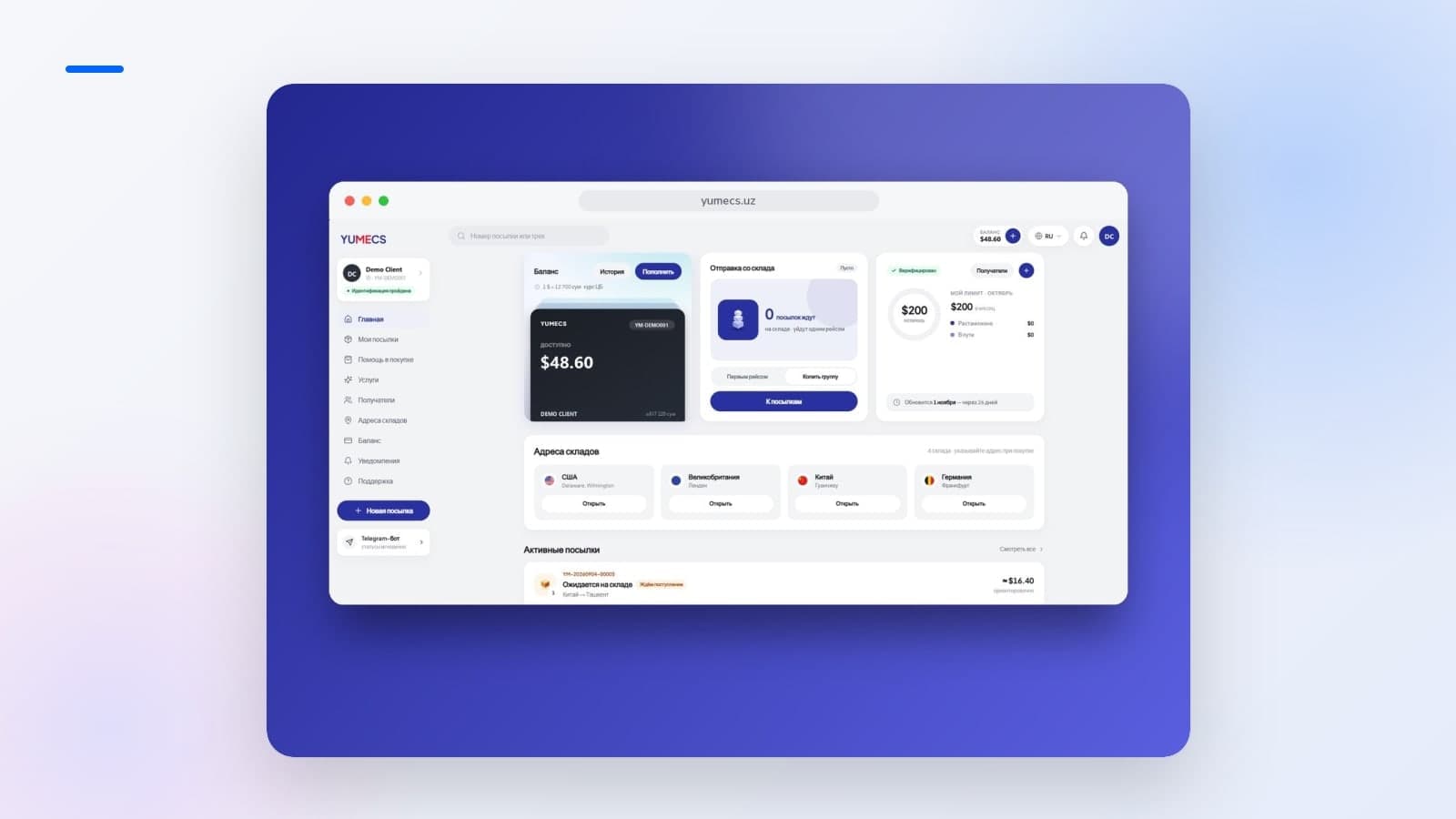
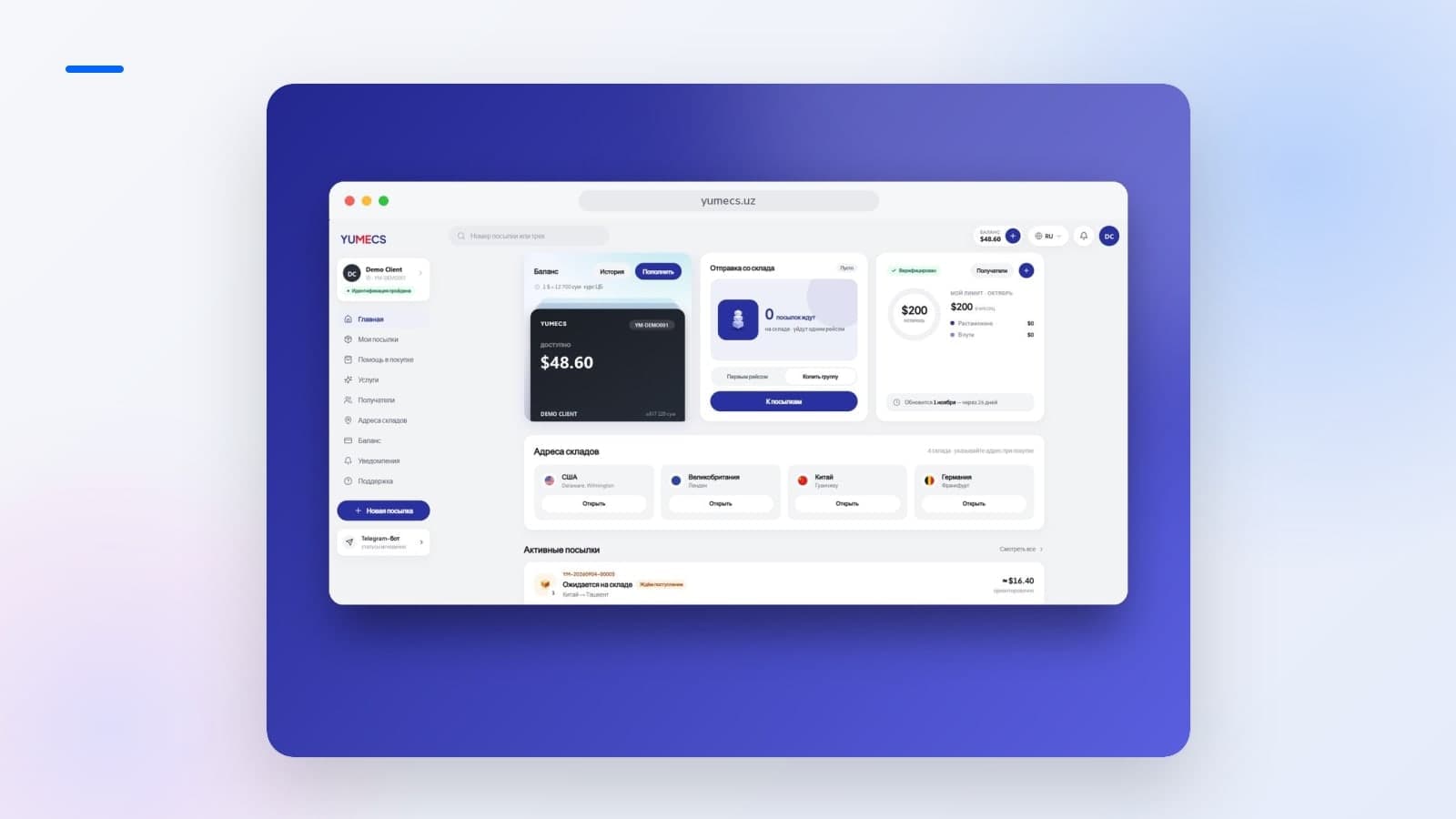
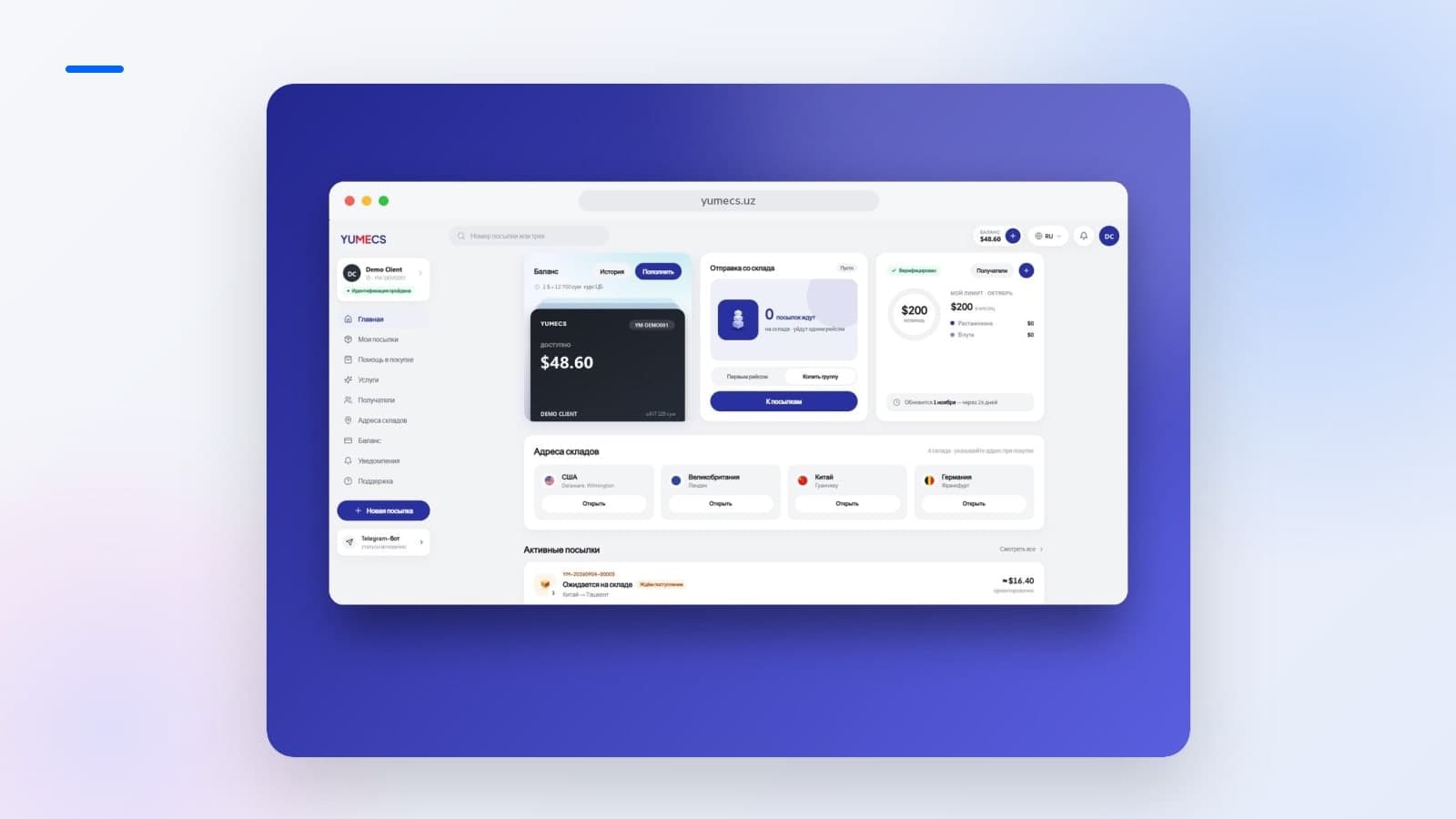
At NDC, we have extensive experience building unified digital ecosystems. For the international logistics provider YUMECS, we developed a dedicated client portal and internal operations platform that automatically delivers status and limit updates directly to customers via a Telegram bot. This eliminated repetitive inquiries for support agents. A similar model works remarkably well for tracking vehicle allocations and fulfillment schedules.
A real case: Automaker Queue Verification
Major players in Uzbekistan's automotive industry have long relied on bots to cut down operating costs. Tens of thousands of car buyers previously flooded dealership call centers every single day asking about contract delivery timelines. According to UzAuto Motors / UzAvtoSavdo, rolling out an official bot linked to their vehicle contracts database empowered customers to verify their queue position, view dealership inventory, and find showroom contact details on demand using their contract number and tax ID—entirely without live operator support.
Common Pitfalls When Launching an Automotive Bot
- Single-Language Interface. In Uzbekistan, offering both Uzbek and Russian right from the welcome screen is non-negotiable.
- Outdated Pricing and Inventory. If a customer configures a car only to hear from a rep that the price went up last week, brand trust is instantly damaged.
- Lengthy Forms Before Showing Cars. Never demand passport or personal data before allowing users to browse your inventory. Save contact collection for booking a test drive or submitting a loan application.
- Neglecting Your Primary Website. A Telegram bot handles immediate, conversational interactions, but capturing sustainable, high-intent search engine traffic still requires robust corporate website development.
Frequently Asked Questions
How much does it cost to develop a Telegram bot for a car dealership in Tashkent?
Pricing depends on required features. A standard button bot with price sheets and a lead capture form costs between 5,400,000 and 10,000,000 UZS (so'm). An interactive Telegram Mini App featuring a catalog, search filters, loan calculator, and test-drive booking ranges from 17,000,000 to 35,000,000 UZS (so'm). Adding full CRM integration typically adds an extra 3,000,000 to 7,000,000 UZS (so'm).
How does the bot distribute leads among sales managers?
Once a customer submits a request, the data transmits via API into your CRM (such as amoCRM or Bitrix24). The system checks manager duty schedules and automatically assigns the lead, attaching the chosen car configuration and scheduled test-drive slot, or alerts your team directly inside a private Telegram staff chat.
Can customers track their vehicle delivery queue through the Telegram bot?
Yes. The bot can integrate directly with your contract management system. The customer simply inputs their contract number and personal identification code (PINFL), and the bot displays real-time production status, estimated delivery dates, and queue rank, eliminating routine inquiries for your front desk.
Is it difficult to update in-stock vehicle inventory?
Not at all. Catalog management can be handled through an intuitive admin panel, synchronized Google Sheets, or a direct connection to your existing inventory software. As soon as a car is marked as sold, a manager updates the status with one click, and inventory updates instantly inside the Telegram bot.
If you are planning to launch a Telegram bot for your car dealership, reach out to us via our contacts page. We will analyze your current sales workflows and recommend the ideal solution for your business goals.
Sources
- UzAuto Motors / UzAvtoSavdo · uzavtosanoat.uz
- MotorFeed (партнеры автосалонов импорта авто из Кореи и Китая) · motor-feed.com
- Узнать очередь UzAuto Motors (GM Uzbekistan Navbat) в Telegram — Автострада
- Telegram Mini Apps и чат-боты для бизнеса в Ташкенте — AIYNTOR
- Интеграция Telegram и amoCRM в Ташкенте — IT Space